A cheap, solar-powered hut designed by Ikea, in partnership with the United Nations High Commissioner for Refugees, promises to revolutionize emergency housing for displaced persons.


"In July, Ikea Foundation and the United Nations High Commissioner for Refugees (UNCHR) will roll out one of the major innovations for war-torn homeless since the canvas tent: cheap, flat-packed, build-it-yourself homes with electricity-generating roofs," reports Shane Snow.
"Up to this point, the best elemental protection relief workers could often provide refugees have been cheap, canvas UN tents that start to disintegrate after about six months."
"The new Ikea-designed shelters are built to last 10 times that long," he explains. "They’re twice as large as an old-school refugee tent, at 17.5 square meters (fitting five people comfortably) and take about four hours to assemble, which is about how long it took my lawyer friend, Frank, and me to bolt together my giant Ikea bookshelf the other day."
"Ikea and UNHCR will beta test the shelters in Ethiopia next month, then iterate to a final design for mass production. They currently cost $10,000 to make, but they’re hoping to get that price down to less than $1,000 when they’re in mass production. The tents cost half that."
Read the full story: A New Ingeniously Designed Shelter For Refugees—Made By Ikea
Temporary Camps Become Permanent Cities for Refugees
Published to coincide with World Refugee Day, Smithsonian has assembled an interactive map of the 50 largest refugee camps in the world. Many of the camps, which together house 1.9 million people, are comparable in size to medium-sized U.S. cities.
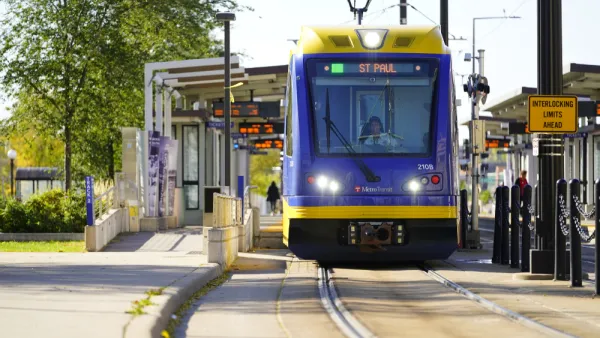
Twin Cities Volunteers Help Recent Immigrants Navigate Transit
Showing refugee and immigrant residents how to use public transportation can improve access to essential services, jobs, and education, but a more robust transit system is needed to effectively serve all who need it.
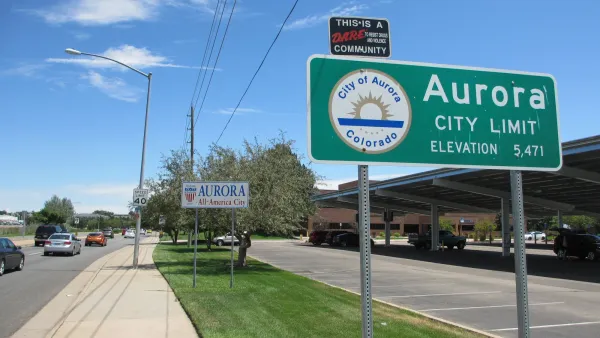
Mobile Social Services Address Gaps in Suburban Colorado
In the Denver suburb of Aurora, nonprofits are using 'mobile public spaces' to reach refugees settling in the autocentric community.

Desperate measures: Advocates weigh draining Lake Powell to fill Colorado River
Draining the reservoir could reduce evaporation losses by a couple hundred thousand acre-feet.

Eastern Nebraska is running out of electricity
Data centers and electrification are straining eastern Nebraska’s grid, throttling economic development.

Malls are becoming the midtowns of the future
Mall and office park redevelopments are a generational opportunity to create new nodes of urbanity.

NYC breaks ground on anti-flooding infrastructure project
New York City's new system will reduce stormwater flows to local sewers by 90%.

One Kentucky town’s secret to affordable housing
The Smoketown Community Land Trust has already built seven affordable homes for community members.

Houston gains petal-shaped cooling infrastructure to make streets more ‘delightful’
The city has installed the pavilions along 15 blocks in Houston.

FREE Course: Walkable City 1: Why Walkability?
After describing his path towards focusing on walkability as the essence of good planning, Jeff Speck marches through his five principal reasons for making more walkable places.
Reinventing Malls: Planning Alchemy—Turning Gray Fields Into Gold
The course focuses on the opportunities and imperatives that shape reinvention of mall sites.

City of Rosemead
Rutgers University, Edward J. Bloustein School of Planning and Public Policy
One Hundred Miles
University of Michigan School for Environment and Sustainability (SEAS)
Hunter College, City University of New York (CUNY)
The Architects Foundation
City of Cambridge
Montrose County
The Pocatello Development Authority