Greg Hinz tours the unfinished 'superstation' under Block 37 in the central Loop, built by the Chicago Transit Authority at a cost of $218 million. It would cost an estimated $150 million to complete, a sum that's unlikely to be raised anytime soon.


"After a full year of asking, photographer Stephen Serio and I a few days ago finally got a chance to tour the hitherto unseen 'superstation' under Block 37 in the central Loop — a grand space that is an equally grand testimony to the hubris of the latter years of former Mayor Richard M. Daley's administration," says Hinz. The station was conceived as a hub for express train service to Chicago's airports and as "a track link between the Blue and Red lines — the CTA's busiest — which otherwise do not converge." However, funding for the express train service never materialized.
"We the taxpayers spent well over $200 million on what amounts to one of the world's biggest unfinished basements. And it will only take another $150 million or so to be able to use it," notes Hinz. "That won't happen anytime soon."
Read the full story: CTA reveals its Block 37 superstation
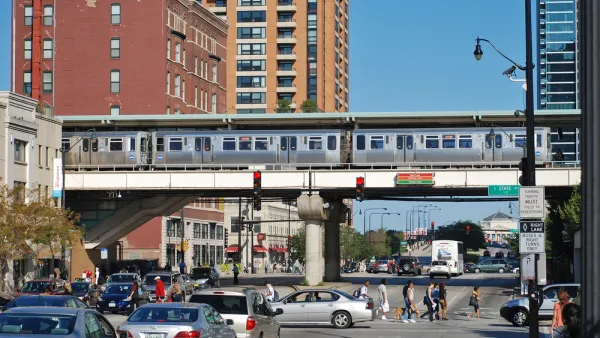
Chicago Transit Increasing Rail Service to Pre-Pandemic Levels
The Chicago Transit Authority is close to returning both rail and bus service to pre-pandemic schedules, with some adjustments for new travel demand.
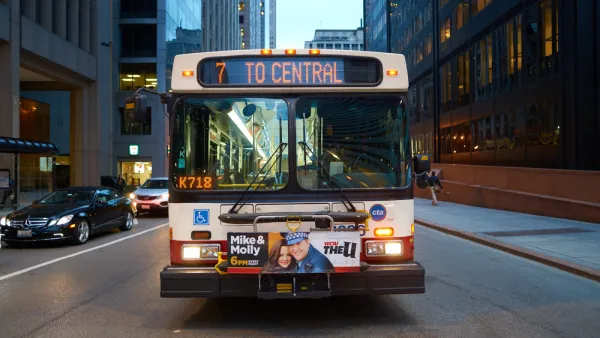
Chicago Announces First Five ‘Better Streets for Buses’ Corridors
The CTA will develop a series of options for improving bus service on key transit corridors.
Study: Loss of Public Transit in Chicago Would Have ‘Severe’ Mobility, Economic Consequences
The first-of-it’s kind study found that without public transit, Chicago would lose an estimated $35 billion in economic activity annually and the quality of life of residents, particularly women and low-income groups, would take a major hit.

Planetizen Federal Action Tracker
A weekly monitor of how Trump’s orders and actions are impacting planners and planning in America.

Eastern Nebraska is running out of electricity
Data centers and electrification are straining eastern Nebraska’s grid, throttling economic development.

Study reveals best places in the U.S. for cycling, walking
New research from Streetlight Data examines bicycle and pedestrian miles per capita in the 100 largest U.S. cities by population.

All sides of BRT debate unhappy with CDOT’s most recent move
The Colorado Department of Transportation is no longer considering center-running bus lanes for Colorado Boulevard.

Massachusetts bogs generate both power, and cranberries
Putting solar panels above farmland is one way Massachusetts is advancing toward its goal of net-zero carbon emissions by 2050.

What could the future of LA transit look like under Raman?
The mayor-elect views broken sidewalks and potholes as crises that can be fixed with better governance.

FREE Course: Walkable City 1: Why Walkability?
After describing his path towards focusing on walkability as the essence of good planning, Jeff Speck marches through his five principal reasons for making more walkable places.
Reinventing Malls: Planning Alchemy—Turning Gray Fields Into Gold
The course focuses on the opportunities and imperatives that shape reinvention of mall sites.

City of Rosemead
Rutgers University, Edward J. Bloustein School of Planning and Public Policy
One Hundred Miles
University of Michigan School for Environment and Sustainability (SEAS)
Hunter College, City University of New York (CUNY)
The Architects Foundation
City of Cambridge
The Pocatello Development Authority
The Urban Renewal Agency of the City of Pocatello