The cancellation of the Hirshhorn Museum's bubble project has Dan Malouff pondering the role of the National Mall. Should it be an urban room whose buildings define its open space, or the setting for risk-taking architecture?


"Should the Mall be a singular urban space, defined by consistent neoclassical style, or an architectural sculpture garden for individual masterpiece buildings?" asks Malouff. "Either vision could be great, but with no agreement on what the Mall should be, neither is happening."
"The question is not really about artist preference for classical or modern styles," he continues. "That's a distraction. Rather, the question is whether the focus of the National Mall should be its open public spaces, or its buildings."
"It would be nice to have a great public space and a variety of architecture, but unfortunately the two visions are mutually exclusive," he argues. "Urban walls need consistency, and sculpture gardens need variety. The more we push in one direction, the worse the Mall will function as the other. So which is it?"
Read the full story: Is the National Mall the place for risk-taking architecture?
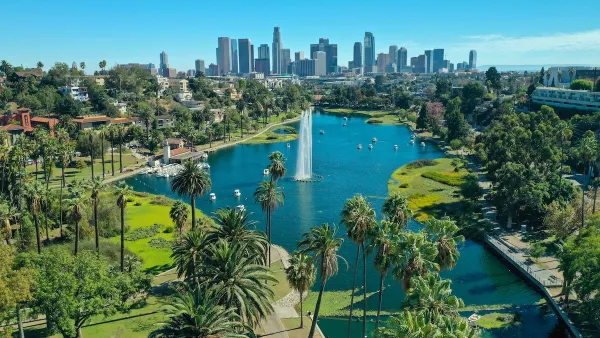
A Historic Investment in LA County’s Parks and Open Spaces
Los Angeles County has launched its largest-ever competitive grant program, investing $58 million to expand park access, enhance climate resilience, and support community-driven projects in the areas that need them most.
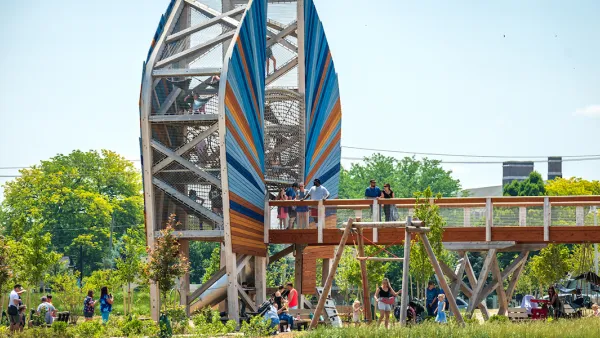
Innovative Park Agencies Receive National Recognition
The National Recreation and Park Association (NRPA) recently announced the recipients of this year’s awards for innovation in health and wellness, equity, conservation, and park design.
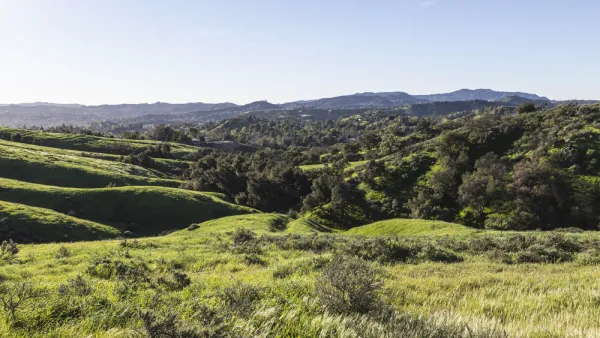
Regenerating and Healing Land Through Parks
Through thoughtful planning and restoration efforts, parks can help heal degraded land, meeting multiple community needs, improving soil quality, restoring native vegetation, and creating habitats for wildlife.

Planetizen Federal Action Tracker
A weekly monitor of how Trump’s orders and actions are impacting planners and planning in America.

California plans to bury El Niño’s downpour
If the state plays its cards right, it may be able to store a billion acre-feet of El Niño’s water in aquifers.

Desperate measures: Advocates weigh draining Lake Powell to fill Colorado River
Draining the reservoir could reduce evaporation losses by a couple hundred thousand acre-feet.

In Texas, data centers are swallowing promised parkland
Residents who moved to Taylor, Texas for a rural community now have to contend with three data centers in their backyard.

How a Chicago-sized wind farm beat the odds and powered on
The project spanned five presidential administrations and a standoff with a U.S. military base.

MTA gives itself 30 days to transform pit into basketball court
The site has been under construction since 2022; the city originally estimated it would finish the court in 2024.

FREE Course: Walkable City 1: Why Walkability?
After describing his path towards focusing on walkability as the essence of good planning, Jeff Speck marches through his five principal reasons for making more walkable places.
Reinventing Malls: Planning Alchemy—Turning Gray Fields Into Gold
The course focuses on the opportunities and imperatives that shape reinvention of mall sites.

City of Rosemead
Rutgers University, Edward J. Bloustein School of Planning and Public Policy
One Hundred Miles
Hunter College, City University of New York (CUNY)
The Architects Foundation
University of Cincinnati Online
City of Cambridge
Montrose County
The Pocatello Development Authority