With a decision over the fate of the controversial Keystone XL pipeline by expected later this year, John M. Broder wonders whether an environmental quid pro quo could deliver a major climate policy victory in exchange for the pipeline's approval.


"President Obama’s first major environmental decision of his second term could be to approve the Keystone XL pipeline, profoundly disappointing environmental advocates who have made the project a symbolic test of the president’s seriousness on climate change," writes Broder. "But could some kind of deal be in the offing, a major climate policy announcement on, for example, power plant regulation or renewable energy incentives, to ease the sting of the pipeline approval?"
Among the many problems with such a deal, as Broder points out, is that environmentalists are unlikely to be mollified by any consolation prize. "[Environmentalists] have described the pipeline as a fuse to one of the biggest carbon bombs on the planet, and said that extracting and burning all the oil in the Alberta oil sands would mean the game was over for global climate."
Read the full story: A Call for Quid Pro Quo on Keystone Pipeline Approval

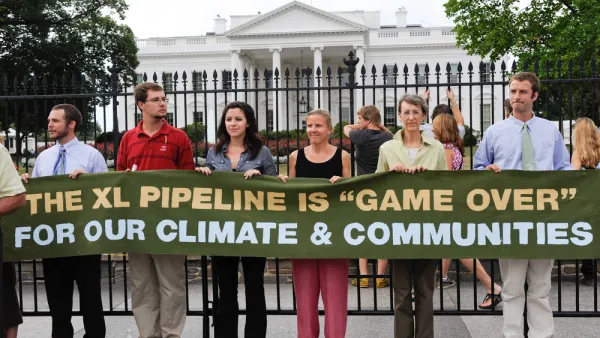
Developer Drops Keystone XL Plans
It's the latest turn of the screw for a project that has depended on the occupant in the White House.
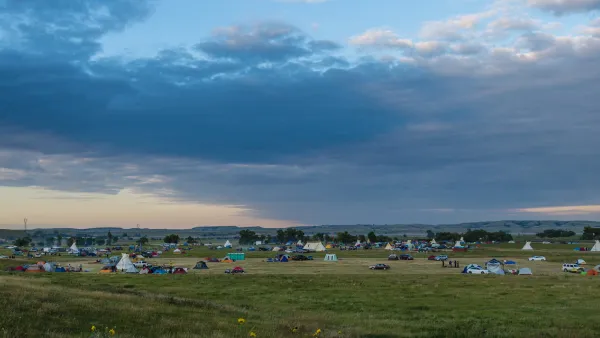
Thank Indigenous Activists for the Keystone XL Pipeline's Demise
President Biden's executive order may put the final nail in the coffin of the controversial pipeline project, but it was unwavering local activists who kept the pressure on for a decade.
Explained: America's Complex System of Oil Transportation
A new analysis by Joseph Kane, Robert Puentes, and Adie Tomer examines America's current infrastructure of transporting oil throughout the country.

Planetizen Federal Action Tracker
A weekly monitor of how Trump’s orders and actions are impacting planners and planning in America.

‘Going backwards:’ Baltimore mayor, students rally against state's transit funding plan
Maryland's proposed six-year plan provides no funding for Baltimore’s BMORE bus program and reduces its road maintenance funding.

Detroit to transform waterfront with $2.2 billion investment
Developers will convert about 18 acres of unused parking lot space into civic spaces.

Data center developers are using lawsuits, cash offers to ‘overwhelm’ rural America
Newsrooms in five states worked together to uncover the tactics big tech developers use to buy land from reluctant communities.

U.S.-Iran war may have ‘devastating’ impact on cost to warm homes
Vermont and Maine residents may see a 76% increase in the cost of warming their homes this winter.

Senate bill would ‘overhaul’ environmental permitting laws
Under the proposed act, government agencies would also not be able to suspend or rescind permits after granting them.

FREE Course: Walkable City 1: Why Walkability?
After describing his path towards focusing on walkability as the essence of good planning, Jeff Speck marches through his five principal reasons for making more walkable places.
Reinventing Malls: Planning Alchemy—Turning Gray Fields Into Gold
The course focuses on the opportunities and imperatives that shape reinvention of mall sites.

One Hundred Miles
County of Mendocino
planning NEXT
The Architects Foundation
University of Cincinnati Online
Montrose County
Northern Illinois Transit Authority (NITA)
The Pocatello Development Authority