Ben Poston investigates Los Angeles's "60-year backlog of failed streets." A strategy designed to pave over the disparities between council districts means that the most damaged of the city's 6,500 miles of paved roadway get fixed last.


"A Times analysis of street inspection data found wide disparities in road quality among the city's 114 neighborhoods," says Poston. "The differences are not driven by wealth or political power. In fact, some of the poorest parts of the city have some of the best roads."
"The heart of the problem is aging streets, heavy traffic, undulating terrain and the sheer size of the network," he explains. "The streets in the poorest shape tend to be in hillside neighborhoods, such as the Hollywood Hills, Mount Washington, Los Feliz and Bel-Air."
"But layered on top of those problems is a street repair strategy that bypasses the worst streets in favor of preserving salvageable ones. Street officials have also made a political decision to bring the overall grade of roads in each City Council district to the same level."
Read the full story: L.A. full of roads to ruin for cars

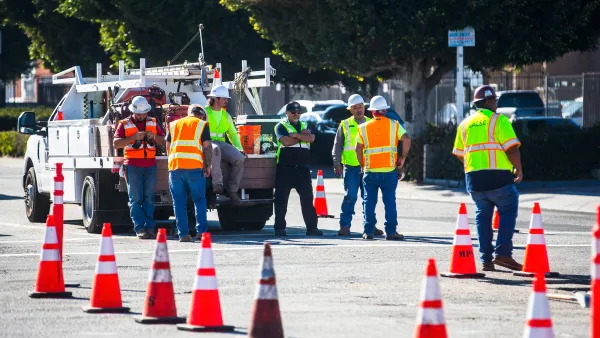
Commentary: LA’s ‘Large Asphalt Repair’ Policy Privileges Drivers, Endangers Others
A new policy to perform spot repairs rather than resurfacing entire streets lets the city skirt requirements to install accessibility and pedestrian infrastructure.
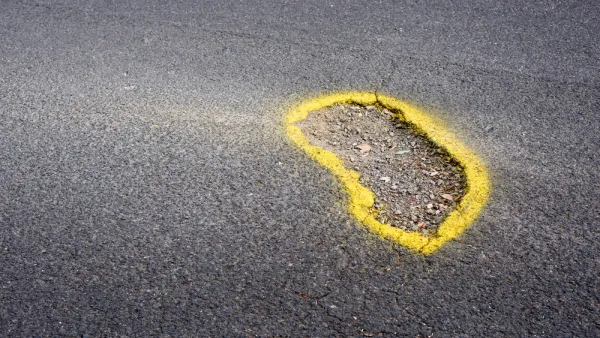
Portland Anarchists Illegally Repair Potholes
Saying that they believe in direct action and suspecting the motives of the State, a group of Portland anarchists are taking to the streets to fix potholes.
Congratulations L.A., You Have the Worst Roads in the U.S.
A new study by TRIP, the Washington, D.C.-based transportation nonprofit, has concluded that drivers in the Los Angeles region ply the most deteriorated roads in the country, based on 2011 data from the Federal Highway Administration.

Planetizen Federal Action Tracker
A weekly monitor of how Trump’s orders and actions are impacting planners and planning in America.

Northwest rail fans eager for Sept. 30 debut of Amtrak’s Airo fleet
Get ready for that new train smell and more seats. But they won’t go faster or run more frequently on the Cascades route in Washington and Oregon.
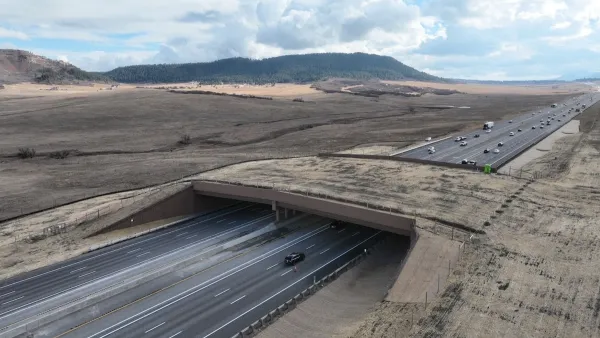
Record-breaking wildlife overpass in Colorado brings 91% reduction in animal collisions
Prior to the overpass, vehicles were hitting one deer per day on Colorado’s Interstate 25.

Detroit to transform waterfront with $2.2 billion investment
Developers will convert about 18 acres of unused parking lot space into civic spaces.

‘Going backwards:’ Baltimore mayor, students rally against state's transit funding plan
Maryland's proposed six-year plan provides no funding for Baltimore’s BMORE bus program and reduces its road maintenance funding.

Trump wants to cancel nearly 98% of funding for HUD housing support program
Multiple housing groups are suing the administration in an effort to preserve the funding.

FREE Course: Walkable City 1: Why Walkability?
After describing his path towards focusing on walkability as the essence of good planning, Jeff Speck marches through his five principal reasons for making more walkable places.
Reinventing Malls: Planning Alchemy—Turning Gray Fields Into Gold
The course focuses on the opportunities and imperatives that shape reinvention of mall sites.

City of Thousand Oaks
City of Wisconsin Rapids
Harvard University Graduate School of Design
The Architects Foundation
University of Cincinnati Online
Northern Illinois Transit Authority (NITA)
The Pocatello Development Authority
The Urban Renewal Agency of the City of Pocatello