What will America's housing market look like in a decade? Will suburban homes make a comeback? Will the popularity of smaller units in urban environments continue to rise? Robert Shiller looks into his housing market crystal ball and sees haze.


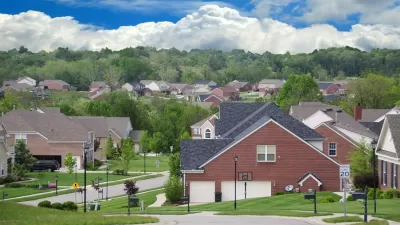
Shiller looks at broad historical trends in homeownership - housing near factories and warehouses in the 19th century, streetcar suburbs in the early twentieth, and the rise of the sprawling suburbs following the path of the nation's highway system - and wonders what the next decade will bring. He looks at current trends, such as walkable urbanism and rental homes, but isn't ready to affirm those trends will continue.
"In the wake of the housing crisis, and amid shifting demographics, it’s plausible that a broad change in thinking is ahead, reducing demand for large suburban homes. After all, the national psyche has absorbed the tribulations of the millions of people who have been living in homes worth less than their mortgages, struggling to make payments and yet unable to sell. Smaller living quarters may become more socially acceptable."
"If you want to settle down for a quiet life and watch your children grow up in a nice neighborhood, you might well act now to lock in an ultralow mortgage rate. Then again, if you’re restless, ambitious and determined to be mobile, it might be sensible to rent rather than own. Calculating the best economic return may not even be possible, given the uncertain investment potential."
Read the full story: Today’s Dream House May Not Be Tomorrow’s

U.S. Rental Market Crosses a New Threshold of Affordability
In a first for the country's rental market, most U.S. apartments are asking for more than $2,000 to rent, according to data recently published by Redfin.
HOAs Fight Back Against Institutional Investors
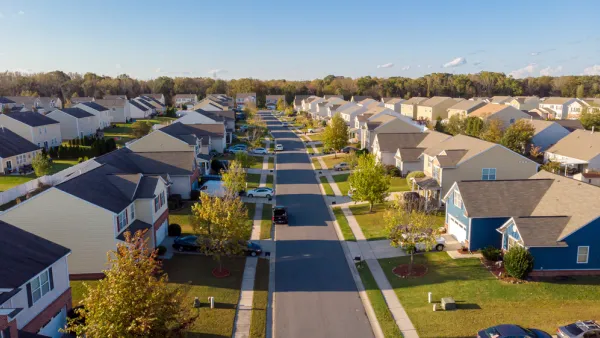
A growing number of homeowners associations around the country are using old legal tools to keep institutional investors from buying up, and renting out, the neighborhood.

L.A.'s Pandemic Rent Cap to Stay in Place Until 2023
Landlords have been unable to raise rents on rent stabilized apartments in Los Angeles since March 2020. Unlike in other large cities with similar rules, Los Angeles won't be removing the rent cap anytime soon.

Planetizen Federal Action Tracker
A weekly monitor of how Trump’s orders and actions are impacting planners and planning in America.

California plans to bury El Niño’s downpour
If the state plays its cards right, it may be able to store a billion acre-feet of El Niño’s water in aquifers.

Desperate measures: Advocates weigh draining Lake Powell to fill Colorado River
Draining the reservoir could reduce evaporation losses by a couple hundred thousand acre-feet.

Chicago voters approve permanent festival grounds, penalty for vacant property owners
Currently, major summer and fall festivals take over public parks for weeks at a time, drawing criticism from nearby residents

NYC votes to cut outdoor dining red tape, speed up permitting
New York City also voted to allow the Department of Transportation to begin work on urgent projects before notifying elected officials.

California appears to reject Prop. 45
The proposition would have expanded the projects that qualify for a streamlined environmental review, effectively paring down the California Environmental Quality Act.

FREE Course: Walkable City 1: Why Walkability?
After describing his path towards focusing on walkability as the essence of good planning, Jeff Speck marches through his five principal reasons for making more walkable places.
Reinventing Malls: Planning Alchemy—Turning Gray Fields Into Gold
The course focuses on the opportunities and imperatives that shape reinvention of mall sites.

City of Rosemead
Rutgers University, Edward J. Bloustein School of Planning and Public Policy
One Hundred Miles
Hunter College, City University of New York (CUNY)
The Architects Foundation
University of Cincinnati Online
City of Cambridge
Montrose County
The Pocatello Development Authority