The divergent routes to approvals for two apartment complex developments just a mile apart show how important it is to engage both government and the surrounding community early in the process.


Two apartment projects located about a mile apart on a major District of Columbia arterial provide contrasting approaches to residential development.
According to a report by Jonathan O'Connell, the Cafritz Enterprises development farther north has met with neighbor resistance because of a glass facade that does not mesh with the surroundings and because the developer gave the impression of resuming activity on a site surrounded by single-family homes that has been vacant for 23 years rather quietly.
In contrast, the Saul Centers development near Van Ness Metro Station is a TOD on a site that recently housed a shopping center. Neighbors have bought into a vision of a mixed-use hub that could develop into another Dupont Circle or Chevy Chase with round-the-clock activity.
Read the full story: Split in public opinion for two Connecticut Avenue apartment projects
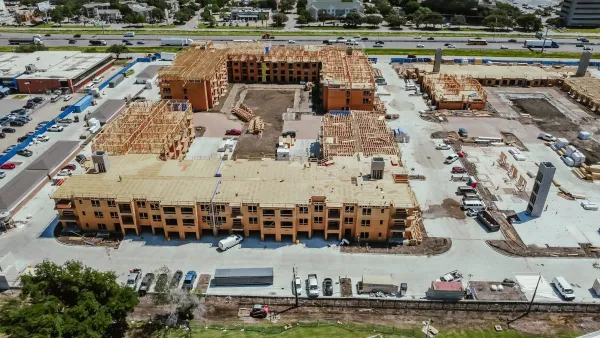
Controversial Texas housing law has 'directly facilitated' over 1,250 new homes
SB 840 allows developers to build multifamily housing by-right on lots zoned for commercial use without applying to a zoning change.
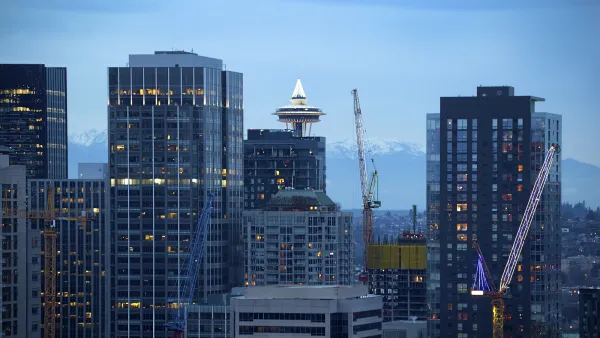
Seattle has Built Over 14,000 Affordable Units Since 2020 — More Than Any Other US Metro
Despite being ahead of other cities, Seattle is still short more than 150,000 affordable units.
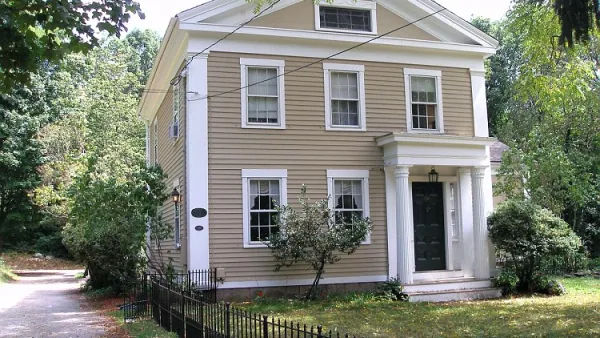
Small Connecticut Town Approves Controversial 96-Unit Apartment Complex
Just 1.4 percent of housing in the affluent enclave of Woodbridge qualifies as affordable.

Planetizen Federal Action Tracker
A weekly monitor of how Trump’s orders and actions are impacting planners and planning in America.

California plans to bury El Niño’s downpour
If the state plays its cards right, it may be able to store a billion acre-feet of El Niño’s water in aquifers.

Desperate measures: Advocates weigh draining Lake Powell to fill Colorado River
Draining the reservoir could reduce evaporation losses by a couple hundred thousand acre-feet.

In Texas, data centers are swallowing promised parkland
Residents who moved to Taylor, Texas for a rural community now have to contend with three data centers in their backyard.

How a Chicago-sized wind farm beat the odds and powered on
The project spanned five presidential administrations and a standoff with a U.S. military base.

MTA gives itself 30 days to transform pit into basketball court
The site has been under construction since 2022; the city originally estimated it would finish the court in 2024.

FREE Course: Walkable City 1: Why Walkability?
After describing his path towards focusing on walkability as the essence of good planning, Jeff Speck marches through his five principal reasons for making more walkable places.
Reinventing Malls: Planning Alchemy—Turning Gray Fields Into Gold
The course focuses on the opportunities and imperatives that shape reinvention of mall sites.

City of Rosemead
Rutgers University, Edward J. Bloustein School of Planning and Public Policy
One Hundred Miles
Hunter College, City University of New York (CUNY)
The Architects Foundation
University of Cincinnati Online
City of Cambridge
Montrose County
The Pocatello Development Authority