Angie Schmitt looks at how America's institutions of higher learning are embracing progressive transportation demand management strategies to cut costs, expand their footprints, and encourage healthier lifestyles.


"Colleges and universities — by nature of their fixed locations and limited resources — are excellent laboratories for transportation innovation, says [Jeffrey] Tumlin, who now works for the firm Nelson\Nygaard." And as a series of articles on the TDM approaches of Stanford, MIT, and the University of Colorado-Boulder illustrate, "[m]any schools are now well ahead of even the most progressive cities and state DOTs when it comes to saving money and improving public health by reducing car trips."
"Right now, as schools struggle with declining public funding, more colleges and universities than ever are embracing the cost-saving approach of TDM. The times simply demand innovation, says Tumlin."
Check out each of the articles in the series to see some of the innovative strategies being utilized to get students and staff to leave their cars behind.
Read the full story: Transport U: Colleges Save Millions By Embracing Policies to Reduce Driving

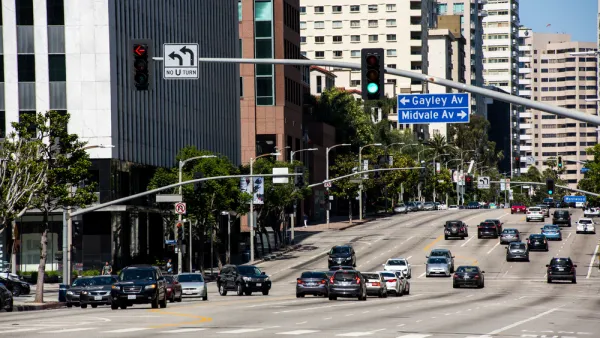
Reducing Car Trips in L.A.: Transportation Demand Management Ordinance Could Be Expanded
The proposed expansion would affect smaller multi-family developments and include incentives for reducing travel during peak hours and encouraging transit, walking, and biking.
Improving Mobility Requires a Multimodal Consideration of Congestion
As urban populations increase and drivers seek to escape crowded commutes, America's urban transit systems are becoming increasingly congested. For TDM professionals to improve mobility for all, they must first change how they conceive of congestion.
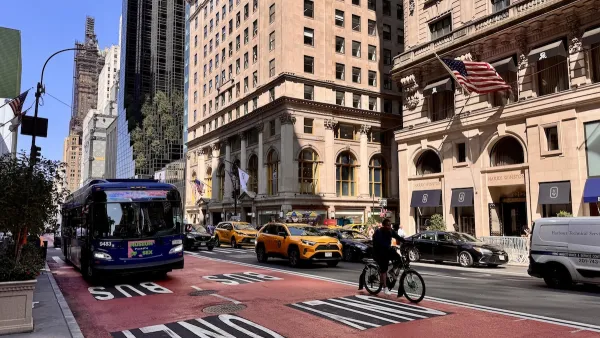
Congestion Costing Reality Check, Part 3: Smart congestion relief
There are many better ways to reduce congestion in your city than expensive roadway expansion projects. Win-win strategies reduce congestion and provide many other benefits.

Planetizen Federal Action Tracker
A weekly monitor of how Trump’s orders and actions are impacting planners and planning in America.

California plans to bury El Niño’s downpour
If the state plays its cards right, it may be able to store a billion acre-feet of El Niño’s water in aquifers.

Chicago breaks ground on $3 billion megadevelopment
The new neighborhood, titled Foundry Park, will one day host 3,700 residences.

California High-Speed Rail Authority CEO resigns after $600,000 scandal
Under Ian Choudri, the authority used taxpayer dollars to fund first class flights and trips to nightclubs.

Want to study the Missouri River? Soon, you may need unanimous approval from 10 states
Legislation would require 10 governors’ permission to study or build projects moving water outside the basin.

Desperate measures: Advocates weigh draining Lake Powell to fill Colorado River
Draining the reservoir could reduce evaporation losses by a couple hundred thousand acre-feet.

FREE Course: Walkable City 1: Why Walkability?
After describing his path towards focusing on walkability as the essence of good planning, Jeff Speck marches through his five principal reasons for making more walkable places.
Reinventing Malls: Planning Alchemy—Turning Gray Fields Into Gold
The course focuses on the opportunities and imperatives that shape reinvention of mall sites.

City of Rosemead
Rutgers University, Edward J. Bloustein School of Planning and Public Policy
One Hundred Miles
Hunter College, City University of New York (CUNY)
The Architects Foundation
University of Cincinnati Online
City of Cambridge
Montrose County
The Pocatello Development Authority