With an "unprecedented" amount of development applications waiting for review, and the impending arrival of light rail linking to downtown L.A., seaside Santa Monica is growing up, literally. Sam Lubell examines the city's "development tsunami."


"Once upon a time, Santa Monica was a sleepy beach town, far removed from the ruckus of Los Angeles," writes Lubell. "That day has long passed. As the economy recovers from the recession, the city is poised to become one of the development and architectural capitals of Southern California."
"More than 35 projects have applied for development agreements in the city, the majority of them multiple-story, mixed-used developments. Many of the architects involved are internationally recognized, such as Frank Gehry, OMA, and Pugh + Scarpa."
However, as should be expected in a city going through dramatic growing pains, "[t]here are several critics of all this development," notes Lubell. "Most protesters claim that while development will be focused on downtown, that won’t stop traffic and other problems from spreading throughout the city. One vocal neighborhood group, the Santa Monica Coalition for a Livable City, called the upcoming projects a 'tsunami of development' and complained about the increased traffic and environmental impact that the new construction would bring."
Read the full story: Development Tsunami

CA city to shut down airport, transform it into utopian park
The western side of the 200-acre park will feature a dog park, nature education center and arboretum.

Judge orders Waymo to stop using 2 Santa Monica charging stations after noise complaints
Neighbors have asked the city to ban the company from using charging stations in residential areas between 11pm and 6am.
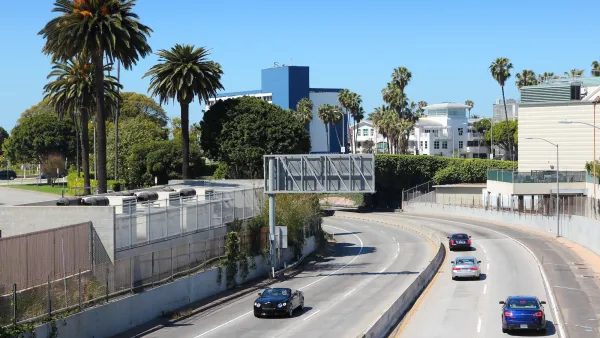
Santa Monica gets $2M grant to study I-10 freeway cap
City officials want to explore capping or even removing a portion of the freeway in the Pico neighborhood.

Planetizen Federal Action Tracker
A weekly monitor of how Trump’s orders and actions are impacting planners and planning in America.

California plans to bury El Niño’s downpour
If the state plays its cards right, it may be able to store a billion acre-feet of El Niño’s water in aquifers.

Desperate measures: Advocates weigh draining Lake Powell to fill Colorado River
Draining the reservoir could reduce evaporation losses by a couple hundred thousand acre-feet.

Housing is the top priority of Seattle’s sole new councilmember
Jenks campaigned on building 1,000 new units of affordable housing.

New tax cuts may slash $1.5 billion in funding for Miami transit, public parks
Amendment 3 will save Miami-Dade homeowners $2,700 in 2028.

Arizona, Wisconsin, Pennsylvania hope to finally advance climate goals post-midterms
The three states have spent years under Republican or divided control.

FREE Course: Walkable City 1: Why Walkability?
After describing his path towards focusing on walkability as the essence of good planning, Jeff Speck marches through his five principal reasons for making more walkable places.
Reinventing Malls: Planning Alchemy—Turning Gray Fields Into Gold
The course focuses on the opportunities and imperatives that shape reinvention of mall sites.

City of Rosemead
Rutgers University, Edward J. Bloustein School of Planning and Public Policy
One Hundred Miles
University of Michigan School for Environment and Sustainability (SEAS)
Hunter College, City University of New York (CUNY)
The Architects Foundation
City of Cambridge
Montrose County
The Pocatello Development Authority