Have you noticed the architectural trend in spicing up bland glass skyscrapers with forests of foliage? Tim de Chant strips away this veneer of extreme greenwashing by explaining why trees won't grow on a ledge 500 feet high.


"Want to make a skyscraper look trendy and sustainable? Put a tree on it. Or better yet, dozens. Many high-concept skyscraper proposals are festooned with trees. On the rooftop, on terraces, in nooks and crannies, on absurdly large balconies. Basically anywhere horizontal and high off the ground."
But according to de Chant, these visions aren't realistic. Wind, temperature extremes, and logistical concerns are just some of the elements that conspire to make the tops of skyscrapers an inhospitable place for trees, he explains.
"Now if someone want to gin up a tree that can survive on top of a skyscraper, go ahead, I guess. But I can think of far better things we should be putting our time and effort into, like preserving places that already have trees growing on them or planting more on streets that need them."
Read the full story: Can we please stop drawing trees on top of skyscrapers?

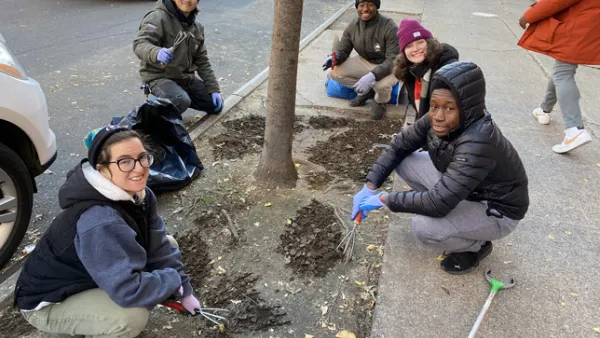
NYC plants over 18,000 trees, the most new foliage in a decade
Many of the trees were planted in communities vulnerable to extreme heat.
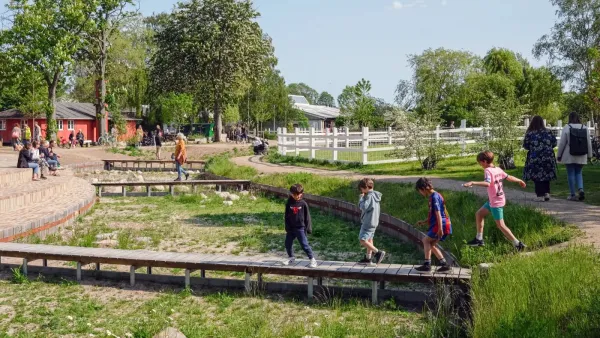
Copenhagen is losing its cool
In a city long designed to maximize light during dark Scandinavian winters, climate change is forcing the Danish capital to rethink its relationship with the sun.
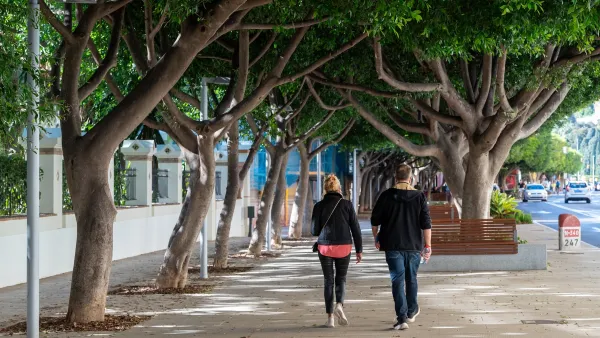
Green blocks are up to 4 degrees cooler than treeless streets
The difference in temperature created by urban trees can translate to as much as 40% less excess heat.

Planetizen Federal Action Tracker
A weekly monitor of how Trump’s orders and actions are impacting planners and planning in America.

Amtrak, CN end decades-long dispute with eight-year agreement
The new operating agreement establishes an updated framework for the companies to work together, including processes to resolve disputes.

Northwest rail fans eager for Sept. 30 debut of Amtrak’s Airo fleet
Get ready for that new train smell and more seats. But they won’t go faster or run more frequently on the Cascades route in Washington and Oregon.

Brightline Florida files for bankruptcy
The transit company is over $5 billion in debt.

St. Louis Metro to test if single-car trains can reduce operating costs, maintain rider satisfaction
The pilot program will run from October to spring 2027, and begin with one single-car train operating on Metrolink’s Red and Blue lines.

Pennsylvania is building data centers in abandoned mines
Housing data centers in mines provides an alternative to destroying local forests and may spare residents from data centers’ noise and air pollution.

FREE Course: Walkable City 1: Why Walkability?
After describing his path towards focusing on walkability as the essence of good planning, Jeff Speck marches through his five principal reasons for making more walkable places.
Reinventing Malls: Planning Alchemy—Turning Gray Fields Into Gold
The course focuses on the opportunities and imperatives that shape reinvention of mall sites.

City of Thousand Oaks
City of Wisconsin Rapids
Harvard University Graduate School of Design
The Architects Foundation
University of Cincinnati Online
The Pocatello Development Authority
The Urban Renewal Agency of the City of Pocatello