Biking can be a formidable economic development tool, argues James A. Bacon, who examines several ways in which investment in bicycle infrastructure can create wealth and jobs.


"It is commonly said among cycling enthusiasts that if you build the biking amenities, the cyclists will come," notes Bacon. "The challenge is persuading government, business and civic decision makers to put money into bicycle amenities at a time when resources are scarce and public needs are many."
In many communities, the strongest argument that can be made for directing policy and investment to an issue is to point out the benefits in job and wealth creation. So for those interested in "more bike lanes, parking spaces for bikes, bike-friendly traffic laws and the like," says Bacon, "make the link to economic development."
He examines three ways in which bicycle amenities can create value in the vicinity of Richmond, Virginia:
- Cycling stimulates tourism
- Cycling trails and property values
- Cycling, place making and livability
Read the full story: Bicycles and Economic Development

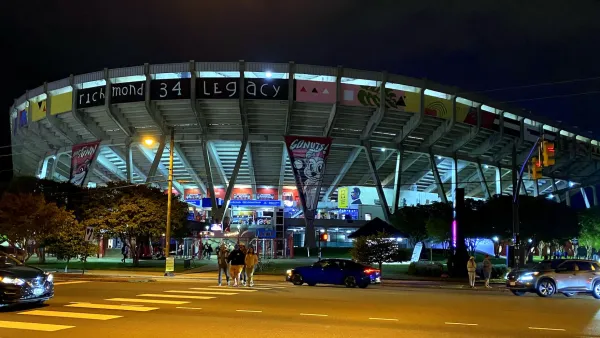
Richmond's new 'stadium district' will include hundreds of homes, offices, jobs
The city is planning for a neighborhood revival in the area around a new baseball stadium.
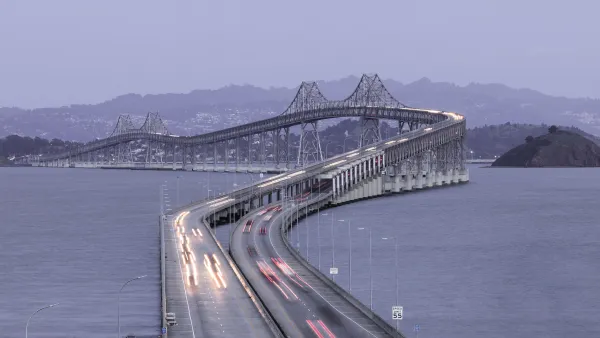
Phantom Tollbooths: Caltrans to Remove Bay Area Bridge Toll Booths Defunct Since 2020
The Richmond-San Rafael Bridge will be the first in the Bay Area to eliminate toll booths entirely in favor of open-road tolling using sensors.
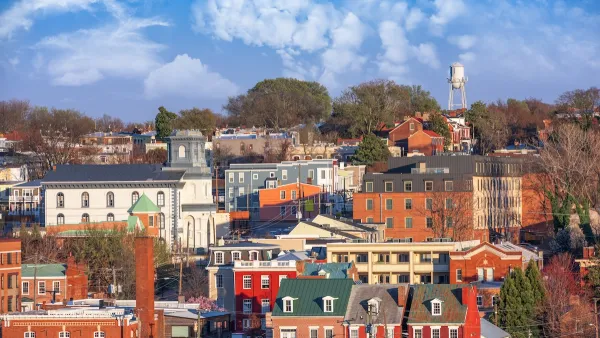
Data Centers are Crushing Communities. One Virginia County is Changing That.
Henrico County’s innovative approach uses tax revenue from data centers to fund affordable housing.

Planetizen Federal Action Tracker
A weekly monitor of how Trump’s orders and actions are impacting planners and planning in America.

Amtrak, CN end decades-long dispute with eight-year agreement
The new operating agreement establishes an updated framework for the companies to work together, including processes to resolve disputes.

Northwest rail fans eager for Sept. 30 debut of Amtrak’s Airo fleet
Get ready for that new train smell and more seats. But they won’t go faster or run more frequently on the Cascades route in Washington and Oregon.

Trump administration unlawfully slashed $7 billion in clean energy grants, judge rules
The Environmental Protection Agency ended the Solar For All program, which provided the grants, after President Donald Trump’s inauguration.

Record-breaking wildlife overpass in Colorado brings 91% reduction in animal collisions
Prior to the overpass, vehicles were hitting one deer per day on Colorado’s Interstate 25.

California lawmakers approve just 5% of much-needed LA28 transportation funding
State legislators appear just as unwilling as Trump to pay for Olympics-related transportation projects.

FREE Course: Walkable City 1: Why Walkability?
After describing his path towards focusing on walkability as the essence of good planning, Jeff Speck marches through his five principal reasons for making more walkable places.
Reinventing Malls: Planning Alchemy—Turning Gray Fields Into Gold
The course focuses on the opportunities and imperatives that shape reinvention of mall sites.

City of Thousand Oaks
City of Wisconsin Rapids
Harvard University Graduate School of Design
The Architects Foundation
University of Cincinnati Online
The Pocatello Development Authority
The Urban Renewal Agency of the City of Pocatello