For a state that prides itself on being a nature lovers' paradise, a growing struggle with hazardous air pollution threatens Utah's very identity. Dan Frosch examines the factors contributing to the epidemic, and some of the proposed solutions.


Utah's unique topography attracts nature lovers and outdoor enthusiasts from around the world. Unfortunately, it also helps to create a vexing pollution problem "where atmospheric inversions during the winter months lead to a thick fog of dirty air cloaking the [Wasatch Front]." And it seems to be getting worse. "According to [Utah’s Division of Air Quality], Salt Lake County has experienced 22 days this winter in which pollution levels exceeded federal air quality standards, compared with just one last year."
"The air pollution has gotten so bad at times that it has prompted warnings from local doctors, spawned protests at the State Capitol and led to a variety of legislative proposals in the hopes of confronting the problem before it gets worse," writes Frosch.
“'If the 40,000 women in Utah who are pregnant suddenly started smoking, that would constitute a genuine health emergency,' said Dr. Brian Moench, an anesthesiologist who leads Utah Physicians for a Healthy Environment, a group that has urged Gov. Gary R. Herbert, a Republican, to declare a public health emergency. 'But our levels of air pollution are causing the exact same consequences as if all these women were smoking.'”
"In an interview on Thursday, Governor Herbert said the state had taken a number of steps to address the pollution: urging people to take mass transit, meeting with energy companies to develop emission reduction plans and reducing the use of state vehicles."
Read the full story: Seen as Nature Lovers’ Paradise, Utah Struggles With Air Quality
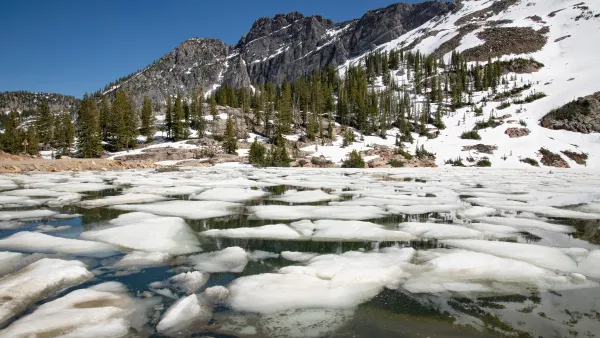
‘Snow-eater’ heat waves are increasing in frequency, study finds
During intense spring heatwaves, snow melts nearly twice as fast as usual and can overwhelm city reservoirs.
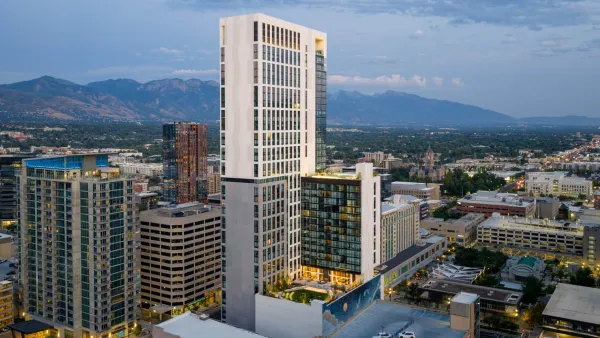
Downtown Salt Lake City Skyscraper Cleans the air Around it
The newly built Astra Tower filters air for its own residents and for the city.
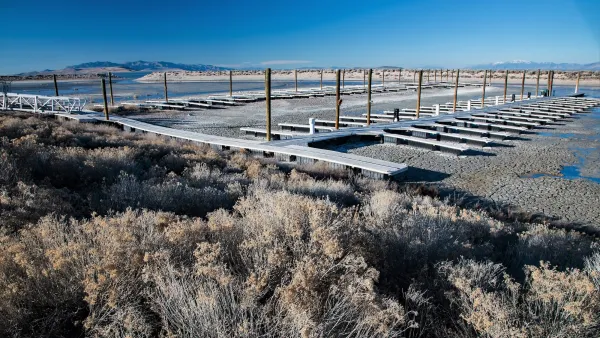
Dust From Exposed Great Salt Lake Bed Threatens Utah’s Air Quality
The lake ended 2025 with the third-lowest water level in a century.

Planetizen Federal Action Tracker
A weekly monitor of how Trump’s orders and actions are impacting planners and planning in America.

Eastern Nebraska is running out of electricity
Data centers and electrification are straining eastern Nebraska’s grid, throttling economic development.

Move over, LA: St. Louis gears up for Olympics, invests millions in downtown redevelopment
The Missouri city will host the 2028 Olympic soccer group stage and knockout matches.

Dallas releases zoning code overhaul to officials
The drafted overhaul is over 400 pages long.

NYC renovations for dangerous, ‘mercilessly crammed’ street delayed until 2027
Construction was supposed to begin this fall.

San Diego’s Midway Rising project gets greenlight from city council
The project looks to become the largest affordable housing development in California's history.

FREE Course: Walkable City 1: Why Walkability?
After describing his path towards focusing on walkability as the essence of good planning, Jeff Speck marches through his five principal reasons for making more walkable places.
Reinventing Malls: Planning Alchemy—Turning Gray Fields Into Gold
The course focuses on the opportunities and imperatives that shape reinvention of mall sites.

City of Rosemead
Rutgers University, Edward J. Bloustein School of Planning and Public Policy
One Hundred Miles
University of Michigan School for Environment and Sustainability (SEAS)
Hunter College, City University of New York (CUNY)
The Architects Foundation
City of Cambridge
The Pocatello Development Authority
The Urban Renewal Agency of the City of Pocatello