In a preview of his statewide transportation plan, Mass. Gov. Deval Patrick unveiled an ambitious agenda and an appetizing menu of potential funding options on Monday. The final plan released yesterday has some wanting to send their meals back.


First the good news. On Monday, Massachusetts governor Governor Deval Patrick unveiled an ambitious plan for reinvigorating "the state’s beleaguered transportation system," report Eric Moskowitz and Michael Levenson. "In a presentation earlier in the day at the University of Massachusetts Boston, Patrick unveiled what analysts and advocates considered perhaps the fullest accounting ever of the state’s transportation red ink, coupling plans to balance annual budgets with targeted spending on infrastructure, mostly to fix and modernize highway and transit systems."
In order to fund the $1.02 billion a year necessary to implement “The Way Forward” plan, Patrick identified a "menu" of potential funding sources from which he would select his preferred option in Wednesday's State of the Commonwealth address. The menu included, "[p]rogressive ideas from a vehicle miles traveled (VMT) tax to a 'green' fee would help align transportation costs with use and wear."
Now the let down. "[J]ust two days after outlining a menu of funding options, the Patrick administration proposed only raising income taxes to pay for repairs and improvements around the state," reports the blog Boston Streets.
Angie Schmitt summarizes Patrick’s proposal thus: "[It] doesn’t contain a vehicle miles traveled fee, which was endorsed by a state-appointed panel. Nor does it contain the tax on parking facilities that intrigued Governing Magazine. Instead, like Virginia Governor Bob McDonnell’s recent transportation funding proposal, the package doesn’t ask motorists to contribute anything. While he won’t be taking the extreme step of eliminating the state’s gas tax, as McDonnell wants to do, Patrick is going to pay for the state’s transportation needs by adding a new tax on productive work instead of driving."
Perhaps Patrick could learn something from Republican Governor Rick Snyder of Michigan, who this week proposed raising gas taxes to pay for his state's road repairs.
Read the full story: Massachusetts’ Anticipated Transpo Funding Plan Is a Big Ol’ Let Down
Increasing State Gas Taxes Insufficient To Meet Road Projects' Costs
In her ongoing coverage of Missouri's I-70 expansion and state transportation deficits, Streetsblog's Angie Schmitt analyzes MO's consideration to double the state 17-cent state gas tax to finance the truck only lanes from Kansas City to St. Louis
Increase Funding or Raise Taxes?
Transit advocates may be louder than highway backers for the first time in discussions about the next authorization bill, but highway supporters warn less highway funding means less gasoline taxes.
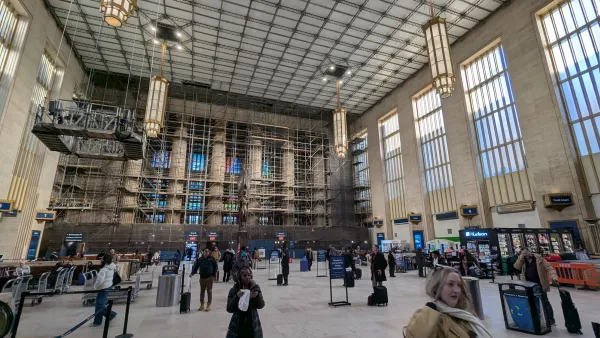
Pennsylvania 12-year transportation plan commits $13B for transit
The state's new mid-range transportation strategy includes nearly $17 billion for roads and bridges and $367 million for multimodal projects.

Eastern Nebraska is running out of electricity
Data centers and electrification are straining eastern Nebraska’s grid, throttling economic development.

Move over, LA: St. Louis gears up for Olympics, invests millions in downtown redevelopment
The Missouri city will host the 2028 Olympic soccer group stage and knockout matches.
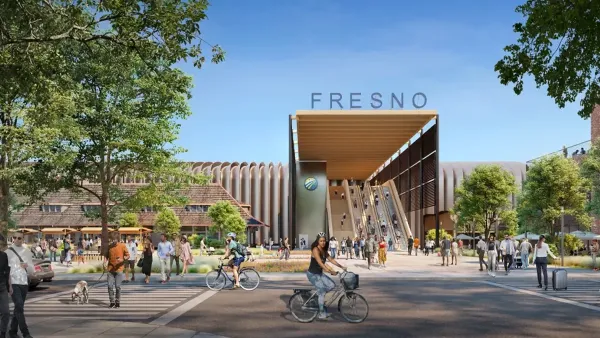
California High-Speed Rail Authority picks trainset manufacturer
The California High-Speed Rail Authority aims to start servicing passengers by 2033.

NYC renovations for dangerous, ‘mercilessly crammed’ street delayed until 2027
Construction was supposed to begin this fall.

San Diego’s Midway Rising project gets greenlight from city council
The project looks to become the largest affordable housing development in California's history.

Bill to overhaul energy permitting clears Senate
The Bipartisan American Affordability and Jobs Act of 2026 still needs to pass the House of Representatives.

FREE Course: Walkable City 1: Why Walkability?
After describing his path towards focusing on walkability as the essence of good planning, Jeff Speck marches through his five principal reasons for making more walkable places.
Reinventing Malls: Planning Alchemy—Turning Gray Fields Into Gold
The course focuses on the opportunities and imperatives that shape reinvention of mall sites.

City of Rosemead
Rutgers University, Edward J. Bloustein School of Planning and Public Policy
One Hundred Miles
University of Michigan School for Environment and Sustainability (SEAS)
Hunter College, City University of New York (CUNY)
The Architects Foundation
City of Cambridge
The Pocatello Development Authority
The Urban Renewal Agency of the City of Pocatello