Please be careful if you're out walking late tonight and tomorrow: January 1st is the deadliest day of the year for pedestrians. The outlook for drivers isn't much better, writes Sarah Kliff.


Those behind the wheel aren't the only ones who should be wary of the perils of overindulgence on the last day of the holiday season.
"Researchers in the journal Injury Prevention counted 99 pedestrian deaths on Jan. 1 between 1986 and 2002, making it the deadliest day for pedestrians in the calendar year. Those deaths were more likely to occur in the early hours of the morning, with 48 percent happening between midnight and 6 a.m. Overall, only 20 percent of pedestrian deaths happen in that time frame," says Kliff.
"New Year’s Day isn’t a great time to be in a car, either. Overall, New Year’s Day has the fifth-highest number of car crash deaths (July 4 tops the list)."
Read the full story: New Year’s is the deadliest day for pedestrians

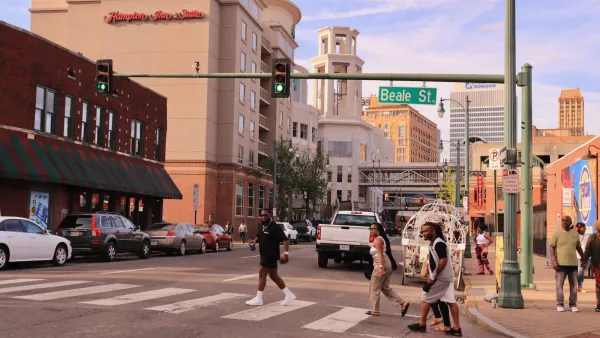
Memphis is the nation's most dangerous city for pedestrians
Memphis had the highest rate of traffic deaths for people walking in the US for two years in a row.
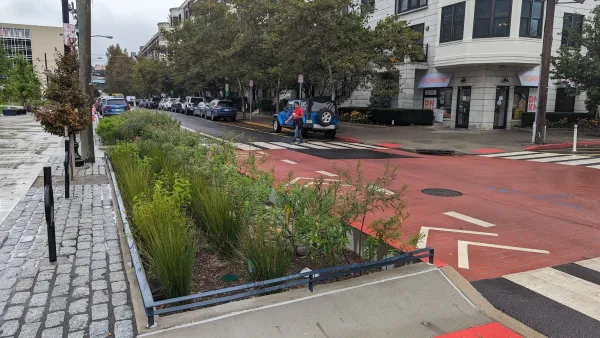
Hoboken's $20 Vision Zero fix
The New Jersey city eliminated traffic deaths for the last nine years in a row.
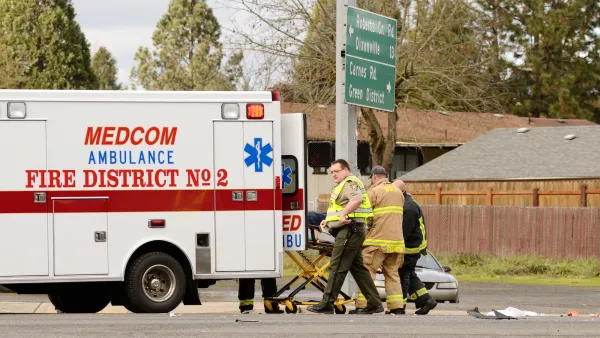
'Dangerous by Design' 2026 report highlights 72% increase in pedestrian deaths since 2009
Although US traffic deaths dropped in the last two years, the number of people killed on US roads remains much higher than two decades ago.

Planetizen Federal Action Tracker
A weekly monitor of how Trump’s orders and actions are impacting planners and planning in America.

Amtrak, CN end decades-long dispute with eight-year agreement
The new operating agreement establishes an updated framework for the companies to work together, including processes to resolve disputes.

Northwest rail fans eager for Sept. 30 debut of Amtrak’s Airo fleet
Get ready for that new train smell and more seats. But they won’t go faster or run more frequently on the Cascades route in Washington and Oregon.

Caltrain may slash over one-third of its stations
If Bay Area voters reject two transit tax measures, Caltrain, BART and AC Transit will see steep service cuts.

A 'dangerous' precedent: North Carolina successfully pressures communities into voting for toll roads
Two mayors resigned from the Charlotte Regional Transportation Planning Organization after it voted in favor of the toll roads.

Austin landlords only need to address mold when it covers 25 sqft. A resolution looks to change that
The city manager will propose updates to the city code regarding regulations around mold in May.

FREE Course: Walkable City 1: Why Walkability?
After describing his path towards focusing on walkability as the essence of good planning, Jeff Speck marches through his five principal reasons for making more walkable places.
Reinventing Malls: Planning Alchemy—Turning Gray Fields Into Gold
The course focuses on the opportunities and imperatives that shape reinvention of mall sites.

City of Thousand Oaks
City of Wisconsin Rapids
Harvard University Graduate School of Design
The Architects Foundation
University of Cincinnati Online
The Pocatello Development Authority
The Urban Renewal Agency of the City of Pocatello