As an increasing percentage of the world's population, and economic assets, confront the threats of climate change, the aftermath of Sandy provides an opportunity for New York to set a global example for building stronger, smarter cities.


New York has shown in the past that it can survive extreme events and come back stronger, says Richard Florida, and in the aftermath of Sandy, the area "has an obligation not just to rebuild but to show the world how to rebuild the right way - smarter, greener, more resilient than ever."
In addition to improving flood control and reducing its carbon footprint, Florida argues that the New York region, "must also bolster its resiliency by creating a less centralized power grid with more built-in redundancy, passing regulations that discourage development on floodplains and encourage the restoration of barrier islands and wetlands that can buffer surges and developing technology that facilitates crowdsourcing of critical information."
"Great cities don't restore themselves according to their original blueprints; they adapt to new circumstances and change."
Read the full story: A stronger, smarter New York


HUD Resiliency Awards Target Affordable Multifamily Housing
The Green and Resilient Retrofit program aims to reduce vulnerability to climate challenges and improve energy efficiency in multifamily buildings.

Federal Government Announces National Climate Resilience Framework
The document is designed to guide federal investment into community-driven solutions tailored to local conditions and needs.

Building Resiliency in Rural Power Grids
A National Science Foundation study seeks to understand the impact of climate change and extreme weather on rural electrical grids in diverse geographic areas.

Planetizen Federal Action Tracker
A weekly monitor of how Trump’s orders and actions are impacting planners and planning in America.

‘Going backwards:’ Baltimore mayor, students rally against state's transit funding plan
Maryland's proposed six-year plan provides no funding for Baltimore’s BMORE bus program and reduces its road maintenance funding.
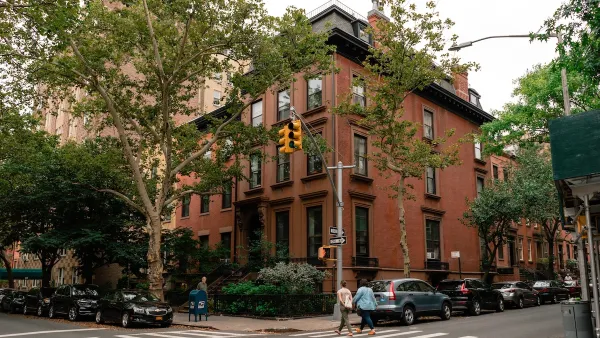
Mamdani sent nearly 6,000 pied-à-terre tax warnings to homes that didn’t qualify
A judge has ordered the administration to cancel thousands of pied-à-terre tax notices after it sent 35% of them erroneously.

Newsom vetoes high-speed rail supervision bill after agency receives condemnatory audit
The audit found the CHSRA approved almost $600,000 in unallowable travel expenses.

Nation sees first electric plane-boat hybrid take off in public demo
The Viceroy Seaglider can fly at speeds of 180mph for up to 180 miles.

One of nation’s poorest counties to receive $6 billion data center
The developers estimate the project will create 200 permanent jobs and 1,000 temporary construction jobs.

FREE Course: Walkable City 1: Why Walkability?
After describing his path towards focusing on walkability as the essence of good planning, Jeff Speck marches through his five principal reasons for making more walkable places.
Reinventing Malls: Planning Alchemy—Turning Gray Fields Into Gold
The course focuses on the opportunities and imperatives that shape reinvention of mall sites.

City of Thousand Oaks
City of Wisconsin Rapids
Harvard University Graduate School of Design
The Architects Foundation
University of Cincinnati Online
Northern Illinois Transit Authority (NITA)
The Pocatello Development Authority
The Urban Renewal Agency of the City of Pocatello