With gasoline increasingly hard to find in New York and many subway lines still down, biking has surged in popularity in the aftermath of Sandy. Bikes are selling briskly and new adherents are jumping in the saddle.


Natalie Erlich reports on the boom in bicycle sales as New York begins to look more like Amsterdam in the aftermath of superstorm Sandy. "'Yesterday we outsold our busiest summer
Saturday,' said Emily Samstag, manager of Bicycle Habitat in Brooklyn,
speaking to a surge in bike-related sales just one day after Hurricane
Sandy ravaged the East Coast. 'Our first customer walked in and said:
'The subways are down so I have to buy a bike'. That was standard all
morning.'"
"All told the shop sold 15 bikes Wednesday," notes Erlich. "In October it usually sells a bike every two weeks."
Bike enthusiasts are hoping the increased interest in bicycle commuting will endure once the transportation crisis subsides. ""Maybe this can be the window into the life of a cyclist," mused Jake
Fleischmann, a salesman at Ride Brooklyn. "Maybe all these people who
had a bike for leisure will see that riding a bike can be your mode of
transportation, especially a city like New York. We are pretty level
ground, you can ride anywhere within a few minutes."
That seems to be the case with Thomas Jarrels, who was a bike messenger in the 1980s but hadn't ridden to work since. "Though it took slightly longer than the train, he said, he
thought he would keep biking even after the subway started running
again," writes Kate Taylor in The New York Times.
"It saves money, and it's less of a headache," he said. "It gives you time to think, meditate and get your exercise on."
Read the full story: Commuters Snatch Up Bicycles in Storm's Wake
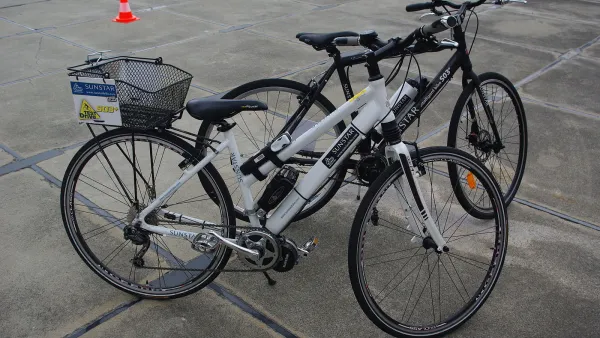
The E-Bike Boom Continues
The popularity of electric bikes doesn't seem to be waning as the devices outpace electric car sales by almost two to one.
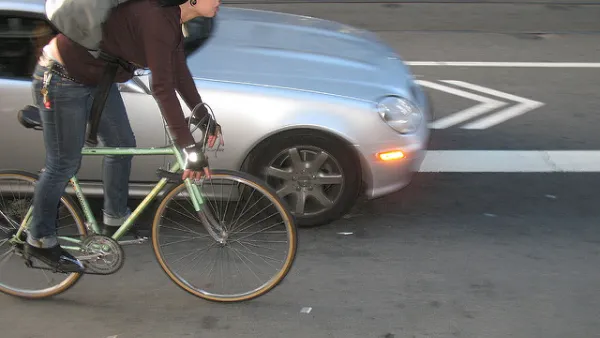
Opinion: Sharrows Are 'Make Believe Infrastructure'
The road markings known as 'sharrows' are meant to make streets safer for cyclists, but critics argue they're nothing but a convenient compromise that favors drivers and fails to improve road safety.
Breaking Down the Federal Bike Commuter Benefit
The flexible credit is meant to support a variety of bike-related expenses, including bike share memberships.

Planetizen Federal Action Tracker
A weekly monitor of how Trump’s orders and actions are impacting planners and planning in America.

Eastern Nebraska is running out of electricity
Data centers and electrification are straining eastern Nebraska’s grid, throttling economic development.

Study reveals best places in the U.S. for cycling, walking
New research from Streetlight Data examines bicycle and pedestrian miles per capita in the 100 largest U.S. cities by population.

DSA members accuse Mamdani of 'abandoning values' over housing redevelopment
New York City's mayor plans to replace about 2,000 units of public housing with private, mixed-income housing.

All sides of BRT debate unhappy with CDOT’s most recent move
The Colorado Department of Transportation is no longer considering center-running bus lanes for Colorado Boulevard.

Massachusetts bogs generate both power, and cranberries
Putting solar panels above farmland is one way Massachusetts is advancing toward its goal of net-zero carbon emissions by 2050.

FREE Course: Walkable City 1: Why Walkability?
After describing his path towards focusing on walkability as the essence of good planning, Jeff Speck marches through his five principal reasons for making more walkable places.
Reinventing Malls: Planning Alchemy—Turning Gray Fields Into Gold
The course focuses on the opportunities and imperatives that shape reinvention of mall sites.

City of Rosemead
Rutgers University, Edward J. Bloustein School of Planning and Public Policy
One Hundred Miles
University of Michigan School for Environment and Sustainability (SEAS)
Hunter College, City University of New York (CUNY)
The Architects Foundation
City of Cambridge
The Pocatello Development Authority
The Urban Renewal Agency of the City of Pocatello