Christopher Hume delivers a forceful argument for why density is necessary for maintaining a prosperous Toronto in the decades ahead, and why the alternative, sprawl, is environmentally unsustainable and economically ruinous.


Hume identifies a national justification for sprawl "on the basis that there will always be more
empty fields to develop" and a deep bias
against density from the many who feel development "should be stopped after
they have what they want."
Despite scary connotations with "shadowy canyons of bleak
high-rise apartment buildings and over-crowded buses lurching along
congested streets...density also means the museum, art galleries, film festivals,
Nuit Blanche and major league sports," says Hume. "Density generates economic activity, i.e. jobs and wealth. And in the
21st century, as never before, the business of the world is transacted
in large urban centres."
While some criticize Toronto's condo boom, the alternative, sprawl, "has long since reached the point where advantages are outweighed by disadvantages." And it is sprawl, after all, not density, that causes congestion.
"What the car hath taken away," concludes Hume, "density will giveth back."
Read the full story: Urban density is key to smart growth
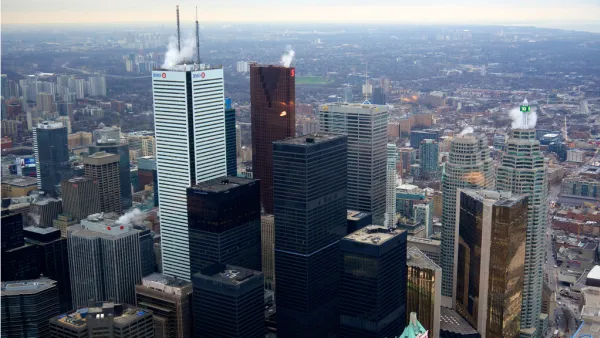
Growth Plan Debate Heats Up in Toronto
The question of how and where to grow is causing controversy in Toronto. A recent op-ed picks a side.
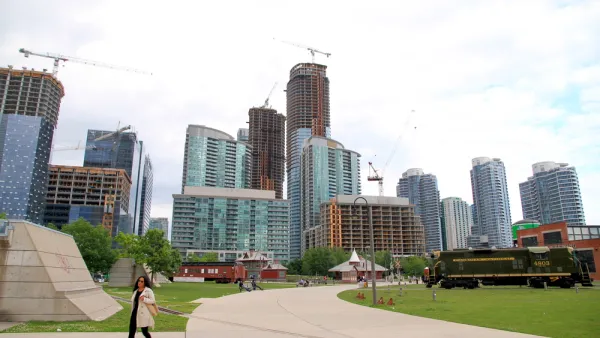
Ontario, Canada Working on Sprawl-Killing Legislation
It's hard to imagine a policy that so comprehensively acts to create disincentives for sprawl gaining political traction anywhere in the United States.
Differing Densities in Three Canadian Cities
This report from The Globe and Mail looks at a recent study of three of Canada's big cities -- Vancouver, Calgary and Toronto -- and compares their densities and development patterns.

Planetizen Federal Action Tracker
A weekly monitor of how Trump’s orders and actions are impacting planners and planning in America.

Washington state to charge fee to drivers with fuel-efficient cars
Revenue from the fee will go towards supporting the state’s highways.
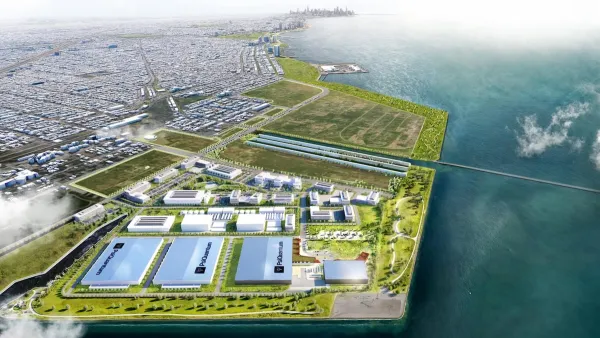
Illinois considers spending $1 billion in taxpayer money on data center
A quantum computing campus and data center are currently under construction in Chicago.

Senate passes bill overhauling permitting
The bill still needs to pass the House.

Did data centers change how voters cast their ballots?
Texas, Ohio, and Georgia all flipped party control. But in rural counties, the effect of local data centers was mixed.

Amtrak invests in eight new Airo trainsets
The new trainsets will begin serving passengers in 2031.

FREE Course: Walkable City 1: Why Walkability?
After describing his path towards focusing on walkability as the essence of good planning, Jeff Speck marches through his five principal reasons for making more walkable places.
Reinventing Malls: Planning Alchemy—Turning Gray Fields Into Gold
The course focuses on the opportunities and imperatives that shape reinvention of mall sites.

City of Charlotte
City of Rosemead
Rutgers University, Edward J. Bloustein School of Planning and Public Policy
University of Michigan School for Environment and Sustainability (SEAS)
Hunter College, City University of New York (CUNY)
The Architects Foundation
University District Partnership