Does a smart city have to pursue sustainability goals? Does it have to utilize the internet to involve citizens? Boyd Cohen tries to put some parameters around the discussion of smart cities - a nebulous term that means many things to many people.


As past articles on the subject demonstrate, the definition of a "smart city" can be stretched to include nearly any city doing some form of planning. As he endeavors to compile his annual rankings of smart cities, Cohen attempts to bring some order to the discussion by creating a vehicle to build "consensus around what a smart city is and what the components of a smart city actually are." To achieve this goal, Cohen introduces, "a new rubric for smart cities, that [he calls] the Smart Cities Wheel," which is oriented around six main "smart" categories.
"Most cities can agree that there is real value in having a smart
economy, smart environmental practices, smart governance, smart living,
smart mobility, and smart people," says Cohen. "Within each of these aspirational
goals, I have included three key drivers to achieving the goal. There
are over 100 indicators to help cities track their performance with
specific actions developed for specific needs."
Cohen goes on to explain a typical three-step process for how a city might, "use the Smart Cities Wheel to develop and implement a smart cities strategy."
Read the full story: What Exactly Is A Smart City?


North America's 10 Smartest Cities
A year after he unveiled his list of North America's top "Smart Cities" based on a new metric meant to bring clarity and measurability to the discussion, Boyd Cohen is back with a refined methodology and a new ranking.
Ranking North America's Smartest Cities
For those of you who've been anxiously waiting since Boyd Cohen published his list of Europe's smartest cities last month...wait no longer, North America's top 10 smartest cities have been revealed.
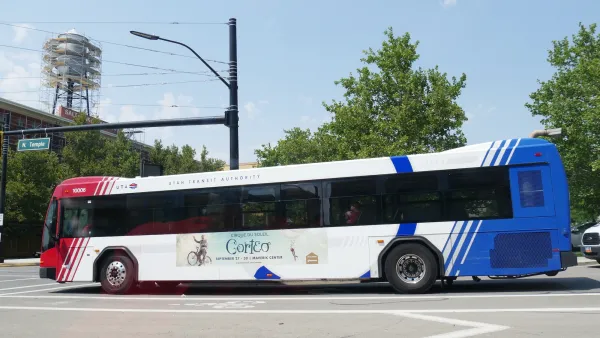
Salt Lake City debuts new bus rapid transit line
The third BRT line in the Utah Transit Authority system connects destinations from Taylorsville to the West Valley.

Planetizen Federal Action Tracker
A weekly monitor of how Trump’s orders and actions are impacting planners and planning in America.

‘Going backwards:’ Baltimore mayor, students rally against state's transit funding plan
Maryland's proposed six-year plan provides no funding for Baltimore’s BMORE bus program and reduces its road maintenance funding.

Detroit to transform waterfront with $2.2 billion investment
Developers will convert about 18 acres of unused parking lot space into civic spaces.

Data center developers are using lawsuits, cash offers to ‘overwhelm’ rural America
Newsrooms in five states worked together to uncover the tactics big tech developers use to buy land from reluctant communities.

U.S.-Iran war may have ‘devastating’ impact on cost to warm homes
Vermont and Maine residents may see a 76% increase in the cost of warming their homes this winter.

Senate bill would ‘overhaul’ environmental permitting laws
Under the proposed act, government agencies would also not be able to suspend or rescind permits after granting them.

FREE Course: Walkable City 1: Why Walkability?
After describing his path towards focusing on walkability as the essence of good planning, Jeff Speck marches through his five principal reasons for making more walkable places.
Reinventing Malls: Planning Alchemy—Turning Gray Fields Into Gold
The course focuses on the opportunities and imperatives that shape reinvention of mall sites.

One Hundred Miles
County of Mendocino
planning NEXT
The Architects Foundation
University of Cincinnati Online
Montrose County
Northern Illinois Transit Authority (NITA)
The Pocatello Development Authority