Harvey Morris surveys recent controversies in France, England, and Germany that have stoked the simmering debate over whether the accelerating gentrification of Europe's major cities is leading to the ghettoization of their urban poor.


With the global recession increasing the gap between "the haves and have-nots" in Europe, as in America, the expense of Europe's major cities has continued to rise, further reducing the areas affordable to lower-income residents.
With ghettoization increasing, lower-income residents and their advocates aren't taking the situation lightly; as recent riots in Amiens, criticism of a plan to demolish Communist-era apartment blocks in central Berlin, and opposition to a proposal to sell municipally-owned homes in expensive neighborhoods in Britain, and move their low-income tenants elsewhere, attest.
Read the full story: Europe’s Cities: Gentrification or Ghettoization?
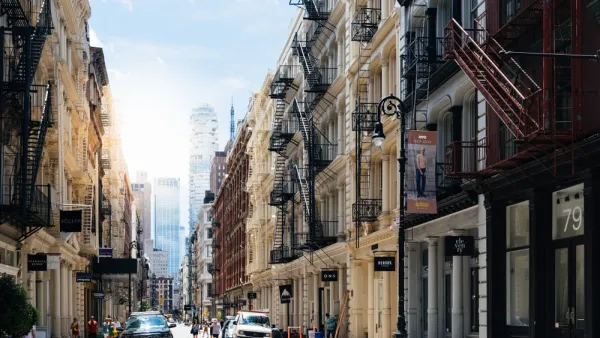
The Growing Urban Inequality Gap, Visualized
Inequality is growing faster in large metropolitan areas, according to a New York Times data visualization.
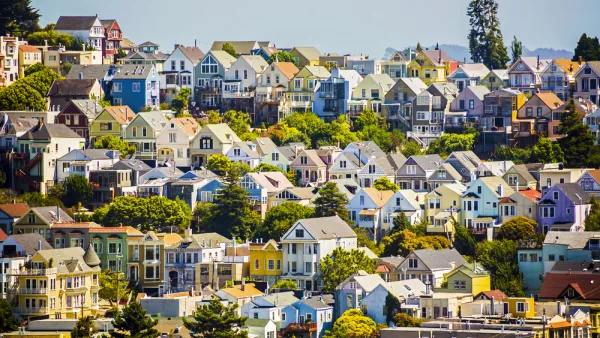
Op-Ed: Only Half of San Francisco is Changing
Using a mid 20th-century painting as his point of reference, Benjamin Schneider points out that the vast, disruptive changes we often associate with San Francisco are only affecting the city's eastern side.
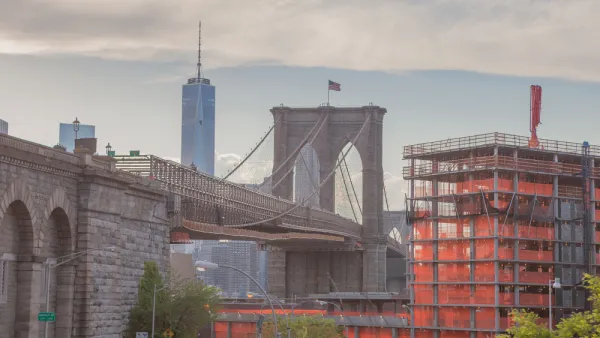
As Cities Have Changed, So Have Richard Florida's Ideas
Call it the re-education, the evolution, or the contrition of Richard Florida, but the "rock-star urbanist" has realized some unintended consequences of his creative class ethos, and he's ready to share a new vision for cities.

Desperate measures: Advocates weigh draining Lake Powell to fill Colorado River
Draining the reservoir could reduce evaporation losses by a couple hundred thousand acre-feet.

Eastern Nebraska is running out of electricity
Data centers and electrification are straining eastern Nebraska’s grid, throttling economic development.

Move over, LA: St. Louis gears up for Olympics, invests millions in downtown redevelopment
The Missouri city will host the 2028 Olympic soccer group stage and knockout matches.

MTA sends Dem leaders a wish list to mend Trump’s damages
Requests include exempting new train and bus components from tariffs and increasing transit security funding.

Mass. votes against statewide minimum lot size for single-family homes
Over 2 million residents voted on Question 7; it was decided by just over 30,000 votes.

Maryland’s $15 billion bridge project gains key approval
The Maryland Transit Authority said the project will create over 60,000 jobs and add $23 billion to the local economy.

FREE Course: Walkable City 1: Why Walkability?
After describing his path towards focusing on walkability as the essence of good planning, Jeff Speck marches through his five principal reasons for making more walkable places.
Reinventing Malls: Planning Alchemy—Turning Gray Fields Into Gold
The course focuses on the opportunities and imperatives that shape reinvention of mall sites.

City of Rosemead
Rutgers University, Edward J. Bloustein School of Planning and Public Policy
One Hundred Miles
University of Michigan School for Environment and Sustainability (SEAS)
Hunter College, City University of New York (CUNY)
The Architects Foundation
City of Cambridge
The Pocatello Development Authority
The Urban Renewal Agency of the City of Pocatello