Stalled for 5 years, the 45-acre NorthPoint mixed use development in East Cambridge re-launches with a new development team and an updated vision for its urban form.


Development is about to start again on a 45-acre abandoned rail yard near Tufts University in East Cambridge. The NorthPoint project will include 2,900 residences, 2 million square feet of laboratory and office buildings, 200,000 square feet of retail space, as well as a number of parks. The site is located near an extension of the Massachusetts Bay Transit Authority green line.
An initial phase of construction stalled out in 2007, leaving largely vacant buildings in its wake. Last year, a new development team took over and revamped the plans, including better urban design elements and pedestrian facilities. As Cambridge City Council member Ken Reeves put it, ""The development team knows the difference between building more buildings and making a great place," Reeves said. "I think we're on the precipice of welcoming a great new neighborhood here.""
The project has received City Council approval, although building design must go through further review. The development will begin early next year with a 19-story residential and retail tower.
Thanks to Rachel Proctor May
Read the full story: Construction of NorthPoint mini-city in Cambridge to Resume

The Massachusetts town that didn't get the T wants a re-do
Fifty years ago, Arlington said no to a stop on the MBTA Red Line connecting it to Boston. Now, the town wants a second chance.
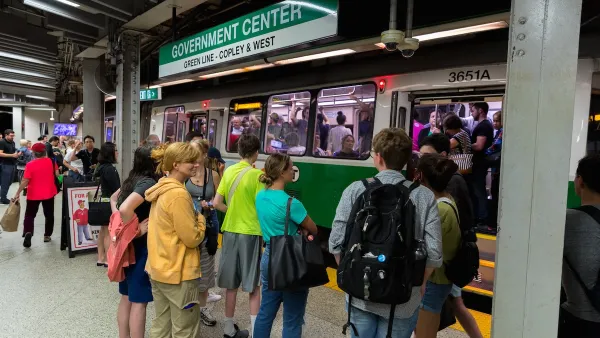
Boston has spent millions making the Green Line more accessible — and there’s no end in sight
While the city has invested millions into expanding and adding platforms to the Green Line to make it more accessible, new train cars set to arrive next year will be too tall for disabled passengers to board without raising the current platforms.
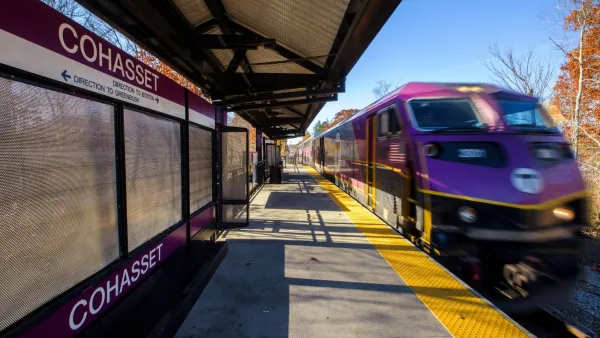
MBTA extends commuter rail discounts and lowers express bus fare to keep passengers riding into the fall
Boston-area commuters can access half-price monthly passes through November.

Planetizen Federal Action Tracker
A weekly monitor of how Trump’s orders and actions are impacting planners and planning in America.

California plans to bury El Niño’s downpour
If the state plays its cards right, it may be able to store a billion acre-feet of El Niño’s water in aquifers.

Desperate measures: Advocates weigh draining Lake Powell to fill Colorado River
Draining the reservoir could reduce evaporation losses by a couple hundred thousand acre-feet.

Los Angeles just elected an urban planner as its mayor
Transportation analysts are optimistic that Raman will be more aggressive in addressing transit issues than Bass.

Mamdani’s pied-à-terre tax survives legal challenge
A panel of judges found that the plaintiffs failed to demonstrate injury as a result of New York City's implementation of the tax.

Eastern Nebraska is running out of electricity
Data centers and electrification are straining eastern Nebraska’s grid, throttling economic development.

FREE Course: Walkable City 1: Why Walkability?
After describing his path towards focusing on walkability as the essence of good planning, Jeff Speck marches through his five principal reasons for making more walkable places.
Reinventing Malls: Planning Alchemy—Turning Gray Fields Into Gold
The course focuses on the opportunities and imperatives that shape reinvention of mall sites.

City of Rosemead
Rutgers University, Edward J. Bloustein School of Planning and Public Policy
One Hundred Miles
University of Michigan School for Environment and Sustainability (SEAS)
Hunter College, City University of New York (CUNY)
The Architects Foundation
City of Cambridge
Montrose County
The Pocatello Development Authority