Facing crippling deficits that have threatened California's vaunted quality of life, the discovery of more than $286 million in state accounts will come as a welcome relief. A sweeping state audit, however, raises more questions than it answers.


It turns out the shocking discovery of $54 million hidden untapped in two of the California Department of Parks and Recreation's funds, as mass park closures loomed, was just the tip of the iceberg. more than $286.5 million that "lawmakers were unaware of as they repeatedly cut government services."
"The new discovery includes about $30 million for healthcare programs,
almost $29 million for reimbursing crime victims and $12.5 million for
cleaning up underground petroleum tanks. It follows revelations that
nearly $113 million was languishing in a recycling program funded with
consumers' bottle deposits and $54 million had gone unreported by state
parks officials.
The irregularities are a particular distraction for [Gov.] Brown as he pushes
voters to pass billions of dollars in tax increases on the November
ballot. Recent opinion polls have suggested many voters want some sign
that California's fiscal house is being put in order before they will
give more money to Sacramento."
Read the full story: California finds $119 million more in untapped funds
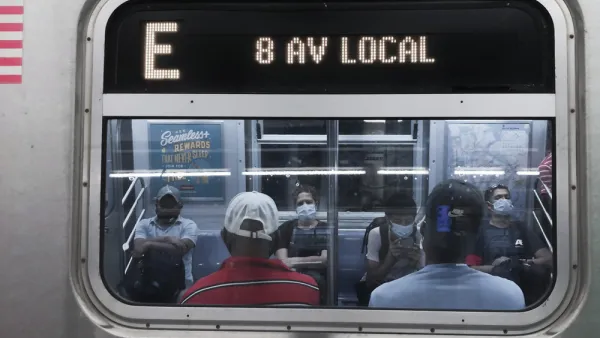
Transit Faces a Fiscal Cliff in New York City—Sooner Than Expected
It's like March 2020 all over again.
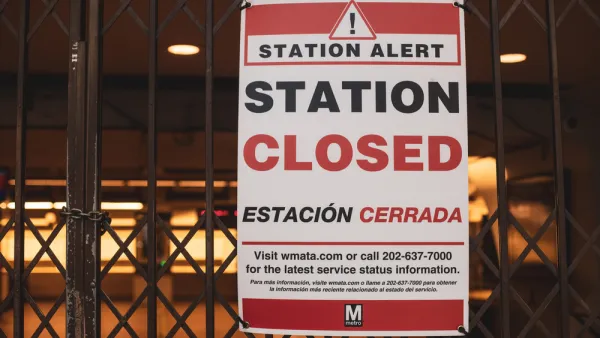
D.C. Metro Seeks Public Input on Proposed Service Cuts
D.C. Metro Seeks Public Input on Proposed Service Cuts
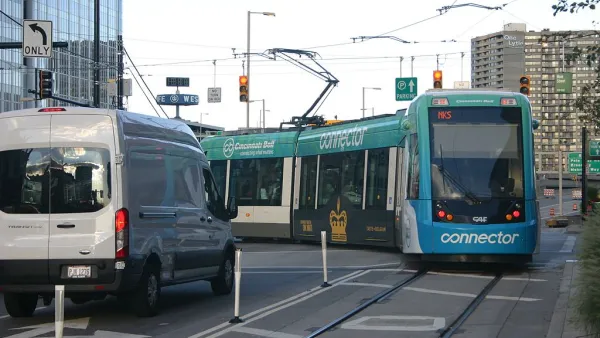
Streetcar Facing $1.4 Million Budget Deficit in Cincinnati
The Cincinnati Streetcar, now known as the Bell Connector, weathered numerous controversies on the way to completion. Now it faces the prospect of balancing its budget less than three years after launching.

Desperate measures: Advocates weigh draining Lake Powell to fill Colorado River
Draining the reservoir could reduce evaporation losses by a couple hundred thousand acre-feet.

Eastern Nebraska is running out of electricity
Data centers and electrification are straining eastern Nebraska’s grid, throttling economic development.

Malls are becoming the midtowns of the future
Mall and office park redevelopments are a generational opportunity to create new nodes of urbanity.

NYC breaks ground on anti-flooding infrastructure project
New York City's new system will reduce stormwater flows to local sewers by 90%.

One Kentucky town’s secret to affordable housing
The Smoketown Community Land Trust has already built seven affordable homes for community members.

Houston gains petal-shaped cooling infrastructure to make streets more ‘delightful’
The city has installed the pavilions along 15 blocks in Houston.

FREE Course: Walkable City 1: Why Walkability?
After describing his path towards focusing on walkability as the essence of good planning, Jeff Speck marches through his five principal reasons for making more walkable places.
Reinventing Malls: Planning Alchemy—Turning Gray Fields Into Gold
The course focuses on the opportunities and imperatives that shape reinvention of mall sites.

City of Rosemead
Rutgers University, Edward J. Bloustein School of Planning and Public Policy
One Hundred Miles
University of Michigan School for Environment and Sustainability (SEAS)
Hunter College, City University of New York (CUNY)
The Architects Foundation
City of Cambridge
Montrose County
The Pocatello Development Authority