James Trainor looks back at the history of New York's "adventure playgrounds" of the 1960s and 70s, tracing their origin back to the original Central Park dust-up between Robert Moses and local housewives.


Trainor recalls the buzz and excitement of his youth in New York City, when new ideas in urban playground design had resulted in a number of fantastic "adventure playgrounds". The site of the very first, Trainor notes, was also the site of a famous battle between Robert Moses and local housewives:
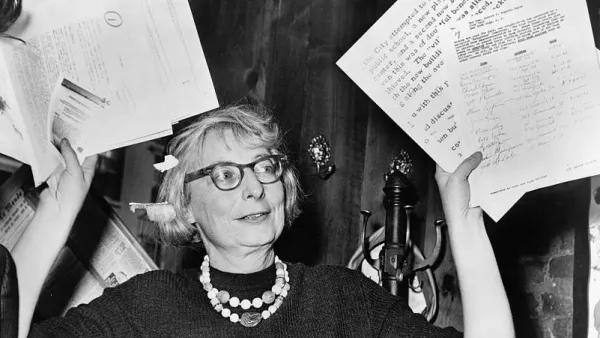
"...a young mother taking her son to a small locally popular playground came across blueprints, idly left behind by a parks department engineer, detailing the imminent destruction of the playground and surrounding glen to make way for an expanded parking lot for the ritzy Tavern on the Green restaurant nearby. News spread fast, and within a day neighborhood mothers had mobilized to petition Moses. Moses responded two days later with hurricane fences and construction equipment. The "Battle of Central Park" was thus engaged, as newspapers chronicled a community rallying to defend its children's rights (and a playground that Moses himself had installed in the 1930s), and ran stark photographs of activists like Jacobs joining mothers and children facing off against bulldozers.
The majority of the substantial article documents the rise of the "playscape" in New York, a term coined by landscape architect M. Paul Friedberg and architect Richard Dattner.
"Bold, geometric, and unapologetically monumental, the new playscapes were everything the dull and instantly outmoded playgrounds were not."
Read the full story: Reimagining Recreation
'Citizen Jane' Sets the Battle Lines for the Future of Cities
Coinciding with the 101st anniversary of Jane Jacobs's birth, a documentary film showing in select theaters around the country recounts the history between Jane Jacobs and Robert Moses, and the ideas that forced their struggle.
Reviews for 'Citizen Jane: Battle for the City'
Two publications likely to find an audience with people sympathetic to the cause of Jane Jacobs reviewed the latest film about her political battles with Robert Moses for the soul of New York.
100 Years After Her Birth, Jane Jacobs Might Not Recognize New York
Sam Hall Kaplan reviews "Eyes on Street: The Life of Jane Jacobs" and offers insight gained from personal experience with the "Saint of City Planning."

Planetizen Federal Action Tracker
A weekly monitor of how Trump’s orders and actions are impacting planners and planning in America.

California plans to bury El Niño’s downpour
If the state plays its cards right, it may be able to store a billion acre-feet of El Niño’s water in aquifers.

Desperate measures: Advocates weigh draining Lake Powell to fill Colorado River
Draining the reservoir could reduce evaporation losses by a couple hundred thousand acre-feet.

US buildings threatened, destroyed by fires set to triple by 2060
Researchers found a high fire risk for socioeconomically vulnerable neighborhoods in the American West.

LA residents may be allowed to paint their own crosswalks
Councilwoman Katy Yaroslavsky put out a motion instructing the Los Angeles Department of Public Transportation to study the feasibility of allowing volunteers to paint crosswalks.

Dallas moves to overhaul its zoning code
The city's zoning reform will allow more multi-family and mixed-use developments.

FREE Course: Walkable City 1: Why Walkability?
After describing his path towards focusing on walkability as the essence of good planning, Jeff Speck marches through his five principal reasons for making more walkable places.
Reinventing Malls: Planning Alchemy—Turning Gray Fields Into Gold
The course focuses on the opportunities and imperatives that shape reinvention of mall sites.

City of Rosemead
Rutgers University, Edward J. Bloustein School of Planning and Public Policy
One Hundred Miles
Hunter College, City University of New York (CUNY)
The Architects Foundation
University of Cincinnati Online
City of Cambridge
Montrose County
The Pocatello Development Authority