Young activists Emaleigh and Ainé Doley take matters into their own hands to clean up their neighborhood street in run-down Germantown.


With their neighbors losing homes to foreclosure, community activists Emaleigh and Ainé Doley watched as renters moved in--bringing with them "a trifecta of poverty, drugs, and violence."
Inga Saffron reports that the Doleys started "Grow This Block" to combat the decline of their Germantown neighborhood in Philadelphia. Publicized by their own blog and Tweets, the Doley sisters created community events, such as trash pickup, gardening, and low-cost neutering for the rapidly multiplying stray cats.
Urban planner Mike Lydon calls this kind of grassroots action "tactical urbanism." Sometimes, these "tactical" efforts catch the attention of the municipal government, as it did when Miami residents spray-painted weeds to get officials to clean up an abandoned lot. Lydon concedes that, "this kind of approach doesn't replace the need for conventional planning."
Read the full story: Germantown sisters use tactical urbanism to bolster their block
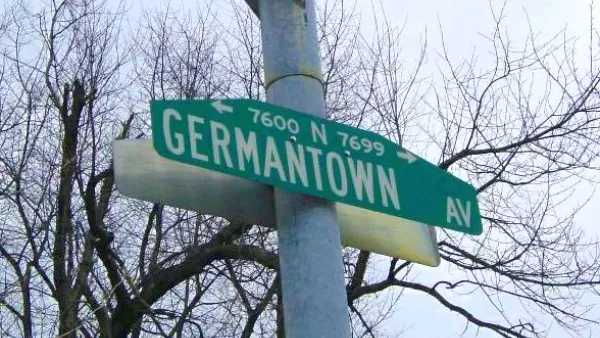
Gentler Gentrification in Philly's Germantown
Germantown has acquired many more wealthy residents without displacing many of its long-term residents or losing its diversity.
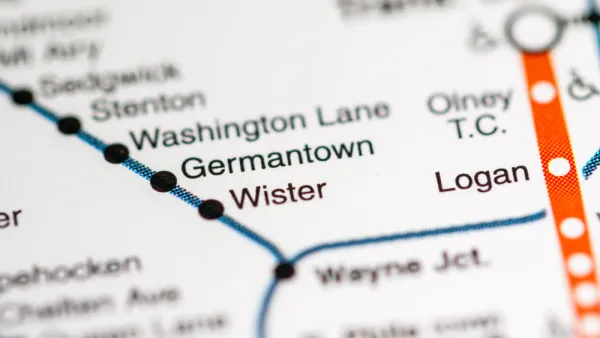
'Jumpstart Germantown' Aims for the Antidote to Gentrification
A new program based in the Germantown neighborhood in Philadelphia aims to encourage community ownership of urban re-investment.
High Hopes for a Renovated Vernon Park in Philadelphia
A once-neglected park is at the center of efforts to breathe new life into Germantown's business district.

Planetizen Federal Action Tracker
A weekly monitor of how Trump’s orders and actions are impacting planners and planning in America.

Eastern Nebraska is running out of electricity
Data centers and electrification are straining eastern Nebraska’s grid, throttling economic development.

Study reveals best places in the U.S. for cycling, walking
New research from Streetlight Data examines bicycle and pedestrian miles per capita in the 100 largest U.S. cities by population.

DSA members accuse Mamdani of 'abandoning values' over housing redevelopment
New York City's mayor plans to replace about 2,000 units of public housing with private, mixed-income housing.

All sides of BRT debate unhappy with CDOT’s most recent move
The Colorado Department of Transportation is no longer considering center-running bus lanes for Colorado Boulevard.

Massachusetts bogs generate both power, and cranberries
Putting solar panels above farmland is one way Massachusetts is advancing toward its goal of net-zero carbon emissions by 2050.

FREE Course: Walkable City 1: Why Walkability?
After describing his path towards focusing on walkability as the essence of good planning, Jeff Speck marches through his five principal reasons for making more walkable places.
Reinventing Malls: Planning Alchemy—Turning Gray Fields Into Gold
The course focuses on the opportunities and imperatives that shape reinvention of mall sites.

City of Rosemead
Rutgers University, Edward J. Bloustein School of Planning and Public Policy
One Hundred Miles
University of Michigan School for Environment and Sustainability (SEAS)
Hunter College, City University of New York (CUNY)
The Architects Foundation
City of Cambridge
The Pocatello Development Authority
The Urban Renewal Agency of the City of Pocatello