Conor Myhrvold writes about the application of remote sensing technology to the search for ancient South American cities reclaimed by time and nature.


Using Light Detection and Ranging (LiDAR) remote sensing technology, a team of scientists from the National Center for Airborne Laser Mapping, have found an ancient city in the jungles of Honduras that some believe may be the legendary lost city of Ciudad Blanca.
According to Myhrvold, the technology, which is commonly applied to mapping underwater topography, "works by bouncing a laser off the ground from an aircraft and
recording how long it takes for the laser to return back. In post
processing on a computer, the area's topography can be determined down
to the tiniest details: in some cases, features several centimeters in
size."
Before gold fever drives you to book your plane ticket to Honduras, know that claims to the finding of the mythical city are "pure speculation," notes Myhrvold, "the ruins cannot be dated and identified until archaeologists actually visit the site on the ground." Or is he just stalling until he can get that gold for himself???
Read the full story: A Lost City, Found With Lasers
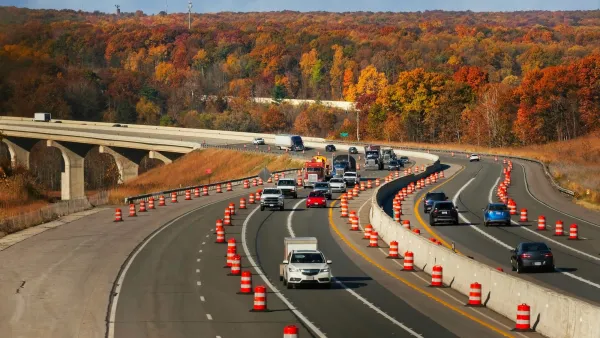
First-of-its-kind Ohio Pilot Used Car Sensors to Report Poor Road Conditions
Honda vehicles equipped with LiDAR and video sensors can flag road deficiencies such as emerging potholes, obstructed signs, and damaged guardrails.

Two Underwhelming Elon Musk Projects on Display at CES
Demonstrations at the Consumer Electronics Show in Las Vegas highlight the failures of Tesla's autonomous vehicles and the Boring Company's tunnels.

Scrutiny Turns Toward Uber After First Pedestrian Death by Autonomous Vehicle
It's not just the autonomous vehicle technology, but also the company that operated the self-driving SUV receiving scrutiny after the death of Elaine Herzberg in Tempe, Az. on March 18.

Planetizen Federal Action Tracker
A weekly monitor of how Trump’s orders and actions are impacting planners and planning in America.

California plans to bury El Niño’s downpour
If the state plays its cards right, it may be able to store a billion acre-feet of El Niño’s water in aquifers.

Desperate measures: Advocates weigh draining Lake Powell to fill Colorado River
Draining the reservoir could reduce evaporation losses by a couple hundred thousand acre-feet.

In Texas, data centers are swallowing promised parkland
Residents who moved to Taylor, Texas for a rural community now have to contend with three data centers in their backyard.

How a Chicago-sized wind farm beat the odds and powered on
The project spanned five presidential administrations and a standoff with a U.S. military base.

MTA gives itself 30 days to transform pit into basketball court
The site has been under construction since 2022; the city originally estimated it would finish the court in 2024.

FREE Course: Walkable City 1: Why Walkability?
After describing his path towards focusing on walkability as the essence of good planning, Jeff Speck marches through his five principal reasons for making more walkable places.
Reinventing Malls: Planning Alchemy—Turning Gray Fields Into Gold
The course focuses on the opportunities and imperatives that shape reinvention of mall sites.

City of Rosemead
Rutgers University, Edward J. Bloustein School of Planning and Public Policy
One Hundred Miles
Hunter College, City University of New York (CUNY)
The Architects Foundation
University of Cincinnati Online
City of Cambridge
Montrose County
The Pocatello Development Authority