Starbucks used to be the retailer who symbolically announced the revival of an urban community. Not any longer. Will Doig looks at Whole Foods, the new gentrification symbol, who've "made a science of putting down roots" at "just the right moment".


When Detroit offered Whole Foods, the Austin, Texas-based retailer $4.2 million to open a store in the city, they clearly believed in magical revitalization powers of the "Whole Foods Effect."
"Whether the Whole Foods Effect is real, or the company is just extremely good at slipping into areas that would have gone upscale anyway, has never been directly quantified," writes Doig. "But evidence suggests that Whole Foods can accelerate gentrification in particular ways. A new Whole Foods may not cause property values to shoot up on its own, but it can set into motion a series of events that change neighborhoods."
"This 'seal of approval' quality is Whole Foods' Midas touch; as with streetcar tracks, potential gentrifiers see it as something tangible that certifies a neighborhood as a quality buy. And not just residents; businesses, too, look to Whole Foods as a disciplined pioneer that does its homework."
FULL STORY: Whole Foods is coming? Time to buy

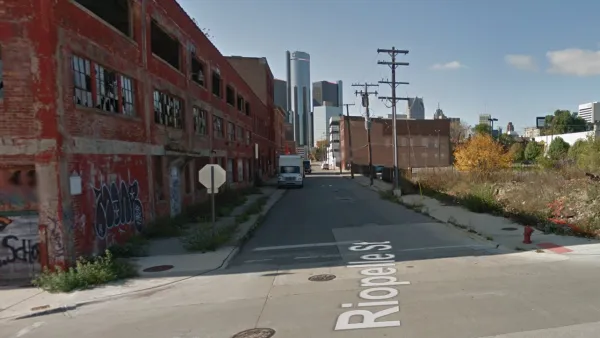
Anticipating Gentrification in Detroit
Where is gentrification most likely to occur in cities like Detroit? And how can that data guide policy? A new report provides some insight.
Stereotypes Undergird Coverage of Detroit Whole Foods Opening
When does the opening of a Whole Foods generate national media attention? When the location is Midtown, Detroit.
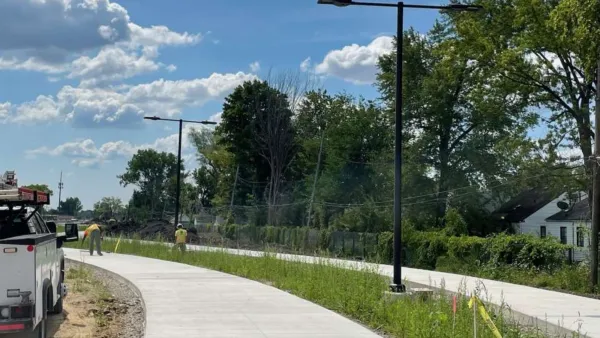
Detroit greenway brings revival — and fears of displacement
The planned Joe Louis Greenway is already bringing change to the neighborhoods near it.

The state-sanctioned urbicide of Austin
People don’t kill cities. Freeways do.

US to reduce Colorado River water deliveries to Mexico
A new Colorado Treaty amendment reduces Mexico’s Colorado River water allocation by 250,000 acre feet.

New Jersey’s second-largest city bans standalone data centers
Jersey City will continue to allow co-location facilities, such as those meant for research institutions that store their own data.

Amtrak not solely to blame for New Jersey commuter rail's unreliability, report finds
A new study from the Garden State Initiative found that NJ Transit’s budget grew 20% across a 4 year period, but reliability declined significantly over the same period.

EPA erases limits on planet-warming pollution from power plants
Under Monday’s plan, power plants would still have some limits on how much mercury, arsenic and other contaminants they can emit.

Phoenix announces new on-demand transit service, more frequent RAPID buses
Both new services will launch in October, and are part of Phoenix's Project Effective Access Solutions for Easing Congestion.

FREE Course: Walkable City 1: Why Walkability?
After describing his path towards focusing on walkability as the essence of good planning, Jeff Speck marches through his five principal reasons for making more walkable places.
Reinventing Malls: Planning Alchemy—Turning Gray Fields Into Gold
The course focuses on the opportunities and imperatives that shape reinvention of mall sites.

Eagle County Government
Harvard University Graduate School of Design
Nashville Planning Department
The Architects Foundation
University of Cincinnati Online
The Pocatello Development Authority
The Urban Renewal Agency of the City of Pocatello
Journal of the American Planning Association