Julie V. Iovine examines a new exhibition at the Center for Architecture in New York that seeks to capture the spirit of architectural possibility and optimism that defined midcentury Baghdad.


"City of Mirages: Baghdad, 1952-1982," which originated at the Collegi d'Arquitectes de Catalunya in Barcelona, presents the speculative work of architects such as Frank Lloyd Wright, Walter Gropius, Le Corbusier and Alvar Aalto as they, "flocked to Baghdad ready to build housing, civic centers, museums, sports complexes, campuses, libraries and an opera house-all that a re-emerging nation would need to show it should be taken seriously on the world stage."
Because many of the buildings featured in the show where either never completed or have been lost to war and neglect, curator Pedro Azara chose to only use architectural sketches, plans and models in the exhibit to capture the spirit of the time in which they were produced.
In addition to featuring lesser known designs of some of the world's most famous architects of the last century during the twilight of their careers (including the work of a 90-year-old Frank Lloyd Wright), Iovine cheers how the the "small but intense" exhibition depicts "how different Western architects interpreted the local building traditions, the pull of exotic imagery and particularly the extreme climate."
Read the full story: The Land of Broken Promises

Le Corbusier's Baghdad Sports Complex Revealed
In the mid-1900s architect Le Corbusier designed a grand sports complex for Baghdad as part of the city's bid for the 1960 Olympics. That bid failed and the project was never built. Now, original drawings and designs are on display.
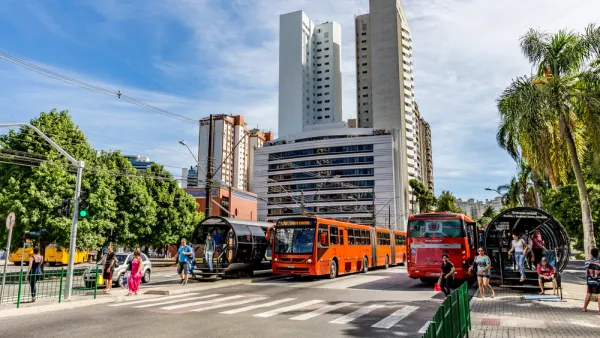
The Evolution of Green Urbanism
Today’s "Eco" or "Green" Urbanism movement has ancient, cross-cultural roots. This history is worth contemplating for lessons relevant to sustainable planning and design.
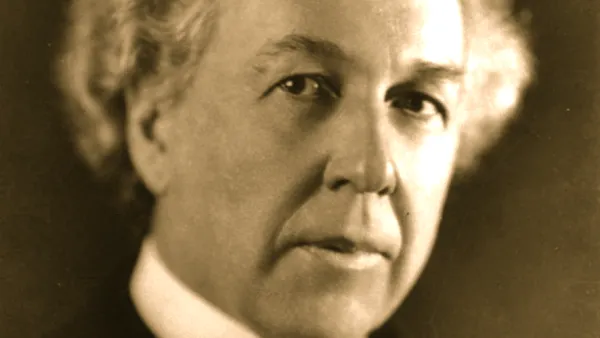
Choice Slights from Frank Lloyd Wright
In a 1957 book, author Selden Rodman collected conversations with 35 of America's preeminent artists and architects. The interviews with Frank Lloyd Wright are a font of choice quotes on topics from Le Corbusier to NYC's density.

Planetizen Federal Action Tracker
A weekly monitor of how Trump’s orders and actions are impacting planners and planning in America.

Chicago breaks ground on $3 billion megadevelopment
The new neighborhood, titled Foundry Park, will one day host 3,700 residences.

This MA town is drowning in its own sewage — and residents like it that way
Susan Murcott, a waste water expert, said if Carlisle didn't address their leaking sewage, the problem could turn “deadly.”

Amtrak cuts ribbon on Seattle Airo maintenance facility
The $250 million, nearly 100,000-square-foot building can house an entire Cascades Airo trainset.

To power data centers, Google seeks autonomous control of thousands of homes’ electricity
The tech company has signed a deal to indirectly pay Mid-Atlantic residents to reduce their power demand when the grid is strained.

From robotaxis to robotrains: LA, DC weigh driverless transit
If approved, the projects will take years to implement and face financial and technical hurdles.

FREE Course: Walkable City 1: Why Walkability?
After describing his path towards focusing on walkability as the essence of good planning, Jeff Speck marches through his five principal reasons for making more walkable places.
Reinventing Malls: Planning Alchemy—Turning Gray Fields Into Gold
The course focuses on the opportunities and imperatives that shape reinvention of mall sites.

City of Rosemead
Rutgers University, Edward J. Bloustein School of Planning and Public Policy
One Hundred Miles
The Architects Foundation
University of Cincinnati Online
Montrose County
The Pocatello Development Authority
The Urban Renewal Agency of the City of Pocatello