Accompanied by images of a partially demolished building, P.J. Lassek reports on Tulsa's conflict between encouraging development and providing parking amenities.


As the Tulsa skyline takes another hit, the city council is considering a moratorium on creating surface parking lots. Newly elected councilor and downtown business owner, Blake Ewing, describes his motivation for introducing a moratorium on the demolition of existing buildings for surface parking:
"When you look at downtown, it has been stated over and over again that the surface parking lots are breaking up the flow," he said.
While the City of Tulsa embarks on a downtown parking master plan, Ewing hopes to employ a moratorium to prevent building owners from pre-empting any new parking policies as they come down the pike.
With an urbanist Councilor, a newly adopted comprehensive plan, and a new planning director, Tulsa may be poised to reverse an overzealous trend in parking development. City Planning Director, Dawn Warrick, concurs that preserving existing buildings should be a priority and that a strategy for developing appropriate parking solutions should be employed as soon as possible. Ewing points out the price of inaction over the decades:
"Compare Tulsa's skyline from 1960 and now. We had a better skyline then, and that's not OK."
Thanks to Jessica Brent
Read the full story: Tulsa Councilor Fears Downtown Getting Too Many Parking Lot
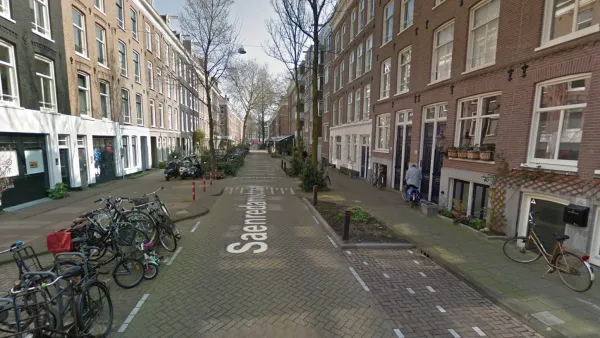
Watch: How to Remove Thousands of Parking Spaces
What the city of Amsterdam will gain by removing cars from on-street parking space.
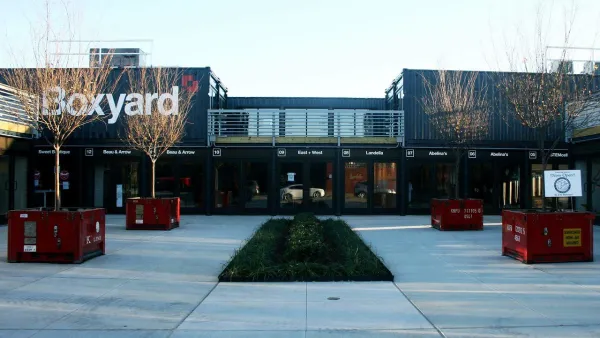
The Boxyard Igniting Retail Push In Downtown Tulsa
Innovative retail center constructed from repurposed shipping containers activates an empty lot, looks to spark a retail revival in downtown Tulsa.
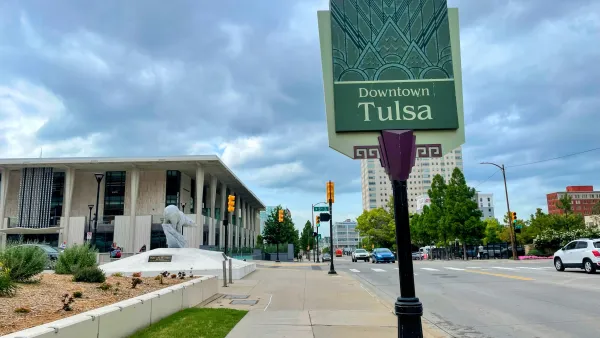
Tulsa dissolves city-county planning commission
The Tulsa Metropolitan Planning Commission, which previously oversaw both city and county planning issues, will split into two separate bodies on Sept. 2.

Planetizen Federal Action Tracker
A weekly monitor of how Trump’s orders and actions are impacting planners and planning in America.

California plans to bury El Niño’s downpour
If the state plays its cards right, it may be able to store a billion acre-feet of El Niño’s water in aquifers.

Desperate measures: Advocates weigh draining Lake Powell to fill Colorado River
Draining the reservoir could reduce evaporation losses by a couple hundred thousand acre-feet.

Chicago voters approve permanent festival grounds, penalty for vacant property owners
Currently, major summer and fall festivals take over public parks for weeks at a time, drawing criticism from nearby residents

NYC votes to cut outdoor dining red tape, speed up permitting
New York City also voted to allow the Department of Transportation to begin work on urgent projects before notifying elected officials.

California appears to reject Prop. 45
The proposition would have expanded the projects that qualify for a streamlined environmental review, effectively paring down the California Environmental Quality Act.

FREE Course: Walkable City 1: Why Walkability?
After describing his path towards focusing on walkability as the essence of good planning, Jeff Speck marches through his five principal reasons for making more walkable places.
Reinventing Malls: Planning Alchemy—Turning Gray Fields Into Gold
The course focuses on the opportunities and imperatives that shape reinvention of mall sites.

City of Rosemead
Rutgers University, Edward J. Bloustein School of Planning and Public Policy
One Hundred Miles
Hunter College, City University of New York (CUNY)
The Architects Foundation
University of Cincinnati Online
City of Cambridge
Montrose County
The Pocatello Development Authority