Mayor Michael Bloomberg, someone who may know a thing or two about running a successful city, pens an opinion piece examining what it takes to succeed in the global competition for people, visitors, and business.


For Bloomberg, the 21st-century global economy has fundamentally changed what it means to run a city, as individuals and capital become ever more mobile. As Bruce Katz, Director of the Brookings Metropolitan Policy Program, recently discussed, cities are increasingly responsible for their own competitiveness on the global stage, and must take on obligations that traditionally have been the purview of national governments.
So what are the metrics by which success for cities can be judged? According, to Mayor Bloomberg, "For cities to have sustained success, they must compete for the grand prize: intellectual capital and talent."
"I have long believed that talent attracts capital far more effectively and consistently than capital attracts talent. The most creative individuals want to live in places that protect personal freedoms, prize diversity and offer an abundance of cultural opportunities. A city that wants to attract creators must offer a fertile breeding ground for new ideas and innovations."
"Economists may not say it this way but the truth of the matter is: being cool counts. When people can find inspiration in a community that also offers great parks, safe streets and extensive mass transit, they vote with their feet."
FULL STORY: Cities must be cool, creative and in control

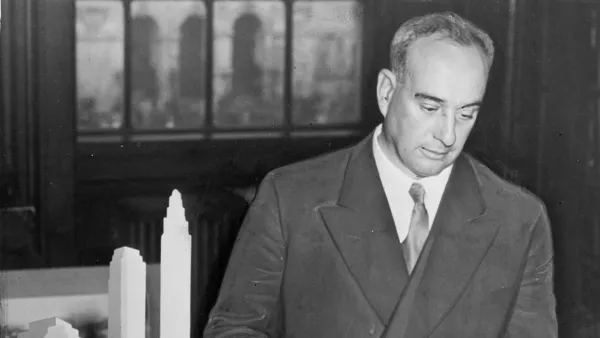
The Robert Moses Nexus to Amazon's Cancellation of Queens HQ2
Last week, Amazon abruptly canceled its decision to invest about $2.5 billion and bring 25,000 high-paying jobs to Queens. A scholar blames their abrupt decision on an arcane state bureaucracy tasked with preventing Robert Moses-like takings.
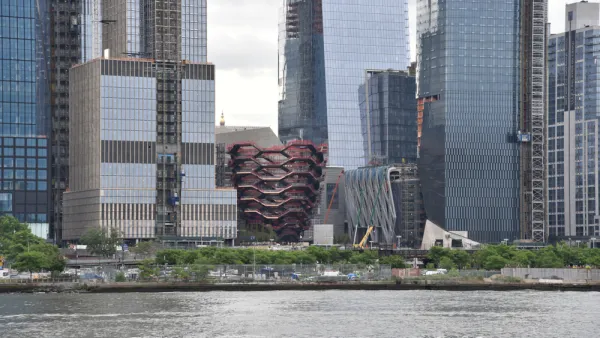
Promised Data-Driven Infrastructure On Hold at Hudson Yards
When the Manhattan megadevelopment got its start, big data was a major part of Hudson Yards' marketing pitch. Now it's "probably the last thing we'll get to."

New York City Polystyrene Ban Took Effect New Year's Day
Thanks to two recent New York State court rulings, disposable food and beverage containers will no longer be made from polystyrene in the nation's largest city. The ban was originally proposed by Mayor Michael Bloomberg in February 2013.

The state-sanctioned urbicide of Austin
People don’t kill cities. Freeways do.

US to reduce Colorado River water deliveries to Mexico
A new Colorado Treaty amendment reduces Mexico’s Colorado River water allocation by 250,000 acre feet.

New Jersey’s second-largest city bans standalone data centers
Jersey City will continue to allow co-location facilities, such as those meant for research institutions that store their own data.

Amtrak not solely to blame for New Jersey commuter rail's unreliability, report finds
A new study from the Garden State Initiative found that NJ Transit’s budget grew 20% across a 4 year period, but reliability declined significantly over the same period.

EPA erases limits on planet-warming pollution from power plants
Under Monday’s plan, power plants would still have some limits on how much mercury, arsenic and other contaminants they can emit.

Phoenix announces new on-demand transit service, more frequent RAPID buses
Both new services will launch in October, and are part of Phoenix's Project Effective Access Solutions for Easing Congestion.

FREE Course: Walkable City 1: Why Walkability?
After describing his path towards focusing on walkability as the essence of good planning, Jeff Speck marches through his five principal reasons for making more walkable places.
Reinventing Malls: Planning Alchemy—Turning Gray Fields Into Gold
The course focuses on the opportunities and imperatives that shape reinvention of mall sites.

Eagle County Government
Harvard University Graduate School of Design
Nashville Planning Department
The Architects Foundation
University of Cincinnati Online
The Pocatello Development Authority
The Urban Renewal Agency of the City of Pocatello
Journal of the American Planning Association