Emily Badger, examines the efforts of researchers and engineers to design quieter cities, which will be necessary to overcome barriers to city living.


Apparently, excessive noise isn't just a problem for rural inhabitants. For those engaged in the issue of urban noise, such as Thomas Jones, the dean of Cal Poly's College of Architecture and Environmental Design, the sounds of the city are a serious challenge to increasing urban densities.
As Badger writes, "These aren't questions only for apartment-dwellers. Obnoxious city noise comes from all around us, moving between buildings and through windows and across congested roads. If we don't tame it, Jones worries, people will never willingly rearrange themselves into the denser living patterns environmentalists say we need."
And the challenge that engineers such as those working in global engineering firm Arup's Acoustics Group are facing is not to reduce all noise, but only certain offensive ones. "There are plenty of sounds that people like: birds singing, children playing, trees rustling at night. The real challenge is to baffle the noises people don't want to hear while amplifying the ones they do. With this conundrum comes myriad others: How do you keep noise out of an apartment while letting fresh air in? How do you adjust for the aural quirks of the human hear at different decibel levels?" writes Badger.
FULL STORY: The Science of Quieter Cities


How To Limit Urban Noise
Environmental noise can pose serious health risks ranging from sleep disruptions to higher blood pressure.
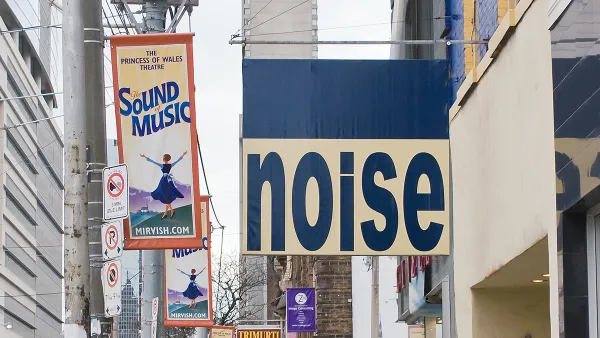
Using Tech to Control Noise Pollution
Several cities are piloting programs that use machine learning to identify and understand urban noise patterns and enforce noise ordinances.
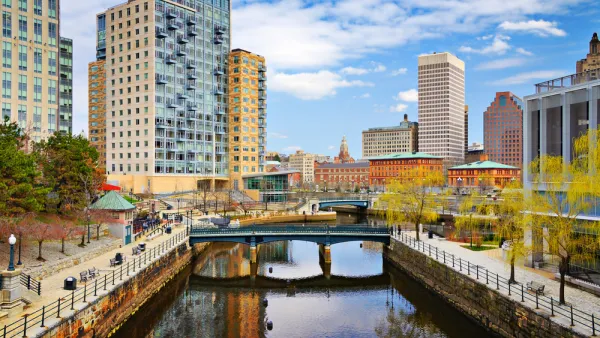
Providence Plans Ambitious Public Space Makeover
Take a virtual tour of the new public spaces proposed in the Providence Unified Vision Plan.

Planetizen Federal Action Tracker
A weekly monitor of how Trump’s orders and actions are impacting planners and planning in America.

The state-sanctioned urbicide of Austin
People don’t kill cities. Freeways do.

US to reduce Colorado River water deliveries to Mexico
A new Colorado Treaty amendment reduces Mexico’s Colorado River water allocation by 250,000 acre feet.

5 New England states march closer to 800 megawatt wind energy project
Securing federal approval for the project may be complicated under the Trump administration, which has historically been hostile towards domestic wind power.

Baltimore to break ground on $50 million Transit Priority Project
The project will bring faster bus trips, safer streets and better bike connections to Baltimore.

Airbnb launches $250 million 'last-dollar financing' housing accelerator, makes first investment in Austin
The company will put $6.4 million towards affordable housing development in Texas’ capital.

FREE Course: Walkable City 1: Why Walkability?
After describing his path towards focusing on walkability as the essence of good planning, Jeff Speck marches through his five principal reasons for making more walkable places.
Reinventing Malls: Planning Alchemy—Turning Gray Fields Into Gold
The course focuses on the opportunities and imperatives that shape reinvention of mall sites.

Eagle County Government
Harvard University Graduate School of Design
Nashville Planning Department
The Architects Foundation
University of Cincinnati Online
The Pocatello Development Authority
The Urban Renewal Agency of the City of Pocatello
Journal of the American Planning Association