As boomers retire at a rate of 10,000 per day, can they be discouraged from sprawling into suburbs and rural areas, where caring for them as they age can be more challenging?


With little success, states have long used tax breaks to try enticing retirees. Migration patterns have remained steady for decades, however, with approximately 65% of people fleeing cities at retirement, largely flocking towards "sunshine and fairways". Slate's Will Doig discusses the importance of keeping seniors in cities though a combination of policy and planning that caters to their unique needs.
Mobility is a widely recognized issue for seniors. Doig points out that policies, such as in San Francisco, that eliminate urban bench seating make it difficult for seniors to get out and about. Transit poses another set of issues. For seniors who struggle to haul shopping bags to the nearest bus stop or train station, semi-legal "dollar vans" could be legitimized through regulation to offer an affordable alternative to hailing a cab.
Planning policy that facilitates inter-generational relationships is essential to caring for seniors while creating vibrant communities. Given the failure of financial incentives to attract retirees, Doig argues:
"...cities must do the work themselves to become attractive to seniors. And they should, because older people have more to offer cities than just their pensions."
Thanks to Jessica Brent
Read the full story: How to Solve the Boomer Retirement Crisis

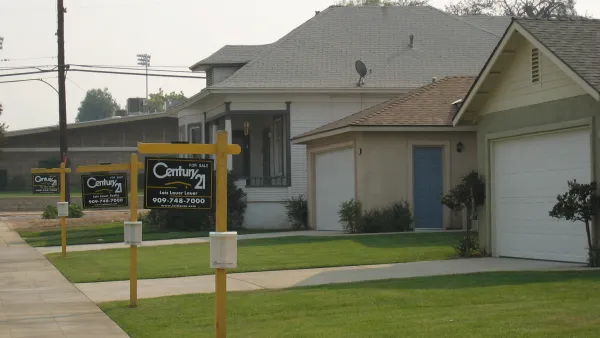
The Next Housing Crisis Isn't Far Off
As aging baby boomers enter retirement and seek to downsize from their large single-family homes (the "great senior sell-off") they'll find a housing market increasingly uninterested in what they're selling, says researcher Arthur C. Nelson.
Where Americans Can Retire 'Like Kings'
Lisa Stark identifies the top ten U.S. cities were retirees can live on less than $100 per day.
Baby Boomers Ponder Their Next Move
Recent studies on older generations' dwelling and travel patterns show that urban areas may provide more mobility and independence than suburban areas with less access to public transit.

Planetizen Federal Action Tracker
A weekly monitor of how Trump’s orders and actions are impacting planners and planning in America.

Amtrak, CN end decades-long dispute with eight-year agreement
The new operating agreement establishes an updated framework for the companies to work together, including processes to resolve disputes.

Judges permit Denver to divert 77,000 acre feet from the Colorado River for reservoir expansion
Overuse and climate change have caused the Colorado River’s water levels to plummet.

Northwest rail fans eager for Sept. 30 debut of Amtrak’s Airo fleet
Get ready for that new train smell and more seats. But they won’t go faster or run more frequently on the Cascades route in Washington and Oregon.

NYC DOT wants faster, more permanent street upgrades
The city is examining ways to build more concrete infrastructure without getting entangled in 'decades-long' projects.

'Something we’ve never seen before:' rising utility rates could strain city finances nationwide
Data centers, climate change and other factors have caused utility rates in the United States to increase by 38% since 2020.

FREE Course: Walkable City 1: Why Walkability?
After describing his path towards focusing on walkability as the essence of good planning, Jeff Speck marches through his five principal reasons for making more walkable places.
Reinventing Malls: Planning Alchemy—Turning Gray Fields Into Gold
The course focuses on the opportunities and imperatives that shape reinvention of mall sites.

Harvard University Graduate School of Design
KFH Group Inc.
Greater Baltimore Committee
The Architects Foundation
University of Cincinnati Online
The Pocatello Development Authority
The Urban Renewal Agency of the City of Pocatello