Lisa Stark identifies the top ten U.S. cities were retirees can live on less than $100 per day.


Based on analysis commissioned by AARP The Magazine, cities including Pittsburgh, San Antonio, and Omaha have been identified as the surprising locales where a fixed income of $36,500 per year buys not just a place to live, but access to quality health care, recreation, and the arts, among other "softer quality of life issues."
In light of such findings, it seems surprising that a recent article in Business Insider claims that, "As many as 3.3 million American baby boomers are planning to retire abroad, according to figures from Travel Market Report, the industry publication."
Citing the financial damage that rising health care costs and the recession have incurred on Baby Boomers, the article claims that, "In the aftermath of the global financial meltdown that ravaged 401(k) accounts and decimated home values, a growing number of Americans-like [Dan] Prescher [who lives in Ecuador]-are stretching their retirement savings by spending their golden years overseas."
At home in the U.S., or abroad, it's clear that options for an affordable and fulfilling retirement abound.
Read the full story: http://abcnews.go.com/Business/10-us-cities-top-list-retire-king-100/story?id=16760919#.UAiXkETHQZ3
The Best Cities To Spend Your Golden Years
AARP's annual list of great places to retire focuses on urban areas with amenities that allow seniors to maintain independence -- mixed-use housing, transit, walkable streets.
Back To The City
Babay boomers are leaving the suburbs and moving to pedestrian-friendly cities.
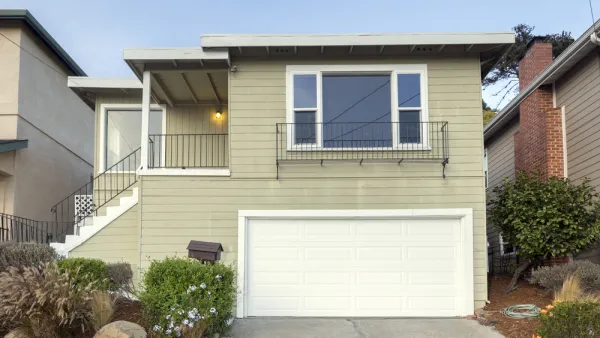
Affordable Housing Becomes More Affordable in California Due to Parking Reform
AB 744, a bill which requires no more than one parking space be provided for every two units of affordable and senior housing proximate to transit, was signed by Gov. Jerry Brown on Oct. 9.

Planetizen Federal Action Tracker
A weekly monitor of how Trump’s orders and actions are impacting planners and planning in America.

Washington state to charge fee to drivers with fuel-efficient cars
Revenue from the fee will go towards supporting the state’s highways.

Illinois considers spending $1 billion in taxpayer money on data center
A quantum computing campus and data center are currently under construction in Chicago.

Mamdani unveils his ‘most ambitious bus lane project’ so far
The city has added two new bus lanes, which it expects to speed up tens of thousands of bus riders’ commutes.

New Jersey and New York suggest $10.3 billion budget for transit
Some of the budget is dedicated to replacing Manhattan's Midtown Bus Terminal.

States split over EPA’s proposal to drop greenhouse gas rules for power plants
The proposed rule drew over 165K comments, including from officials, health and environmental groups, and private citizens.

FREE Course: Walkable City 1: Why Walkability?
After describing his path towards focusing on walkability as the essence of good planning, Jeff Speck marches through his five principal reasons for making more walkable places.
Reinventing Malls: Planning Alchemy—Turning Gray Fields Into Gold
The course focuses on the opportunities and imperatives that shape reinvention of mall sites.

City of Charlotte
City of Rosemead
Rutgers University, Edward J. Bloustein School of Planning and Public Policy
University of Michigan School for Environment and Sustainability (SEAS)
Hunter College, City University of New York (CUNY)
The Architects Foundation
University District Partnership
City of Cambridge
The Pocatello Development Authority