In downtown Washington D.C., arts spaces are mandated by zoning, however the city's breakneck redevelopment is making such venues increasingly harder to find. Mark Jenkins looks at why a well-intentioned regulation isn't working.


Despite numerous city efforts to encourage arts uses in downtown D.C., including zoning requirements, in the area that was once the center of the city's visual arts scene, galleries can be hard to find.
Partly the victim of the successful redevelopment of downtown D.C. as a "living downtown", and partly the result of ill-defined zoning regulations, attempts to find homes for the visual arts also suffer from friction between the arts community and property managers, according to Jenkins.
"Some property managers view the arts requirement as 'a poison pill,' says Zenith Gallery owner Margery Goldberg, who programs art for the lobby at 1111 Pennsylvania Ave. NW."
"And some arts programmers feel their selections are encumbered by conservative office environments. 'The restrictions are so enormous, of what you can't do, that by the time you're done can't doing, you don't know what to do,' says Goldberg."
Read the full story: Art losing its toehold in downtown Washington

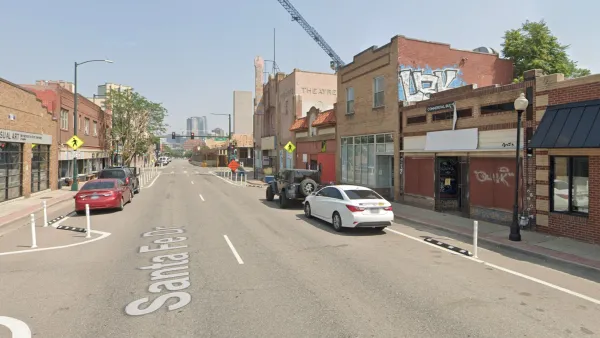
Denver Wants Ground Floor Retail, Sidewalk Extensions to Achieve Main Street 'Vibe'
The Arts District on Santa Fe Drive is considered one of Denver's final frontiers for revitalization. Local stakeholders are targeting zoning changes as a potential solution.

Planetizen Federal Action Tracker
A weekly monitor of how Trump’s orders and actions are impacting planners and planning in America.

California plans to bury El Niño’s downpour
If the state plays its cards right, it may be able to store a billion acre-feet of El Niño’s water in aquifers.

Desperate measures: Advocates weigh draining Lake Powell to fill Colorado River
Draining the reservoir could reduce evaporation losses by a couple hundred thousand acre-feet.

In Texas, data centers are swallowing promised parkland
Residents who moved to Taylor, Texas for a rural community now have to contend with three data centers in their backyard.

How a Chicago-sized wind farm beat the odds and powered on
The project spanned five presidential administrations and a standoff with a U.S. military base.

MTA gives itself 30 days to transform pit into basketball court
The site has been under construction since 2022; the city originally estimated it would finish the court in 2024.

FREE Course: Walkable City 1: Why Walkability?
After describing his path towards focusing on walkability as the essence of good planning, Jeff Speck marches through his five principal reasons for making more walkable places.
Reinventing Malls: Planning Alchemy—Turning Gray Fields Into Gold
The course focuses on the opportunities and imperatives that shape reinvention of mall sites.

City of Rosemead
Rutgers University, Edward J. Bloustein School of Planning and Public Policy
One Hundred Miles
Hunter College, City University of New York (CUNY)
The Architects Foundation
University of Cincinnati Online
City of Cambridge
Montrose County
The Pocatello Development Authority