In a fascinating essay in the journal Places, Keith Eggener examines the politics of architectural reputation through the lens of architect Louis Curtiss's life and career.


Never heard of Louis Singleton Curtiss? You're not alone. I suspect if you have heard of Curtiss, that you've at one time resided in Kansas City, Missouri where, according to Eggener, "he is sometimes called the city's most innovative and important local architect."
But what are the reasons that Curtiss, designer of more than 200 buildings and projects, who died in 1924, and who worked with some of the most important clients of his era, is not known more widely? According to Eggener he was, "a structural innovator of the first order" and has an oeuvre comparable to contemporaries such as Bernard Maybeck or Bertram Grosvenor Goodhue.
By recounting Curtiss's career and personal life, in comparison to his better known contemporaries, Eggener examines the larger process by which architectural reputations are manufactured and sold. "Why is Curtiss so much less celebrated than Maybeck? The answer has less to do with the quality or character of each man's work than with factors extrinsic to design."
"Stories like his may cause us to shift our emphases and challenge our often limiting and simplistic assumptions about history, including those that place a few towering, isolated figures on postage stamps, while others who worked beside them are left to dwell in obscurity. Such stories add texture and nuance to the broader field of American architectural history. For this, at least, they are well worth getting to know."
To that I'll add an enthusiastic amen.
Read the full story: Louis Curtiss and the Politics of Architectural Reputation
Shining a Light on an Architectural Innovator
Following up on his insightful essay on the politics of architectural reputation seen through the career of Louis Curtiss, Keith Eggener examines the architect's innovations with glass curtain walls.
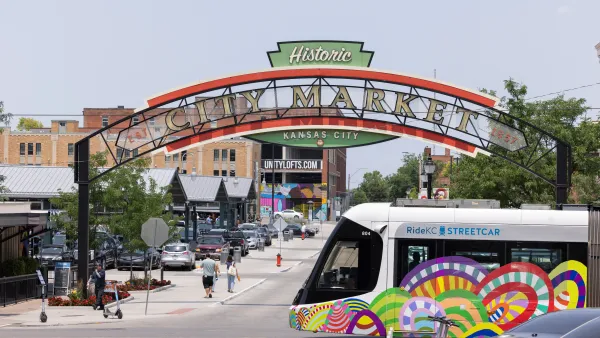
How Kansas City quietly built one of the best streetcars in America
A detailed and completely unbiased history of one of American transit's greatest comebacks.

In the 1990s, Kansas City's Womontown offered queer women community and independence
A group of women created a safe space that gave them the opportunity to buy homes and build wealth in a supportive community.

Planetizen Federal Action Tracker
A weekly monitor of how Trump’s orders and actions are impacting planners and planning in America.

Washington state to charge fee to drivers with fuel-efficient cars
Revenue from the fee will go towards supporting the state’s highways.

Trump to blast ‘hydrocarbon highway’ through ‘world’s longest art gallery’
Environmental and historic preservation groups are suing to stop the project.

MBTA Green Line project moved to next phrase of CIG program
The modernization effort will cost $4.08 billion.

22-mile pedestrian and bike path to encircle Atlanta by 2030
The project will also support affordable housing.

Army detonates nearly 5 tons of lead in Iowa
The detonation comes after days of delays and public outcry.

FREE Course: Walkable City 1: Why Walkability?
After describing his path towards focusing on walkability as the essence of good planning, Jeff Speck marches through his five principal reasons for making more walkable places.
Reinventing Malls: Planning Alchemy—Turning Gray Fields Into Gold
The course focuses on the opportunities and imperatives that shape reinvention of mall sites.

City of Charlotte
City of Rosemead
Rutgers University, Edward J. Bloustein School of Planning and Public Policy
University of Michigan School for Environment and Sustainability (SEAS)
Hunter College, City University of New York (CUNY)
The Architects Foundation
University District Partnership