The 102-mile circle that would become the Denver beltway sees no sign of completion as one city--one of Colorado's oldest--vociferously opposes it. But, at a regional level, it may be too late to curb decentralization and sprawl.


"Because Denver's partial belt was built over time, with many assuming that the project would one day be finished, business owners and residents made decisions accordingly. Decentralization and sprawl, said one prominent planner, Patrick Phillips, have already happened. Golden's pushing the fight to the last man standing will not change what the region became along the way, he said.
'The cow has left the barn,' said Mr. Phillips, the chief executive officer at the Urban Land Institute, a nonprofit research and education organization based in Washington. 'It is an incorrect argument that if you can hold out against that last segment and not complete the ring it will be a bulwark against sprawl, because the sprawl already exists. From a regional planning and transportation perspective it makes more sense to have a full beltway than three-fourths of a beltway.'"
Read the full story: No Closure for Denver’s Beltway Loop

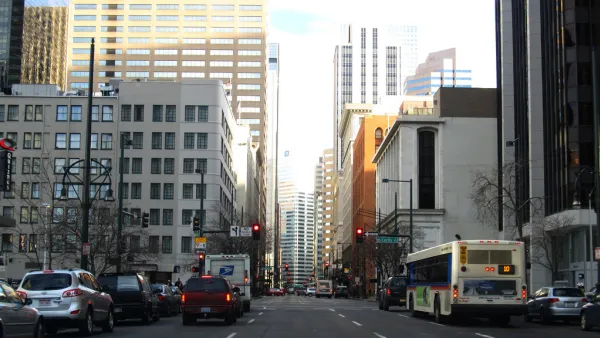
Op-Ed: Downtown Denver's Homogenous Renaissance
There's a lot to like about the resurgence of downtown cores. But as is the case elsewhere, Denver's core has only attracted a small subset of the wider city's population. Most people still call the suburbs home.

Report: Benefits in the Billions for a New Highway Through the Denver Suburbs
The proposed 10-mile Jefferson Parkway expansion would cross land once home to the Rocky Flats nuclear weapons plant—site of one of the country's largest environmental crimes.
More Colorado Cities Banning Public Smoking
Something is missing from a lot of the walkable downtown business zones in cities around Colorado: tobacco smoke.

Planetizen Federal Action Tracker
A weekly monitor of how Trump’s orders and actions are impacting planners and planning in America.

‘Going backwards:’ Baltimore mayor, students rally against state's transit funding plan
Maryland's proposed six-year plan provides no funding for Baltimore’s BMORE bus program and reduces its road maintenance funding.
Mamdani sent nearly 6,000 pied-à-terre tax warnings to homes that didn’t qualify
A judge has ordered the administration to cancel thousands of pied-à-terre tax notices after it sent 35% of them erroneously.

MTA expects Trump’s tariffs to increase new NYC transit costs by $1 billion
The Metropolitan Transit Authority said the cost of new subway cars has risen by 30% since Trump began his second term as president.

Alaska takes public comment on new long-term plan for roads, bridges and more
Alaska's draft Statewide Transportation Improvement Program includes over $1 billion for the Alaska Marine Highway System.

A Colorado neighborhood is the testing ground for the future of home energy
A start up may have found a way to quickly bring geothermal energy to new communities.

FREE Course: Walkable City 1: Why Walkability?
After describing his path towards focusing on walkability as the essence of good planning, Jeff Speck marches through his five principal reasons for making more walkable places.
Reinventing Malls: Planning Alchemy—Turning Gray Fields Into Gold
The course focuses on the opportunities and imperatives that shape reinvention of mall sites.

City of Thousand Oaks
City of Wisconsin Rapids
Harvard University Graduate School of Design
The Architects Foundation
University of Cincinnati Online
Northern Illinois Transit Authority (NITA)
The Pocatello Development Authority
The Urban Renewal Agency of the City of Pocatello