India's Bajaj Auto company introduces an ultracheap small car focused on the country's rickshaw industry. Meanwhile, an unrelated study finds that the unorganized auto-rickshaw sector presents a huge business opportunity.


India's Bajaj Auto, known for making motorcycles and rickshaws, calls it's newest product, the RE60, a "four wheeler", which is expected to cost around $2,750, or about $500 more than a traditional rickshaw.
"Executives say they have no plans to market it to average consumers. Instead, they are aiming for drivers of rickshaws, which are powered by motorcycle engines and operate as short-distance taxis in India. The RE60 offers features not found on current rickshaw models, including seat belts, doors and a hard top. It will have windows, although ones that fold out rather than roll down," write authora Vikas Bajaj and Sruthi Gottipati.
Auto-rickshaw services in Indian cities are predominantly unorganized, where services are provided by individual owners and operators competing against each other for the passenger market. This structure, coupled with an improper governance framework, has created significant problems for both drivers and passengers, and it has resulted in a variety of social, economic and environmental problems. A new study by EMBARQ India recommends implementation of a system similar to the taxi industry in the United States.
Thanks to Jeffrey Riecke
Read the full story: Introducing Bajaj Auto's Brand New…Car?

2025’s Biggest Transportation Wins
Even in a rough year, there are victories worth celebrating.
The Federal EV Tax Credit is Gone — But No One Told Google AI
Despite getting other details about the now-defunct program right, Google’s AI search summary continues to tell users they can receive a $7,500 federal tax credit for buying an EV.
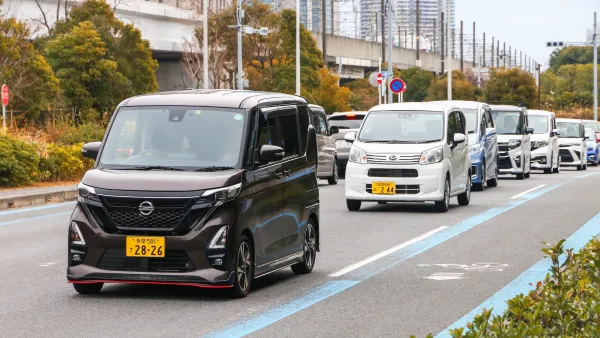
Bringing ‘Cute’ Tiny Cars to America Calls for Rethinking our Roadways
President Trump supports Japanese ‘kei’ cars, but experts say for them to catch on, we need to make major changes in our roadways and transportation infrastructure.

Planetizen Federal Action Tracker
A weekly monitor of how Trump’s orders and actions are impacting planners and planning in America.

Amtrak, CN end decades-long dispute with eight-year agreement
The new operating agreement establishes an updated framework for the companies to work together, including processes to resolve disputes.

Judges permit Denver to divert 77,000 acre feet from the Colorado River for reservoir expansion
Overuse and climate change have caused the Colorado River’s water levels to plummet.

NYC DOT wants faster, more permanent street upgrades
The city is examining ways to build more concrete infrastructure without getting entangled in 'decades-long' projects.

'Something we’ve never seen before:' rising utility rates could strain city finances nationwide
Data centers, climate change and other factors have caused utility rates in the United States to increase by 38% since 2020.

Trump to overrule local leaders, lease millions of acres of America’s Pacific Island territories’ seafloors to mining companies
International law says that the Indigenous people of America’s territories have a right to prior and informed consent regarding projects that impact their countries.

FREE Course: Walkable City 1: Why Walkability?
After describing his path towards focusing on walkability as the essence of good planning, Jeff Speck marches through his five principal reasons for making more walkable places.
Reinventing Malls: Planning Alchemy—Turning Gray Fields Into Gold
The course focuses on the opportunities and imperatives that shape reinvention of mall sites.

Harvard University Graduate School of Design
KFH Group Inc.
Greater Baltimore Committee
The Architects Foundation
University of Cincinnati Online
The Pocatello Development Authority
The Urban Renewal Agency of the City of Pocatello