In 1958, it seemed all but inevitable that giant tree-chomping, asphalt-pouring machines would roam across the countryside leaving gleaming interstate highways in their wake.


Artist Arthur Radebaugh projected this vision of future infrastructure-building robots in a newspaper comic strip he inked called Closer Than We Think. Matt Novak of PaleoFuture quotes the text of the original comic strip:
"The forward section of such a road-builder would be a variant of the new jungle-smashing LeTourneau 'tree-crusher' combined with a grader. The middle section would pour concrete in a never-ending flow, with the rear portion leveling the still soft pavement. A line of freighter helicopters would be on hand to feed the behemoth with the material necessary to keep it moving across any type of country."
Novak points to Disney's Magic Highway U.S.A. as a clear influence on Radebaugh:
Read the full story: Giant Automatic Highway Builders of the Future

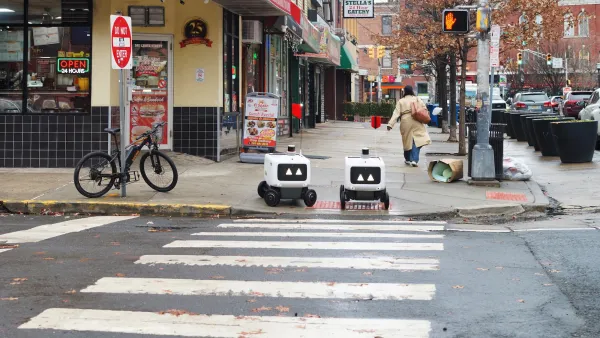
A robot army is assessing accessibility and mobility on Hoboken's streets
The city is deploying robotic scanners to identify gaps in the city's sidewalks, curb cuts and other mobility infrastructure.

DoorDash Plans to Deploy Delivery Robots in Suburban Bike Lanes
A new generation of delivery robot is designed to make longer trips and could compete with cyclists for bike lane space.
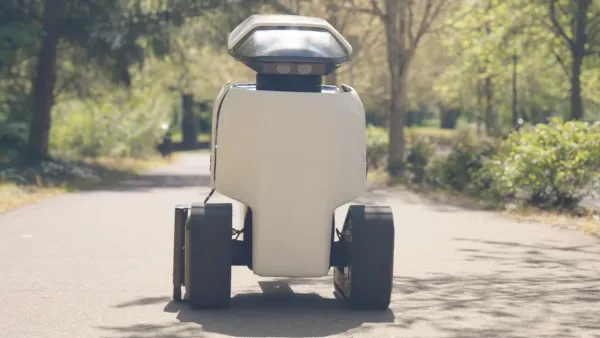
Southern California City Using Robots to Make Sidewalks More Accessible
Irvine is deploying robots to assess accessibility issues on its sidewalks and trails network.

Planetizen Federal Action Tracker
A weekly monitor of how Trump’s orders and actions are impacting planners and planning in America.

Amtrak, CN end decades-long dispute with eight-year agreement
The new operating agreement establishes an updated framework for the companies to work together, including processes to resolve disputes.

Judges permit Denver to divert 77,000 acre feet from the Colorado River for reservoir expansion
Overuse and climate change have caused the Colorado River’s water levels to plummet.

NYC DOT wants faster, more permanent street upgrades
The city is examining ways to build more concrete infrastructure without getting entangled in 'decades-long' projects.

'Something we’ve never seen before:' rising utility rates could strain city finances nationwide
Data centers, climate change and other factors have caused utility rates in the United States to increase by 38% since 2020.

Trump to overrule local leaders, lease millions of acres of America’s Pacific Island territories’ seafloors to mining companies
International law says that the Indigenous people of America’s territories have a right to prior and informed consent regarding projects that impact their countries.

FREE Course: Walkable City 1: Why Walkability?
After describing his path towards focusing on walkability as the essence of good planning, Jeff Speck marches through his five principal reasons for making more walkable places.
Reinventing Malls: Planning Alchemy—Turning Gray Fields Into Gold
The course focuses on the opportunities and imperatives that shape reinvention of mall sites.

Harvard University Graduate School of Design
KFH Group Inc.
Greater Baltimore Committee
The Architects Foundation
University of Cincinnati Online
The Pocatello Development Authority
The Urban Renewal Agency of the City of Pocatello