The 100 largest U.S. cities added 120 new parks last year, but overall spending remained largely flat. Approximately half the cities experienced cuts in their parks budgets, forcing departments to defer maintenance costs even as usership grows.


A new report from The Trust for Public Land shows that cities added parks in 2011, but managed to do so without increasing budgets. How'd that work?
"Despite aggregate increases in acreage and facilities across the U.S., many city park departments are struggling with funding shortages. Operational spending shrank by 0.6 percent overall, with close to half of cities experiencing cuts. Full-time employee counts fell by 3.9 percent, a loss of 935 jobs nationwide."
"Budgets grew slightly overall, but not enough to sustain jobs or overcome increasing – and often deferred – maintenance costs. Peter Harnik, director of the Center for City Park Excellence, noted that 'cities are still saddled with a reported $5.8 billion in deferred repairs and improvements.' That figure is only slightly smaller than the total parks expenditure of the 92 cities that provided financial data for FY 2009, which equaled $6.1 billion."
Thanks to Ryan Donahue
Read the full story: 2011 City Park Facts Released: Urban Parks Grow as Employment Declines

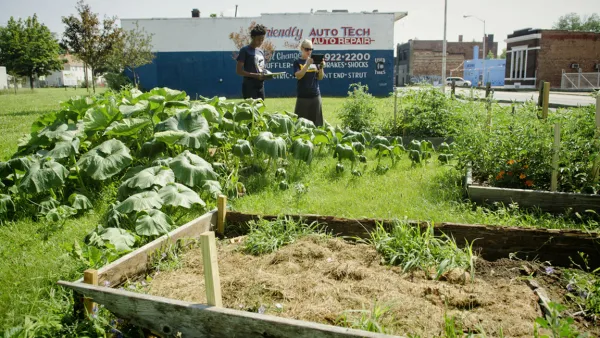
An Ambitious Revitalization Partnership in Detroit
Bringing together the city, developers, and philanthropic support, Fitz Forward aims to redevelop 300 parcels. Backers hope it will serve as a model for other neighborhoods.
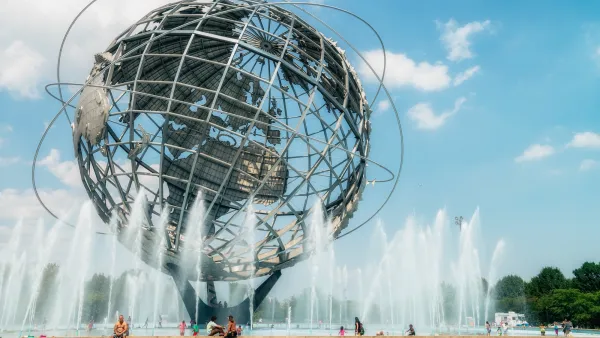
Historic Queens park is getting a $120M upgrade
The borough's largest park will undergo significant upgrades for accessibility, flood mitigation and historic preservation.
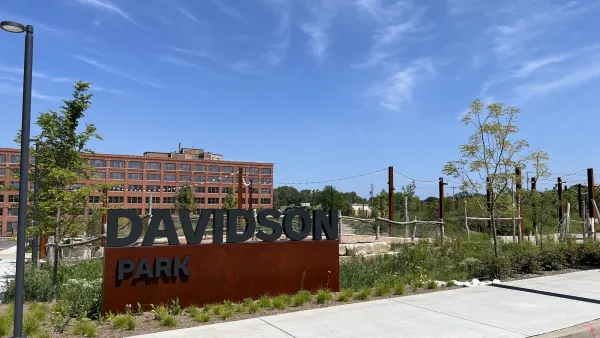
Harley-Davidson turned a Milwaukee parking lot into a green oasis
The park, adjacent to Harley-Davidson headquarters, doubles as stormwater retention infrastructure.

Amtrak, CN end decades-long dispute with eight-year agreement
The new operating agreement establishes an updated framework for the companies to work together, including processes to resolve disputes.

Judges permit Denver to divert 77,000 acre feet from the Colorado River for reservoir expansion
Overuse and climate change have caused the Colorado River’s water levels to plummet.
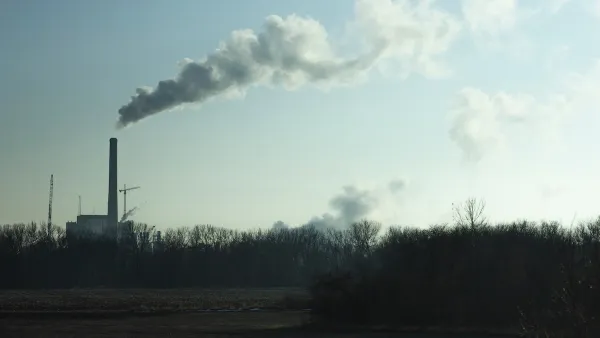
Nation's most wind-powered state turns to coal as data centers increase energy demand
For the first time in decades, Iowa has increased its generation of coal power.

Boston has spent millions making the Green Line more accessible — and there’s no end in sight
While the city has invested millions into expanding and adding platforms to the Green Line to make it more accessible, new train cars set to arrive next year will be too tall for disabled passengers to board without raising the current platforms.

Idaho may see an 18% drop in federal surface transit funding — the largest estimated cut in the US
Transit systems in rural communities are much more reliant on federal funding to provide their services.

How ‘post-disaster gentrification’ alters neighborhoods after natural calamities
After hurricanes, fires or other calamities, the original residents of a community are often replaced by younger, wealthier residents.

FREE Course: Walkable City 1: Why Walkability?
After describing his path towards focusing on walkability as the essence of good planning, Jeff Speck marches through his five principal reasons for making more walkable places.
Reinventing Malls: Planning Alchemy—Turning Gray Fields Into Gold
The course focuses on the opportunities and imperatives that shape reinvention of mall sites.

City of Wisconsin Rapids
Harvard University Graduate School of Design
KFH Group Inc.
The Architects Foundation
University of Cincinnati Online
The Pocatello Development Authority
The Urban Renewal Agency of the City of Pocatello