Hal Johnson argues that the idea that it can be beneficial to a city or region to inspire the growth of industry clusters is still an effective way to go, and creating a sense of place to inspire clustering is essential.


Location, location, location - despite the growing sense that industries can be located anywhere in the internet age, evidence supports the opposite conclusion: that clustering alike businesses together works:
"Sixty percent of the respondents to Area Development's 2010 Corporate Survey said the presence of activities similar to theirs was a consideration when selecting a site. More recently, a 2011 Brookings Institution report showed that 'strong clusters foster innovation through dense knowledge flows and spillovers; strengthen entrepreneurship by boosting new enterprise formation and start-up survival; enhance productivity, income levels, and employment growth in industries; and positively influence regional economic performance.'"
Read the full story: Industry Clusters: Importance of Place still Relevant to Business Success


How Remote Work Could Reshape American Cities
If projections about remote work hold true, the resulting migration could shift economic centers, disperse housing market pressures, and transform the politics of small communities.
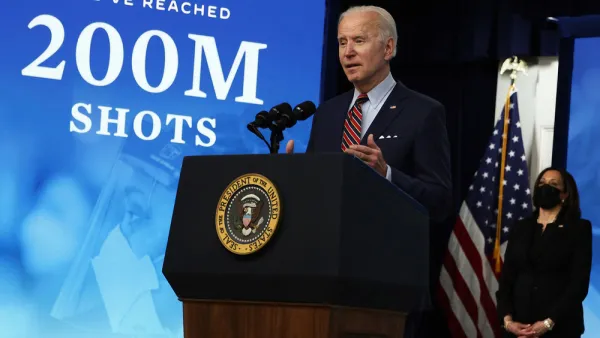
Prolonging the Pandemic: A Public Health Expert Faults the Biden Administration
Over 100 million eligible Americans have chosen not to be inoculated against COVID-19, posing a risk to vaccinated and unvaccinated alike. A July 4th White House celebration was a "missed opportunity" to model health policies, opines one expert.
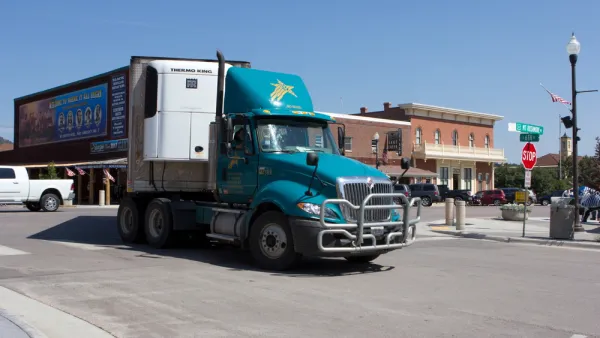
Coronavirus Shuts Down Food Processing Plant as President Pushes Reopening Economy
As President Donald Trump eyes May 1 for "opening up states," he might want to look at states that never shut down businesses to understand his public health advisor's warning that "the virus makes the timeline."

Amtrak, CN end decades-long dispute with eight-year agreement
The new operating agreement establishes an updated framework for the companies to work together, including processes to resolve disputes.

Judges permit Denver to divert 77,000 acre feet from the Colorado River for reservoir expansion
Overuse and climate change have caused the Colorado River’s water levels to plummet.
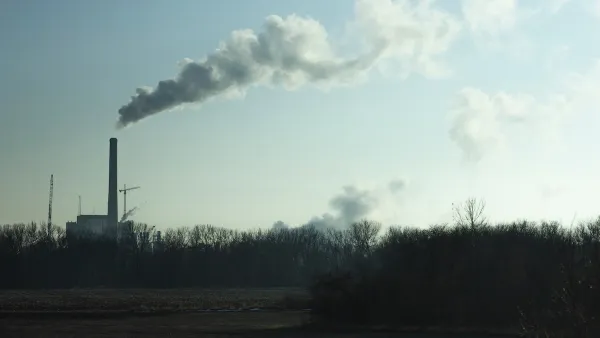
Nation's most wind-powered state turns to coal as data centers increase energy demand
For the first time in decades, Iowa has increased its generation of coal power.

Boston has spent millions making the Green Line more accessible — and there’s no end in sight
While the city has invested millions into expanding and adding platforms to the Green Line to make it more accessible, new train cars set to arrive next year will be too tall for disabled passengers to board without raising the current platforms.

Idaho may see an 18% drop in federal surface transit funding — the largest estimated cut in the US
Transit systems in rural communities are much more reliant on federal funding to provide their services.

How ‘post-disaster gentrification’ alters neighborhoods after natural calamities
After hurricanes, fires or other calamities, the original residents of a community are often replaced by younger, wealthier residents.

FREE Course: Walkable City 1: Why Walkability?
After describing his path towards focusing on walkability as the essence of good planning, Jeff Speck marches through his five principal reasons for making more walkable places.
Reinventing Malls: Planning Alchemy—Turning Gray Fields Into Gold
The course focuses on the opportunities and imperatives that shape reinvention of mall sites.

City of Wisconsin Rapids
Harvard University Graduate School of Design
KFH Group Inc.
The Architects Foundation
University of Cincinnati Online
The Pocatello Development Authority
The Urban Renewal Agency of the City of Pocatello