As proposals for the large-scale development at Brooklyn Bridge Park come in, some members of the public are crying foul over a perceived lack of transparency and public involvement during a recent meeting.


"David Lowin, a vice president at the [Brooklyn Bridge Park Corporation], repeatedly deferred questions and concerns about the proposals to the Environmental Impact Study that was done in 2005 to assess neighborhood impact. 'We are a mission-driven organization, and we are driven to build this park to be the best it can be,' said Lowin. 'The reason we're doing this project is because it raises money to pay for the park.'
Concerns were also raised over the short amount of time that was allotted for public input, with the deadline for written comments falling three weeks after the initial presentation, directly between Thanksgiving and Christmas."
Read the full story: Brooklyn Bridge Park Development Raises Questions
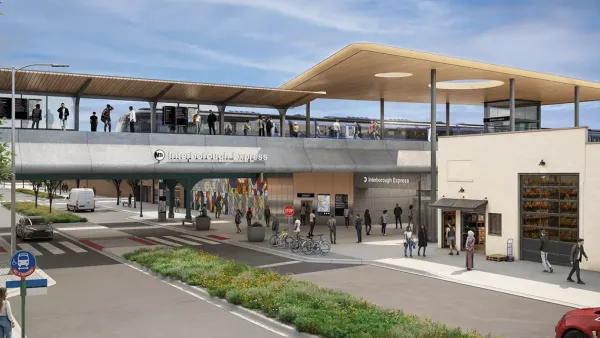
NYC releases new renderings for $5.5 billion Interborough Express
The slated stations will have a modern look, enhanced lighting and improved audio announcements.
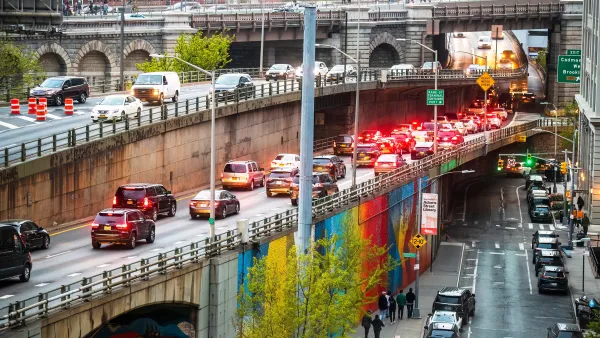
NYC to erect ‘temporary highway’ while rebuilding crumbling BQE
The city estimates it will spend $4 billion on the renovated expressway, which will reopen by 2040.
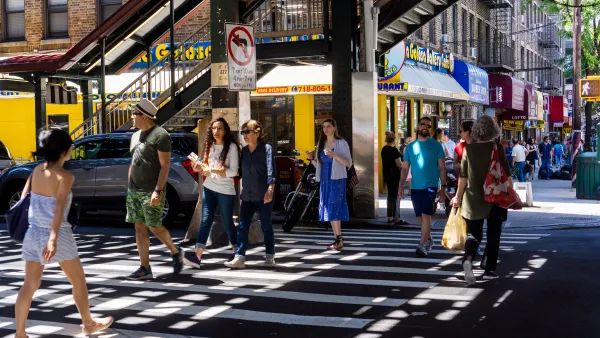
NYC needs 700,000 new homes to resolve housing crisis, report states
The report gave every neighborhood a non-binding development target.

Desperate measures: Advocates weigh draining Lake Powell to fill Colorado River
Draining the reservoir could reduce evaporation losses by a couple hundred thousand acre-feet.

Eastern Nebraska is running out of electricity
Data centers and electrification are straining eastern Nebraska’s grid, throttling economic development.

Malls are becoming the midtowns of the future
Mall and office park redevelopments are a generational opportunity to create new nodes of urbanity.

NYC breaks ground on anti-flooding infrastructure project
New York City's new system will reduce stormwater flows to local sewers by 90%.

One Kentucky town’s secret to affordable housing
The Smoketown Community Land Trust has already built seven affordable homes for community members.

Houston gains petal-shaped cooling infrastructure to make streets more ‘delightful’
The city has installed the pavilions along 15 blocks in Houston.

FREE Course: Walkable City 1: Why Walkability?
After describing his path towards focusing on walkability as the essence of good planning, Jeff Speck marches through his five principal reasons for making more walkable places.
Reinventing Malls: Planning Alchemy—Turning Gray Fields Into Gold
The course focuses on the opportunities and imperatives that shape reinvention of mall sites.

City of Rosemead
Rutgers University, Edward J. Bloustein School of Planning and Public Policy
One Hundred Miles
University of Michigan School for Environment and Sustainability (SEAS)
Hunter College, City University of New York (CUNY)
The Architects Foundation
City of Cambridge
Montrose County
The Pocatello Development Authority