In Chicago, the Regional Transportation Authority (RTA) is willing to spend $500,000 to survey their riders to see how the public feels about the bus and train services.


In past years, the CTA, Metra and Pace have regularly conducted their own ridership assessments. But those surveys didn't provide a big enough picture of the region as a whole, the RTA says.
The survey "enables us to receive honest and helpful feedback from our customers to help us improve all facets of our operation," CTA President Forrest Claypool said.
Rich Wronski, reporter for the Tribune says that "the questions begin with the basics, asking how often customers travel and which bus routes or train lines they take. They then venture into more specific areas, querying riders on why they use public transit, and how they get to their Metra stations, for example."
There are those who question the decision to conduct the surveys. State Sen. Susan Garrett, D-Lake Forest, said ""(It) seems like an odd way to spend a lot of money when they are raising fares." Garrett said. "I don't understand how these transit agencies spend the money they have."
Read the full story: RTA asks transit users: How's the ride?

Could Chicago Transit Agencies Soon Have to Compete for Funding?
Chicago's Regional Transportation Authority (RTA) is considering overhauling how it distributes funds to the area's three transit operators: the Chicago Transit Authority (CTA) bus and rail system, Metra commuter rail, and Pace suburban bus system.
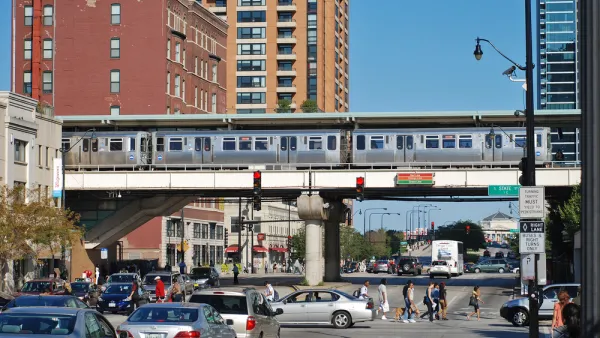
Study: Loss of Public Transit in Chicago Would Have ‘Severe’ Mobility, Economic Consequences
The first-of-it’s kind study found that without public transit, Chicago would lose an estimated $35 billion in economic activity annually and the quality of life of residents, particularly women and low-income groups, would take a major hit.
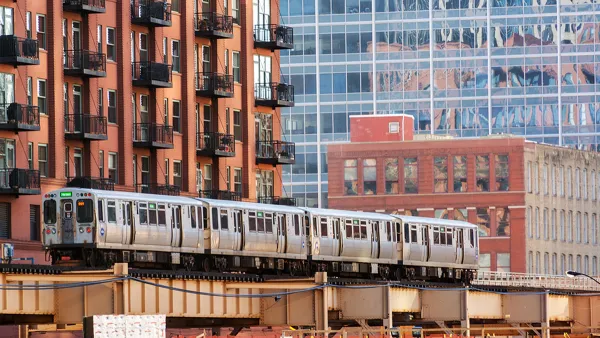
Advocating for Reduced Transit Fairs for Low-Income Riders in Chicago
A new report by the Active Transportation Alliance builds the case for reduced transit fares on all three transit systems in the Chicago region.

Planetizen Federal Action Tracker
A weekly monitor of how Trump’s orders and actions are impacting planners and planning in America.

The state-sanctioned urbicide of Austin
People don’t kill cities. Freeways do.

US to reduce Colorado River water deliveries to Mexico
A new Colorado Treaty amendment reduces Mexico’s Colorado River water allocation by 250,000 acre feet.

Brightline West’s future may rely on $6 billion federal loan
The company has until Nov. 2 to make a $400 million equity investment into its proposed high-speed rail line.

LA Metro’s ultimatum: no extra buses for LA28 if federal funding isn’t imminently secured
If Metro does not provide additional buses, LA28 organizers will have to find a new way to manage Olympic traffic. LA28’s budget does not include a line item for transit.

Colorado’s Largest Data Center Could Rise Next to Homes — Without a Public Hearing
The proposed campus would consume 11 times the power of Denver International Airport; as it has across the country, opposition mounts.

FREE Course: Walkable City 1: Why Walkability?
After describing his path towards focusing on walkability as the essence of good planning, Jeff Speck marches through his five principal reasons for making more walkable places.
Reinventing Malls: Planning Alchemy—Turning Gray Fields Into Gold
The course focuses on the opportunities and imperatives that shape reinvention of mall sites.

Eagle County Government
Harvard University Graduate School of Design
Nashville Planning Department
The Architects Foundation
University of Cincinnati Online
The Pocatello Development Authority
The Urban Renewal Agency of the City of Pocatello
Journal of the American Planning Association