The Center for Urban Real Estate unveiled a proposal to connect Lower Manhattan and Governors Island with landfill to spur development in the area. The connection would generate $16.7 billion of revenue for the city, the center estimates.


LoLo, the proposed land bridge that the Center for Urban Real Estate expects will create 88 million square feet of development, has an impossible task of becoming a reality, writes Julie Satow for The New York Times.
The director of the center Vishaan Chakrabarti says that the project would require a lengthy environmental review and regulatory changes similar to the Hudson Yards development and No. 7 subway line extension. The two projects are costing billions of dollars and will take decades to complete.
"The center is proposing a 92-acre national historic district on the island, 3.9 million square feet for public buildings like schools and 270 acres of open space. The revenue generated by the development would also pay for the extension of the No. 1 and 6 subway lines to the new neighborhood and for a bridge from Red Hook in Brooklyn."
Read the full story: Visions of a Development Rising From the Sea

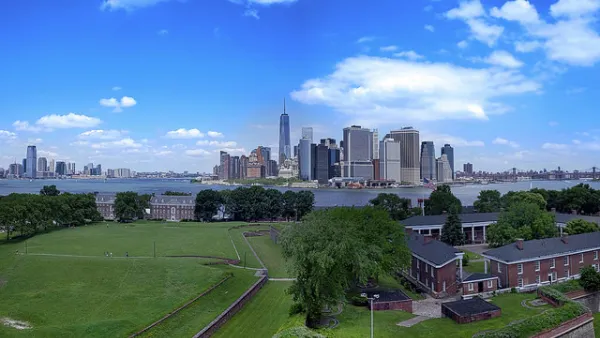
Finalists Selected for Governors Island Climate Research Center
Four teams will submit detailed proposals for a new climate research and education center on New York's Governors Island.
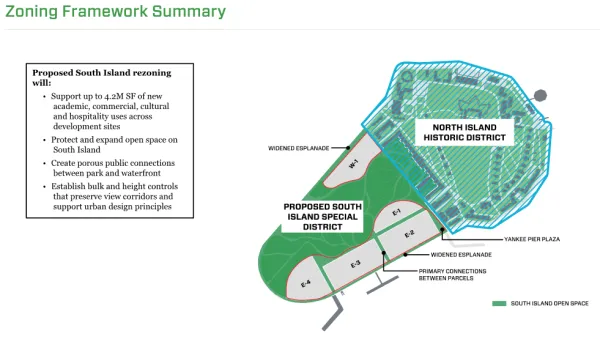
Rezoning for Governors Island Approved
A mix of new development focused on future needs and new tools for preservation are included in the rezoning package for the south end of Governors Island approved by the New York City Council in May.
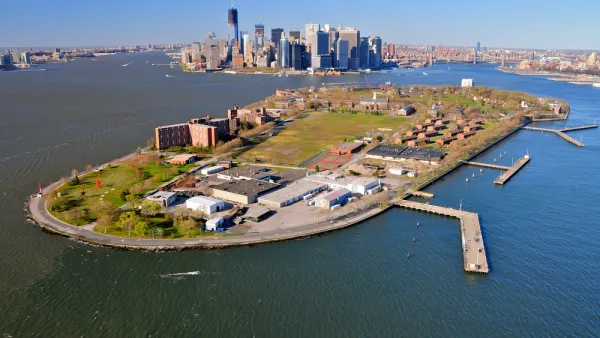
Massive Climate Research Center Planned for Governors Island, Rezoning Now Included
A speculative but exceedingly ambitious plan is pressing for air time in New York City.

Planetizen Federal Action Tracker
A weekly monitor of how Trump’s orders and actions are impacting planners and planning in America.

The state-sanctioned urbicide of Austin
People don’t kill cities. Freeways do.

Colorado’s Largest Data Center Could Rise Next to Homes — Without a Public Hearing
The proposed campus would consume 11 times the power of Denver International Airport; as it has across the country, opposition mounts.

Nation's most wind-powered state turns to coal as data centers increase energy demand
For the first time in decades, Iowa has increased its generation of coal power.

NYC cools commuters with city's first rain garden above a bus stop
New York City officials say the plants in the rain garden can absorb 16 gallons of rainwater during heavy storms.

Brightline West’s future may rely on $6 billion federal loan
The company has until Nov. 2 to make a $400 million equity investment into its proposed high-speed rail line.

FREE Course: Walkable City 1: Why Walkability?
After describing his path towards focusing on walkability as the essence of good planning, Jeff Speck marches through his five principal reasons for making more walkable places.
Reinventing Malls: Planning Alchemy—Turning Gray Fields Into Gold
The course focuses on the opportunities and imperatives that shape reinvention of mall sites.

Greater Baltimore Committee
Eagle County Government
Harvard University Graduate School of Design
The Architects Foundation
University of Cincinnati Online
The Pocatello Development Authority
The Urban Renewal Agency of the City of Pocatello
Journal of the American Planning Association