Aaron M. Renn dissects the rise and fall of Atlanta, concluding that lack of differentiation paired with no job growth will bring mean "game over" for the city.


Renn says Atlanta also suffers from a host of infrastructure problems:
"It suffers some of the highest water and sewer rates in the nation, double those of New York City. ...The biggest infrastructure issue for Atlanta is transportation. Atlanta's freeways are among the world's widest, but this disguises the extent to which its roadway infrastructure is woefully insufficient. Atlanta has a simple beltway and spoke system similar to Indianapolis and Columbus, much smaller cities. Other big cities like Houston, Dallas, Minneapolis and Detroit have much more elaborate systems that don't rely on a single ring road, but instead webs of freeway with multiple 'crosstown' routes."
Renn also points to arterial street capacity and a lack of recent transit investment as other issues that are hurting Atlanta.
Read the full story: Replay: Is It Game Over for Atlanta?

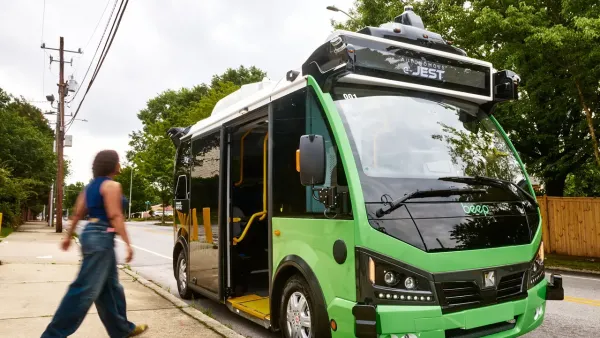
Atlanta Beltline’s free automated shuttle expands service
A $1.75 million grant funded the autonomous shuttle service’s growth.
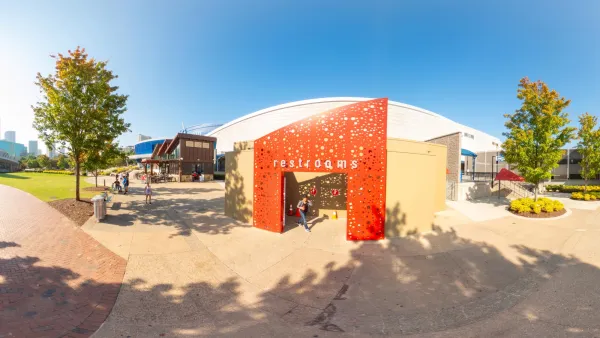
Study: 55% of Atlanta restrooms are inaccessible to the public
More than half of bathrooms that should be publicly accessible are not available, according to a study from Georgia State University.
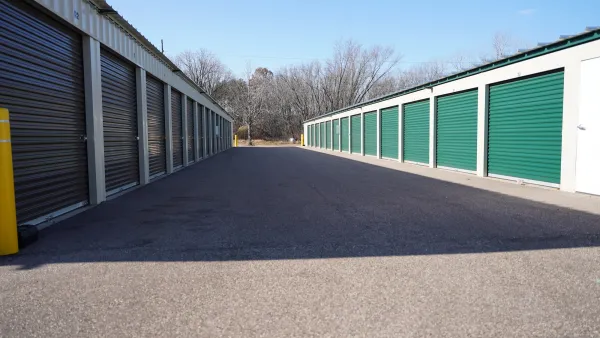
Atlanta mayor bans new self-storage facilities
An executive order from Mayor Andre Dickens bans new self-storage facilities as part of an effort to protect 'critical development opportunities' in the city.

Planetizen Federal Action Tracker
A weekly monitor of how Trump’s orders and actions are impacting planners and planning in America.

Amtrak, CN end decades-long dispute with eight-year agreement
The new operating agreement establishes an updated framework for the companies to work together, including processes to resolve disputes.

Judges permit Denver to divert 77,000 acre feet from the Colorado River for reservoir expansion
Overuse and climate change have caused the Colorado River’s water levels to plummet.

NYC DOT wants faster, more permanent street upgrades
The city is examining ways to build more concrete infrastructure without getting entangled in 'decades-long' projects.

'Something we’ve never seen before:' rising utility rates could strain city finances nationwide
Data centers, climate change and other factors have caused utility rates in the United States to increase by 38% since 2020.

Trump to overrule local leaders, lease millions of acres of America’s Pacific Island territories’ seafloors to mining companies
International law says that the Indigenous people of America’s territories have a right to prior and informed consent regarding projects that impact their countries.

FREE Course: Walkable City 1: Why Walkability?
After describing his path towards focusing on walkability as the essence of good planning, Jeff Speck marches through his five principal reasons for making more walkable places.
Reinventing Malls: Planning Alchemy—Turning Gray Fields Into Gold
The course focuses on the opportunities and imperatives that shape reinvention of mall sites.

Harvard University Graduate School of Design
KFH Group Inc.
Greater Baltimore Committee
The Architects Foundation
University of Cincinnati Online
The Pocatello Development Authority
The Urban Renewal Agency of the City of Pocatello