Former OH Sen. George Voinovich and the U.S. Chamber of Commerce are spearheading the push, but they are by no means alone. The groups came together in 2009 - another one may be in the works with the current transportation extension ending March 31.


Increasing the gas tax is supported by diverse groups for a variety of reasons.
"The Chamber of Commerce, for its part, believes the gas tax is the best way to keep funding road projects because it's simple."
"The Chamber has long held that a modest increase in fuel taxes is needed to support the federal highway and transit programs. It is currently the most straightforward approach to linking users to infrastructure and providing resources without increasing the federal budget deficit or debt," said Janet Kavinoky, the Chamber's executive director of transportation and infrastructure."
Unions and others joined the gas tax increase movement when the current transportation bill expired in 2009.
"We are not going to raise the gas tax. I will be emphatic on that - we can't," Transportation Secretary Ray LaHood told Congress in 2009.
Since then, President Obama has pushed for extensions, while also pushing jobs bills based on infrastructure funding.
The irony is apparent to Pete Ruane, president and CEO of the American Road & Transportation Builders Association. "If they had passed this bill on time, the kind of robust spending [former House Transportation and Infrastructure Committee] Chairman [Jim] Oberstar was pushing, they'd now be the beneficiaries politically of major job changes in the economy," he said.
And the funding wouldn't have come from increasing the federal deficit.
Thanks to The Nooner
Read the full story: Transportation groups want to increase gas tax

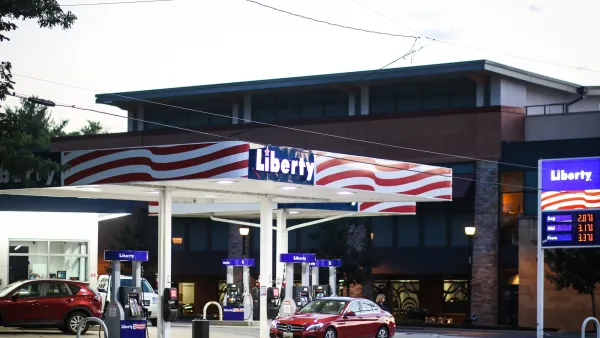
Why does Maryland's gas tax change every year?
The state's annual gas tax update may still not be enough to keep up with changes in the transportation sector and rising project costs.
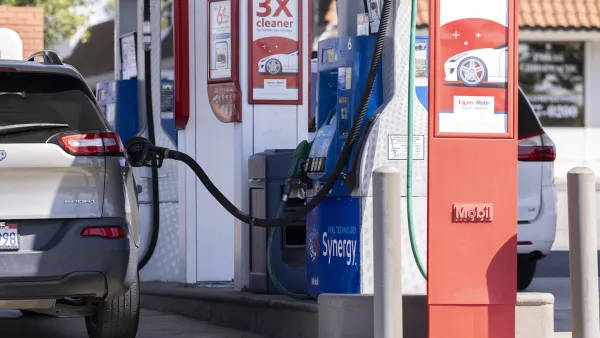
Analysis: Suspending the gas tax wouldn't save Americans much on gas this summer
Even if Congress approves a proposal to temporarily lift the federal gas tax, a variety of other factors and transportation and processing delays would mean American consumers would see little difference at the pump.
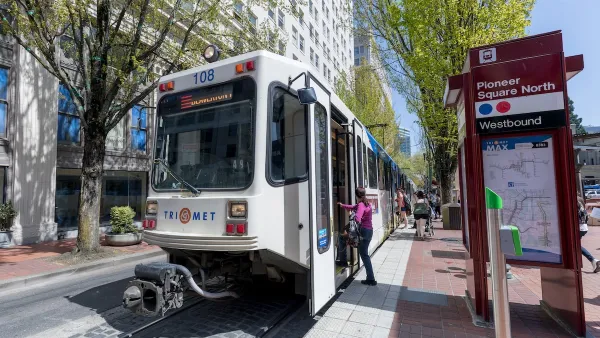
Oregon Transportation Bill Saves 500 ODOT Jobs, but Leaves Future Funding Uncertain
A bill passed in a special legislative session will raise over $4 billion for transportation and public transit in the next 10 years, but fails to establish a long-term funding solution.

Planetizen Federal Action Tracker
A weekly monitor of how Trump’s orders and actions are impacting planners and planning in America.

Amtrak, CN end decades-long dispute with eight-year agreement
The new operating agreement establishes an updated framework for the companies to work together, including processes to resolve disputes.

Judges permit Denver to divert 77,000 acre feet from the Colorado River for reservoir expansion
Overuse and climate change have caused the Colorado River’s water levels to plummet.

NYC DOT wants faster, more permanent street upgrades
The city is examining ways to build more concrete infrastructure without getting entangled in 'decades-long' projects.

'Something we’ve never seen before:' rising utility rates could strain city finances nationwide
Data centers, climate change and other factors have caused utility rates in the United States to increase by 38% since 2020.

Trump to overrule local leaders, lease millions of acres of America’s Pacific Island territories’ seafloors to mining companies
International law says that the Indigenous people of America’s territories have a right to prior and informed consent regarding projects that impact their countries.

FREE Course: Walkable City 1: Why Walkability?
After describing his path towards focusing on walkability as the essence of good planning, Jeff Speck marches through his five principal reasons for making more walkable places.
Reinventing Malls: Planning Alchemy—Turning Gray Fields Into Gold
The course focuses on the opportunities and imperatives that shape reinvention of mall sites.

Harvard University Graduate School of Design
KFH Group Inc.
Greater Baltimore Committee
The Architects Foundation
University of Cincinnati Online
The Pocatello Development Authority
The Urban Renewal Agency of the City of Pocatello