Jason Griffiths and Alex Gino set out in 2002 to document the unremarkable character of the American suburbs. 22,382 miles and 2,593 photographs later, they concluded that suburbia "is difficult to define."


After taking a detailed and objective look at commercial developments across the country, Griffiths and Gino -- both from London -- ended up developing a nuanced view of the suburban character:
"While we recognize that suburbia is clearly problematic, we also feel that solutions must lie within the reconfiguration of familial forms for architecture. If recent histories of postmodernism have sought to mimic the condition within which it seeks to operate, such as the commercial vernacular or fragmentation, then our found condition is banality - a repetitious landscape desensitized by excess choice. Our response to this world is not dialectic or corrective; our rejection of the suburban ethic coexists with an intense pleasure in its scenographic feel."
Design Observer also features a slideshow.
Read the full story: Manifest Destiny: A Guide to the Essential Indifference of American Suburban Housing

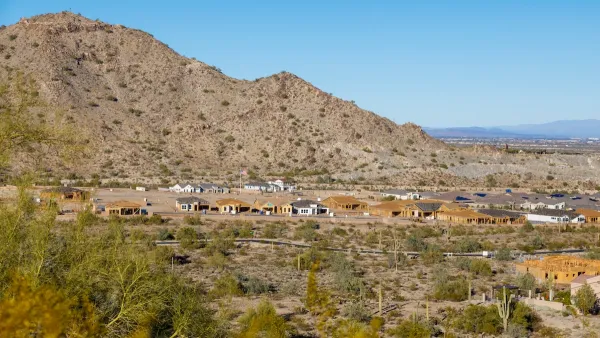
Arizona Overrides Moratorium Imposed due to Water Crisis, Approves up to 60K New Homes
A newly created legal process allows development to proceed if builders agree to bring in renewable water sources and reduce their groundwater use by 25%.
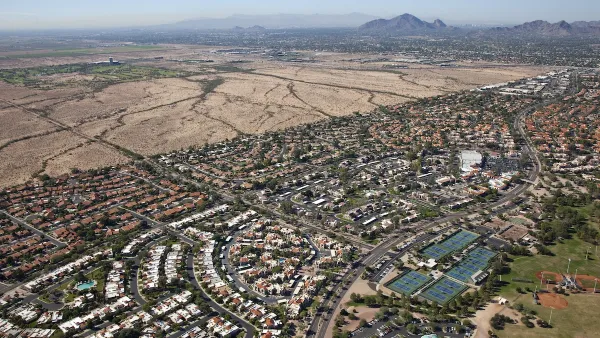
Nearly Half a Million New Arizona Homes Halted Due to Water Crisis
The Arizona Department of Water Resources has put a moratorium on new water supply permits, making the future of planned residential developments uncertain.
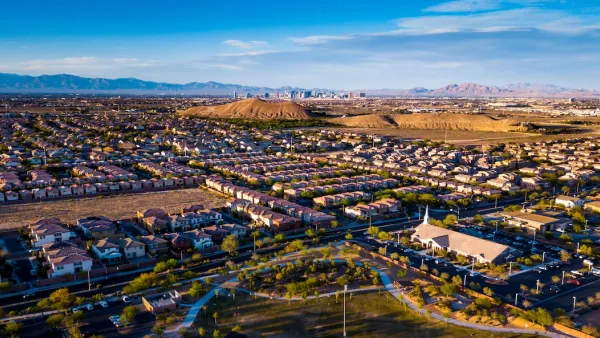
The Nation’s 40 Fastest-Growing Suburbs
Projected population growth will be concentrated in suburban communities around major metropolitan areas, with the Sunbelt experiencing the fastest growth.

Planetizen Federal Action Tracker
A weekly monitor of how Trump’s orders and actions are impacting planners and planning in America.

‘Going backwards:’ Baltimore mayor, students rally against state's transit funding plan
Maryland's proposed six-year plan provides no funding for Baltimore’s BMORE bus program and reduces its road maintenance funding.

Detroit to transform waterfront with $2.2 billion investment
Developers will convert about 18 acres of unused parking lot space into civic spaces.

LA to transform part of water treatment facility into new park
By rebuilding some of the Los Angeles-Glendale Water Reclamation Plant’s infrastructure, the city will free up 18,000 square feet to create a new green space for the public.

San Antonio approves $1.1 billion transit agenda
The agency has also begun construction of its Via Rapid Green line, which will service passengers from the San Antonio International Airport.

Guerilla urbanists’ DIY benches joined by sanctioned seats in Chicago
The group behind the original homemade benches said they will continue installing them across bench-less bus stops in Chicago.

FREE Course: Walkable City 1: Why Walkability?
After describing his path towards focusing on walkability as the essence of good planning, Jeff Speck marches through his five principal reasons for making more walkable places.
Reinventing Malls: Planning Alchemy—Turning Gray Fields Into Gold
The course focuses on the opportunities and imperatives that shape reinvention of mall sites.

One Hundred Miles
County of Mendocino
planning NEXT
The Architects Foundation
University of Cincinnati Online
Montrose County
Northern Illinois Transit Authority (NITA)
The Pocatello Development Authority