Until the foreclosure process is finalized, apartment buildings are the responsibility of no one in particular. Around New York City, writes Chris Opfer, foreclosing banks are increasingly being given the task of maintaining and repairing them.


"The court typically appoints a receiver to collect rent and use the money to perform limited maintenance, but not necessarily to make significant physical improvements."
"In the Brooklyn case, the court didn't appoint a receiver until almost a year after the foreclosure suit began. A court order limits him from spending more than $2,000 on a single repair without the bank's consent.
Physical problems often occur in these rent regulated apartment buildings facing foreclosure both because the buildings are typically older and require substantial maintenance and because the relatively low rent income made it difficult for landlords to make major repairs."
Read the full story: Foreclosures Leave Apartment Buildings in Need of Repair

The Bust of Williamsburg
Sales in Brooklyn are down, and that's made a ghost town out of the recently booming but now busted Williamsburg neighborhood.

NYC plants over 18,000 trees, the most new foliage in a decade
Many of the trees were planted in communities vulnerable to extreme heat.
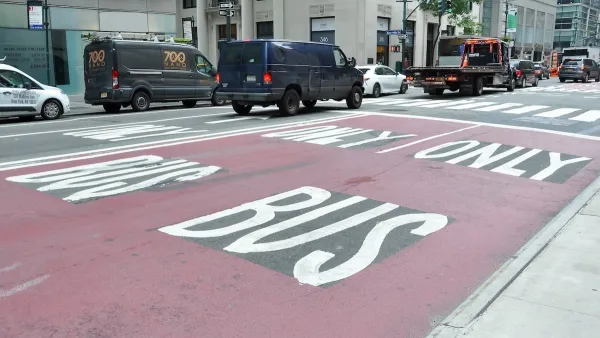
NYC DOT wants faster, more permanent street upgrades
The city is examining ways to build more concrete infrastructure without getting entangled in 'decades-long' projects.

Planetizen Federal Action Tracker
A weekly monitor of how Trump’s orders and actions are impacting planners and planning in America.

Amtrak, CN end decades-long dispute with eight-year agreement
The new operating agreement establishes an updated framework for the companies to work together, including processes to resolve disputes.

Northwest rail fans eager for Sept. 30 debut of Amtrak’s Airo fleet
Get ready for that new train smell and more seats. But they won’t go faster or run more frequently on the Cascades route in Washington and Oregon.

Brightline Florida files for bankruptcy
The transit company is over $5 billion in debt.

St. Louis Metro to test if single-car trains can reduce operating costs, maintain rider satisfaction
The pilot program will run from October to spring 2027, and begin with one single-car train operating on Metrolink’s Red and Blue lines.

Pennsylvania is building data centers in abandoned mines
Housing data centers in mines provides an alternative to destroying local forests and may spare residents from data centers’ noise and air pollution.

FREE Course: Walkable City 1: Why Walkability?
After describing his path towards focusing on walkability as the essence of good planning, Jeff Speck marches through his five principal reasons for making more walkable places.
Reinventing Malls: Planning Alchemy—Turning Gray Fields Into Gold
The course focuses on the opportunities and imperatives that shape reinvention of mall sites.

City of Thousand Oaks
City of Wisconsin Rapids
Harvard University Graduate School of Design
The Architects Foundation
University of Cincinnati Online
The Pocatello Development Authority
The Urban Renewal Agency of the City of Pocatello