A crosswalk in Little Rock, Arkansas is forbidden to pedestrians from 6am to 6pm every day. Tim McKuin asks, what's the deal?


The "anti-people" sign, as McKuin puts it, is on a very important intersection near City Hall and the historic Capital Building.
McKuin dissects the arguments in favor of the prohibition of pedestrians, like the idea that traffic would back up in this important area if people were allowed to cross:
"There's a ton of traffic on Markham precisely because the engineers have sacrificed the walk signal and designated two lanes with a protected left turn. Make that left turn from Markham onto Broadway less appealing and drivers will find another way. Guaranteed."
Read the full story: A City for Cars or for People?
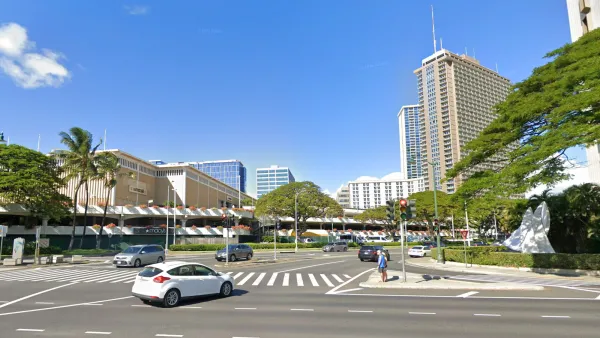
Hawaii DOT takes action after reporters call attention to dangerous crosswalk
The state made changes to a treacherous intersection after reporting revealed that traffic light timing was posting a threat to pedestrians.
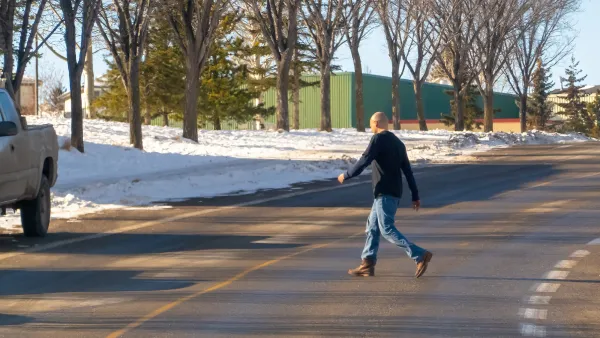
Study: Midblock pedestrian crossings are more common than we think
One in six crossings in the study took place outside of a marked crosswalk.
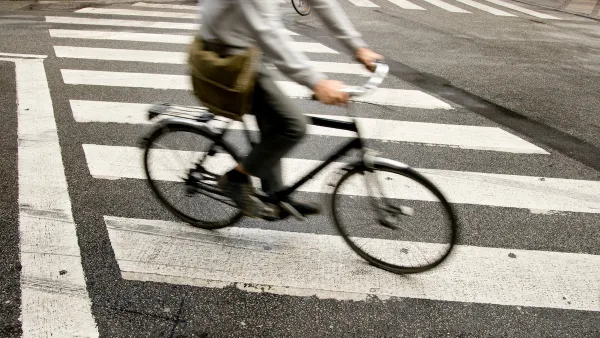
A Little-Known Loophole Puts Cyclists at Risk
Crosswalk laws in most U.S. states don’t offer legal protections to people on bikes, scooters, or mobility devices.

Planetizen Federal Action Tracker
A weekly monitor of how Trump’s orders and actions are impacting planners and planning in America.

California plans to bury El Niño’s downpour
If the state plays its cards right, it may be able to store a billion acre-feet of El Niño’s water in aquifers.

Desperate measures: Advocates weigh draining Lake Powell to fill Colorado River
Draining the reservoir could reduce evaporation losses by a couple hundred thousand acre-feet.

Los Angeles just elected an urban planner as its mayor
Transportation analysts are optimistic that Raman will be more aggressive in addressing transit issues than Bass.

Mamdani’s pied-à-terre tax survives legal challenge
A panel of judges found that the plaintiffs failed to demonstrate injury as a result of New York City's implementation of the tax.

Eastern Nebraska is running out of electricity
Data centers and electrification are straining eastern Nebraska’s grid, throttling economic development.

FREE Course: Walkable City 1: Why Walkability?
After describing his path towards focusing on walkability as the essence of good planning, Jeff Speck marches through his five principal reasons for making more walkable places.
Reinventing Malls: Planning Alchemy—Turning Gray Fields Into Gold
The course focuses on the opportunities and imperatives that shape reinvention of mall sites.

City of Rosemead
Rutgers University, Edward J. Bloustein School of Planning and Public Policy
One Hundred Miles
University of Michigan School for Environment and Sustainability (SEAS)
Hunter College, City University of New York (CUNY)
The Architects Foundation
City of Cambridge
Montrose County
The Pocatello Development Authority