Social activists have reacted sharply to the Indian Planning Commission's report that 25 rupees (50 cents) and 31 rupees a day is sufficient for people in rural and urban areas, respectively. Jyoti Malhotra reports on the ongoing debate.


"In 2004, with the Congress party returning to power in defiance of the "Shining India" campaign launched by the outgoing Bharatiya Janata Party, Prime Minister Manmohan Singh commanded that Mr. Tendulkar revisit his poverty estimates and that Arjun Sengupta, another well-known economist, look into poverty levels, primarily in the unorganized sector.
By 2005-06, Mr. Sengupta had reported that 78% of the population lived below 20 rupees a day, while his fellow economist Mr. Tendulkar pulled up the poverty line from 26% (Planning Commission figures in 1999) to 42% for adults in rural areas spending below 15 rupees a day, keeping the 26% figure intact for the urban poor spending below 20 rupees a day. And in 2009, development scholar N. C. Saxena, suggested a via media figure of 50% for the rural poor, even as he suggested a methodology to identify them."
Read the full story: Politics Journal: Can India Defend Its Poverty Line?

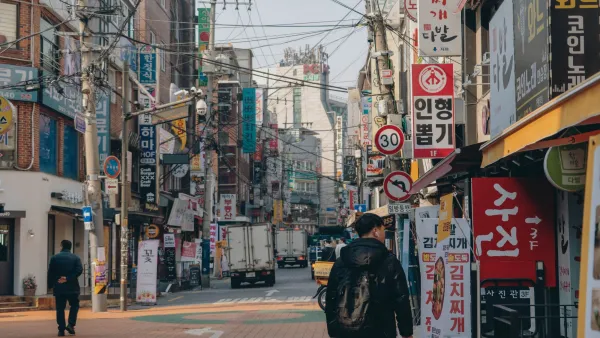
The Basement Apartments of Seoul’s Urban Poor
The lives of Seoul's poorest residents in squalid below-ground housing are brought out of the shadows in the film "Parasite."
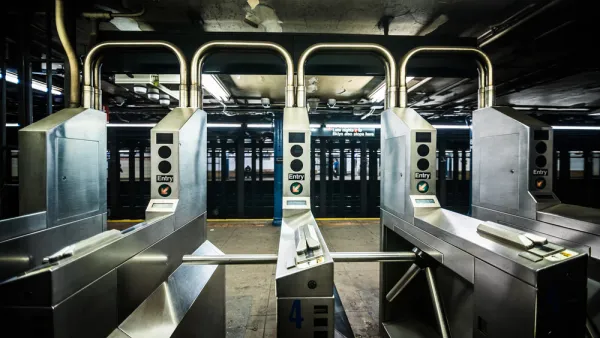
Means-Based, Transit-Fare Discounts Take a Leap Forward in the Big Apple
The 2019 New York City budget includes $106 million to subsidize half the transit fare for qualified residents for six months. The city joins the ranks of Seattle, Toronto, and the Bay Area that offer income-based discounts for transit fares.

Fresno's Troubled Housing History
The crisis facing many Fresno renters is nothing new. A history of housing in the city shows how, since the late 19th century, poor housing conditions have been "ingrained in Fresno's culture."

Planetizen Federal Action Tracker
A weekly monitor of how Trump’s orders and actions are impacting planners and planning in America.

Chicago breaks ground on $3 billion megadevelopment
The new neighborhood, titled Foundry Park, will one day host 3,700 residences.

This MA town is drowning in its own sewage — and residents like it that way
Susan Murcott, a waste water expert, said if Carlisle didn't address their leaking sewage, the problem could turn “deadly.”

Feds to more closely scrutinize proposed Amtrak facility’s environmental impact
The Federal Railroad Administration had initially said the facility qualified for a less extensive environmental review.

Boston is hard to build housing in: its chief of planning wants to keep it that way
Chief of Planning Kairos Shen said she would not make changes to Boston’s affordability requirements for new housing, which critics say have slowed down development.

California plans to bury El Niño’s downpour
If the state plays its cards right, it may be able to store a billion acre-feet of El Niño’s water in aquifers.

FREE Course: Walkable City 1: Why Walkability?
After describing his path towards focusing on walkability as the essence of good planning, Jeff Speck marches through his five principal reasons for making more walkable places.
Reinventing Malls: Planning Alchemy—Turning Gray Fields Into Gold
The course focuses on the opportunities and imperatives that shape reinvention of mall sites.

City of Rosemead
Rutgers University, Edward J. Bloustein School of Planning and Public Policy
One Hundred Miles
Hunter College, City University of New York (CUNY)
The Architects Foundation
University of Cincinnati Online
Montrose County
The Pocatello Development Authority
The Urban Renewal Agency of the City of Pocatello