An 84 foot tall cell tower, disguised as a giant pine tree, sparks controversy in Bozeman, Montana.


As the number of cellular telephone towers doubles across the country, providers are trying to get creative fitting them into existing communities. In Montana and in many scenic areas, blocking mountain views is particularly controversial, while at the same time those mountains limit cell phone reception. The Bozeman Chronicle provides some background on ways cell towers have been disguised, coverage vs. capacity issues, and how the city and county zoning treats towers:
"Under federal law, cities can't ban cell towers.
Further, cities must have provisions to allow towers in residential neighborhoods, on historic landmarks and on environmental sites - anywhere someone might need to make a call in an emergency."
Thanks to JC Shepard
Read the full story: Power of the cell tower
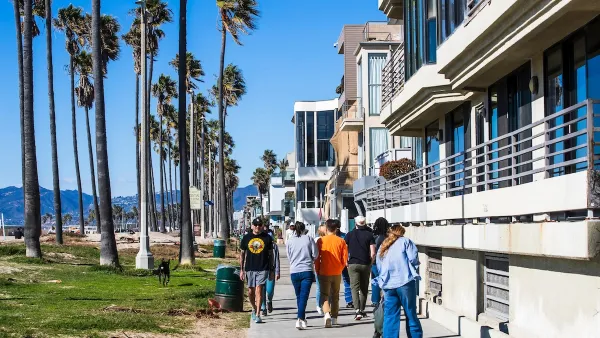
How LA’s new mayor plans to tackle affordable housing crisis
Mayor-elect Nithya Raman has proposed overhauling the city’s permitting process.
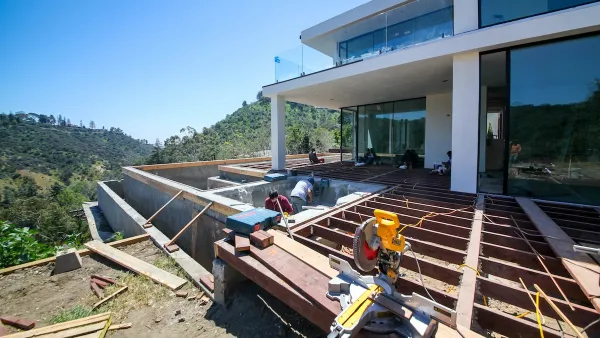
Instead of building new housing, LA developers are turning mansions into mega-mansions
In the richest areas, the number of houses valued at $30 million with demolition permits has skyrocketed since 2018.
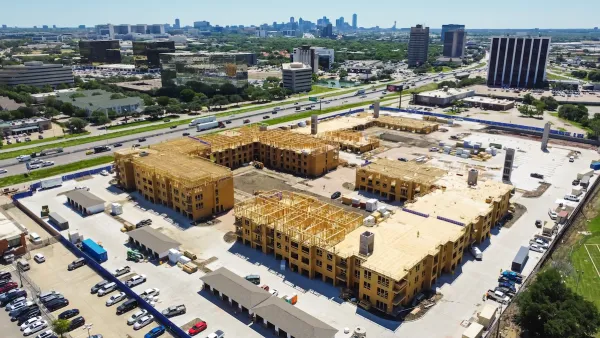
Dallas releases zoning code overhaul to officials
The drafted overhaul is over 400 pages long.

Planetizen Federal Action Tracker
A weekly monitor of how Trump’s orders and actions are impacting planners and planning in America.

Washington state to charge fee to drivers with fuel-efficient cars
Revenue from the fee will go towards supporting the state’s highways.

Illinois considers spending $1 billion in taxpayer money on data center
A quantum computing campus and data center are currently under construction in Chicago.

Senate passes bill overhauling permitting
The bill still needs to pass the House.

Did data centers change how voters cast their ballots?
Texas, Ohio, and Georgia all flipped party control. But in rural counties, the effect of local data centers was mixed.

Amtrak invests in eight new Airo trainsets
The new trainsets will begin serving passengers in 2031.

FREE Course: Walkable City 1: Why Walkability?
After describing his path towards focusing on walkability as the essence of good planning, Jeff Speck marches through his five principal reasons for making more walkable places.
Reinventing Malls: Planning Alchemy—Turning Gray Fields Into Gold
The course focuses on the opportunities and imperatives that shape reinvention of mall sites.

City of Charlotte
City of Rosemead
Rutgers University, Edward J. Bloustein School of Planning and Public Policy
University of Michigan School for Environment and Sustainability (SEAS)
Hunter College, City University of New York (CUNY)
The Architects Foundation
University District Partnership