As San Francisco prepares to host the 2013 America's Cup regatta, plans to use parts of the city's scenic waterfront for spectators' yacht parking edge too far into the public realm, according to this piece from the San Francisco Chronicle.


"If Oracle billionaire Larry Ellison and organizers of the high-profile regatta get their way, the Embarcadero's widest stretch of open water would be turned into a parking lot for two dozen spectator yachts at least 100 feet long. The rich and famous would have access to this watery perch not for a matter of days or weeks, but for the months leading up to and including the storied regatta.
Nor does the imposition end there. If the basin alongside Rincon Park requires dredging to accommodate a class of ships where size most emphatically matters, regatta organizers have the option to turn the basin into a commercial marina. Today's wide-open views might never return."
Urban design writer John King warns that the temporary sporting event could potentially have a very long-term impact on the public realm in San Francisco.
Read the full story: Cup's yacht plan threatens our wide-open bay views

Sailing to a Redeveloped San Francisco Waterfront
In 2013, San Francisco will host America's Cup; many hope this will expedite development along the Bay City's waterfront.
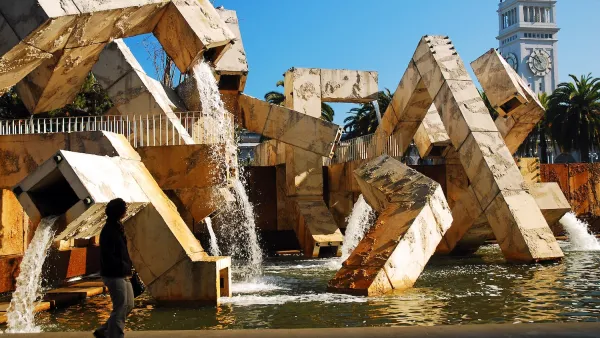
San Francisco to Dismantle its Polarizing Brutalist Fountain
The Vaillancourt Fountain stands as a symbol of the tension between the city’s past and future.
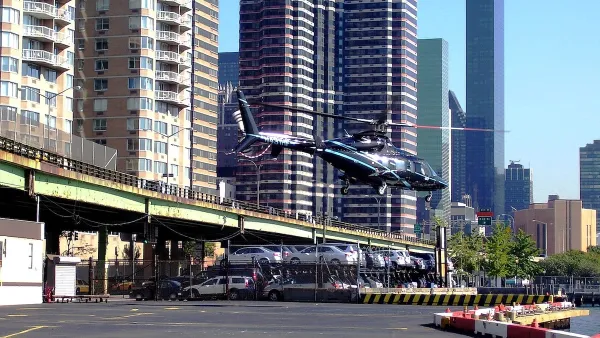
Manhattan Waterfront Parking Lot to Become Public Park
A lot that has served as parking for decades will add a much-needed public amenity to the East River waterfront.

Planetizen Federal Action Tracker
A weekly monitor of how Trump’s orders and actions are impacting planners and planning in America.

California plans to bury El Niño’s downpour
If the state plays its cards right, it may be able to store a billion acre-feet of El Niño’s water in aquifers.

Desperate measures: Advocates weigh draining Lake Powell to fill Colorado River
Draining the reservoir could reduce evaporation losses by a couple hundred thousand acre-feet.

MTA gives itself 30 days to transform pit into basketball court
The site has been under construction since 2022; the city originally estimated it would finish the court in 2024.

Non-stop party: Chicago voters weigh permanent festival grounds
A stable place for bleachers, stages and drainage may streamline the setup and teardown of large events.

Metra may invest $9.1 billion in regional rail
The agency released a draft of a study examining potential ways to offer more frequent train service.

FREE Course: Walkable City 1: Why Walkability?
After describing his path towards focusing on walkability as the essence of good planning, Jeff Speck marches through his five principal reasons for making more walkable places.
Reinventing Malls: Planning Alchemy—Turning Gray Fields Into Gold
The course focuses on the opportunities and imperatives that shape reinvention of mall sites.

City of Rosemead
Rutgers University, Edward J. Bloustein School of Planning and Public Policy
One Hundred Miles
Hunter College, City University of New York (CUNY)
The Architects Foundation
University of Cincinnati Online
City of Cambridge
Montrose County
The Pocatello Development Authority