Now that Gov. Perry has declared his candidacy for President, the Houston Chronicle has begun a series of articles to spotlight how infrastructure has fared under the state's longest serving governor. Transportation is the focus of the first report.


Gov. Rick Perry is quick to note how much Texas has grown - adding "1,200 new residents every day for the last 10 years." The Chronicle examines how Texas has kept up with the needs of all the state's residents.
"During Perry's tenure, the state has postponed investment or turned to debt to finance critical infrastructure needs, experts say. More than any other issue, Texas' transportation policies illustrate its growing pains.
Perry was a major backer of the "controversial Trans-Texas Corridor, an ambitious transportation scheme that relied on foreign investment and tolls for financing". After the plan was dropped in 2009, Perry resorted even more to debt financing to pay for roads - which had begun in 2003. Texas "will owe $17.3 billion by the end of (2012), contributing to the rapid escalation of total state debt, from $13.4 billion in 2001 to $37.8 billion today."
An alternative to debt financing for transportation would be increasing the gas tax, but Perry derailed a Republican legislative effort in 2007 to allow voters to approve gas tax hikes.
Thanks to Environment & Energy - Greenwire
Read the full story: Perry's Texas: Transportation needs trail behind
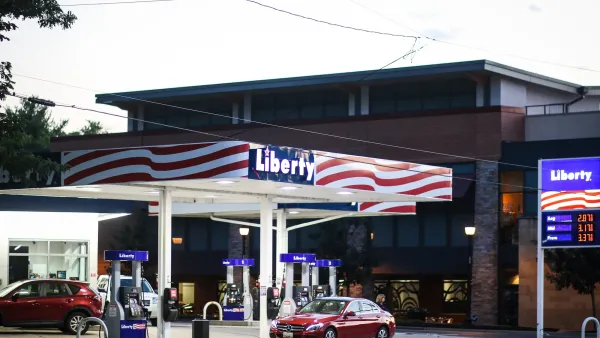
Why does Maryland's gas tax change every year?
The state's annual gas tax update may still not be enough to keep up with changes in the transportation sector and rising project costs.
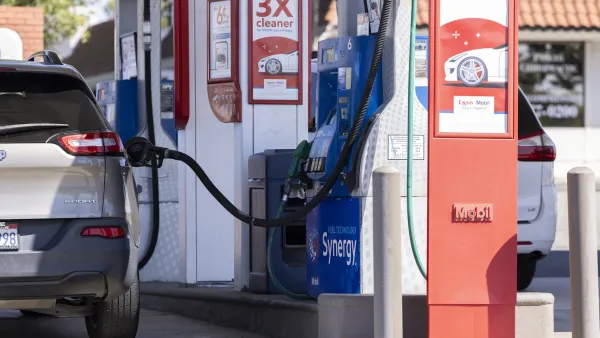
Analysis: Suspending the gas tax wouldn't save Americans much on gas this summer
Even if Congress approves a proposal to temporarily lift the federal gas tax, a variety of other factors and transportation and processing delays would mean American consumers would see little difference at the pump.
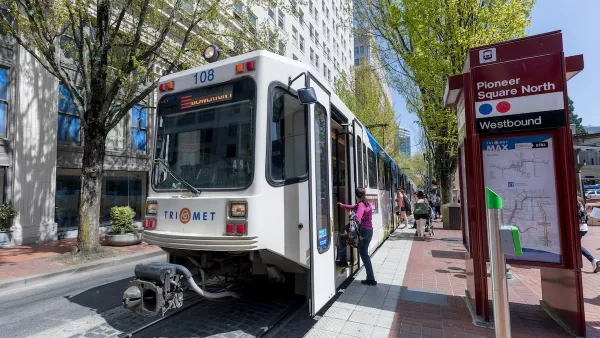
Oregon Transportation Bill Saves 500 ODOT Jobs, but Leaves Future Funding Uncertain
A bill passed in a special legislative session will raise over $4 billion for transportation and public transit in the next 10 years, but fails to establish a long-term funding solution.

Planetizen Federal Action Tracker
A weekly monitor of how Trump’s orders and actions are impacting planners and planning in America.

Eastern Nebraska is running out of electricity
Data centers and electrification are straining eastern Nebraska’s grid, throttling economic development.

Study reveals best places in the U.S. for cycling, walking
New research from Streetlight Data examines bicycle and pedestrian miles per capita in the 100 largest U.S. cities by population.

DSA members accuse Mamdani of 'abandoning values' over housing redevelopment
New York City's mayor plans to replace about 2,000 units of public housing with private, mixed-income housing.

All sides of BRT debate unhappy with CDOT’s most recent move
The Colorado Department of Transportation is no longer considering center-running bus lanes for Colorado Boulevard.

Massachusetts bogs generate both power, and cranberries
Putting solar panels above farmland is one way Massachusetts is advancing toward its goal of net-zero carbon emissions by 2050.

FREE Course: Walkable City 1: Why Walkability?
After describing his path towards focusing on walkability as the essence of good planning, Jeff Speck marches through his five principal reasons for making more walkable places.
Reinventing Malls: Planning Alchemy—Turning Gray Fields Into Gold
The course focuses on the opportunities and imperatives that shape reinvention of mall sites.

City of Rosemead
Rutgers University, Edward J. Bloustein School of Planning and Public Policy
One Hundred Miles
University of Michigan School for Environment and Sustainability (SEAS)
Hunter College, City University of New York (CUNY)
The Architects Foundation
City of Cambridge
The Pocatello Development Authority
The Urban Renewal Agency of the City of Pocatello